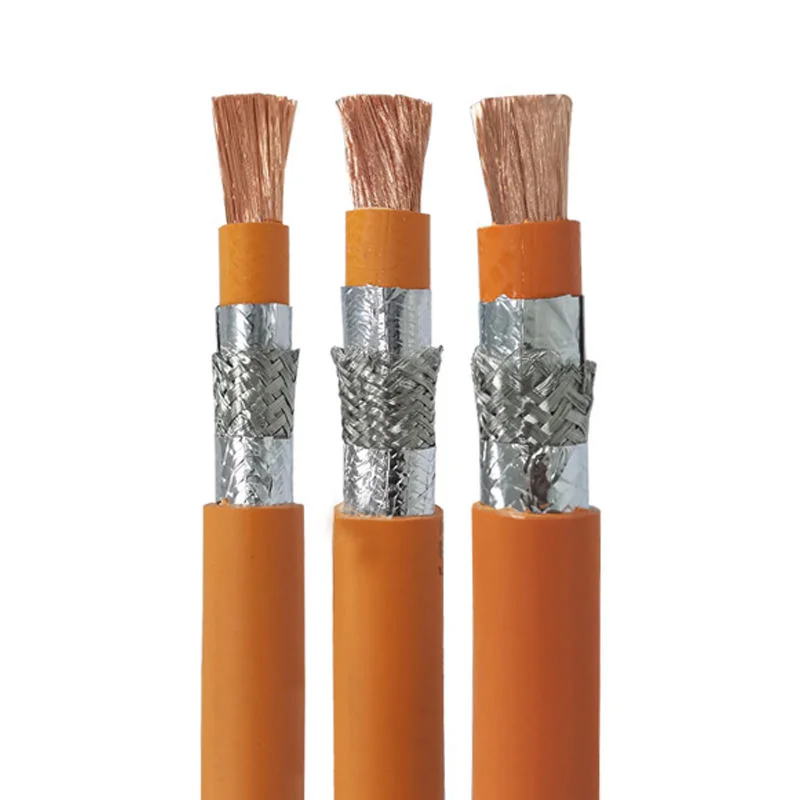
EVR EV High Voltage Cable — 1500 V Unscreened Single-Core Cable with Oxygen-Free Copper Conductor and XLPE Sheath, 2.5 to 240 mm², −40 °C to +125 °C, for EV Battery and Charging Circuits
Kabel Pengisian EV dan Energi Terbarukan /EV High Voltage Cable

EVR EV High Voltage Cable — 1500 V Unscreened Single-Core Cable with Oxygen-Free Copper Conductor and XLPE Sheath, 2.5 to 240 mm², −40 °C to +125 °C, for EV Battery and Charging Circuits

EVR EV high voltage cable: 1500 V single-core unscreened cable, oxygen-free copper, XLPE sheath, 2.5 to 240 mm², rated −40 °C to +125 °C and resistant to oil and UV.

Fitur Utama

1500 V rating on a single core — the voltage class used for traction battery and charging circuits, so one cable type covers the pack, the distribution box, and the charging inlet run
Cross-section range from 2.5 mm² to 240 mm² — the same construction is used for a signal-level control run and for a 240 mm² main pack cable, which keeps the termination and stripping practice consistent across the harness
Unscreened construction — no braid or foil layer, so the cable is lighter and more flexible than the screened EVRP type, and the bend and termination are simpler where the route does not need a screen
XLPE sheath — cross-linked polyethylene holds its shape and dielectric strength at 125 °C, where a thermoplastic sheath would soften
Continuous oil immersion — the cable can sit in oil long term without hardening or cracking, which matters on a driveline or a machine tool where lubricant collects
Flexible at −40 °C — the sheath does not harden at low temperature, so the cable stays workable in a cold-climate installation and in a cold chamber
UV and weather resistant — the sheath resists sunlight and water, so a route that is exposed during vehicle service or on an outdoor charging installation does not degrade the jacket
Self-extinguishing — the cable does not burn at its 125 °C rating and extinguishes once the ignition source is removed

Aplikasi

EV traction battery circuits — main positive and main negative runs inside the pack and between the pack and the junction boxCharging inlet and charging station wiring — the high voltage path from the inlet to the on-board charger or the DC contactorIn-vehicle high voltage control wiring — control and auxiliary circuits that operate at the traction voltageEnergy storage cabinets — battery string and rack wiring in stationary storage where a screened cable is not requiredSpecial-environment equipment wiring — routes exposed to oil, water, or sunlight where a standard PVC cable would age quicklyGeneral new-energy equipment — power and control wiring in equipment built for the new-energy sector

Spesifikasi Teknis

Product Type EV high voltage single-core cable, unscreened
Type Designation EVR
Screening Unscreened — no braid or foil layer
Rated Voltage 1500 V
Cross-Section Range 2.5 mm² to 240 mm²
Conductor Material Multi-strand high-purity oxygen-free copper
Sheath Material XLPE (cross-linked polyethylene)
Temperature Range −40 °C to +125 °C
Low Temperature Behaviour Remains flexible at −40 °C without hardening
High Temperature Behaviour Does not burn at the 125 °C rating
Flame Behaviour Self-extinguishing after removal of the ignition source
Oil Resistance Suitable for continuous immersion in oil; does not harden or crack
Immersion Test Remains flexible after 60 days of immersion
Weather Resistance UV resistant, water resistant, sunlight resistant
Corrosion Resistance Corrosion resistant
Eccentricity Low eccentricity, even sheath wall to prevent breakdown
Standard Colours Orange and black; other colours customizable
Marking Metre marking printed on the sheath
Certifications IATF 16949 (automotive quality management system)
Packing 100 m per coil; lengths below 100 m supplied as measured cut lengths
Application EV battery circuits, charging inlet and station wiring, in-vehicle high voltage control, energy storage cabinets, oil and weather exposed equipment

Deskripsi Detail

What EVR Cable Is, and Where It Sits in an EV Harness

EVR is a single-core, unscreened high voltage cable rated 1500 V, built with an oxygen-free copper conductor and an XLPE sheath. It is the base cable of an electric vehicle high voltage harness: the conductor that carries the pack current, without the braid or foil layer that the screened EVRP type adds.

The distinction between the two is the point of this page. A screened cable is not automatically better — it is heavier, stiffer, and slower to terminate, and the screen only earns its place where there is an interference field to block. Inside a battery pack, or on a DC link that runs in its own enclosure, an unscreened cable is the simpler and more appropriate answer.

The construction range covers 2.5 mm² to 240 mm², so the same cable type serves a small control run and a 240 mm² main pack cable.

Construction: Oxygen-Free Copper and an XLPE Sheath

The cable is a two-layer build, and both layers are chosen for the temperature and the environment rather than for the voltage alone:

  • Conductor — multi-strand high-purity oxygen-free copper. The stranding keeps the cable workable at large cross-sections, where a solid conductor of 240 mm² would be impossible to route.
  • Sheath — XLPE, cross-linked polyethylene. The cross-linking is what allows the sheath to hold its dielectric strength and its shape at 125 °C; a thermoplastic polyethylene would soften at that temperature.
There is no screen layer, and that is a deliberate part of the design rather than an omission. The unscreened build is lighter, more flexible, and quicker to strip and terminate.

Two properties come from the XLPE compound rather than from the copper: resistance to oil, and resistance to ultraviolet light and water. The cable can sit in oil long term without hardening or cracking, and it survives sunlight and rain on an exposed route.

Electrical and Environmental Ratings

ParameterValue
Rated voltage1500 V
Cross-section range2.5–240 mm²
ConductorMulti-strand oxygen-free copper
SheathXLPE
Temperature range−40 °C to +125 °C
Low temperatureFlexible at −40 °C, no hardening
High temperatureDoes not burn at 125 °C
Flame behaviourSelf-extinguishing
Oil resistanceContinuous immersion
Immersion testFlexible after 60 days
WeatherUV, water, sunlight resistant
Standard coloursOrange, black
Standard length100 m per coil
CertificationIATF 16949

The low-temperature figure is worth reading alongside the high-temperature one. A sheath that stays flexible at −40 °C is what allows the cable to be installed and serviced in a cold climate without cracking at the bend, and it is the property that separates a cross-linked compound from a plasticised PVC.

Unscreened Versus Screened: Choosing Between EVR and EVRP

The choice between the two types is a question about the route, not about the voltage class — both are 1500 V cables.

Choose the unscreened EVR where the cable runs inside a pack enclosure, inside a screened cabinet, or on a DC link in a benign interference environment. In those places the screen has nothing to block, and the unscreened cable is lighter, more flexible, and cheaper to terminate.

Choose the screened EVRP where the cable runs alongside a drive output, a motor phase cable, or any switching source. There, an unscreened conductor behaves as an antenna, and the induced voltage appears as noise on the circuit.

Colours, Lengths, and Ordering

Orange and black are the standard sheath colours. Orange is the conventional high voltage identification colour in a vehicle harness; black is used where a colour code is not mandated, and other colours can be customized.

Supply is a 100 m coil, with lengths below 100 m as measured cut lengths. The sheath carries metre marking, so the installed length can be read from the cable rather than measured again.

The cable is produced under an IATF 16949 quality management system, which is the automotive sector requirement for a component supplier. Where a project needs a product certificate beyond the quality system — a national mark or a customer-specific approval — confirm that requirement with the enquiry, because the quality system and the product certificate are separate documents.

To specify EVR cable, four items decide the part: the cross-section, the circuit voltage and whether it is AC or DC, the maximum temperature at the installation point, and the length. Send them through the enquiry form on this page and the build is confirmed against them.

Pertanyaan yang Sering Diajukan

When should I choose EVR instead of the screened EVRP cable?

EVR is unscreened, so it is the simpler and lighter option where the route does not need a screen: a short run inside a pack, a circuit that is already inside a screened enclosure, or a DC link where the interference environment is benign. EVRP adds a braid and is the right choice where the cable runs alongside a drive output, a motor phase cable, or any switching source that would couple into an unscreened conductor.

Is 1500 V a DC rating or an AC rating?

The cable is rated 1500 V. Confirm the AC or DC designation against the circuit before ordering, because the insulation duty differs between a DC link and an AC phase output. State the circuit type with the enquiry and the rating is confirmed for that duty.

Can the cable be used where it will be in contact with oil?

Yes. The sheath is rated for continuous oil immersion and does not harden or crack, and the cable remains flexible after 60 days of immersion. That covers a driveline or machine tool environment where lubricant collects in a tray or a sump.

What colours are available?

Orange and black are standard, and other colours can be customized. Orange is the conventional high voltage identification colour on a vehicle harness, and black is used where a specific colour code is not required.

How is the cable supplied?

Standard supply is a 100 m coil, with lengths below 100 m as measured cut lengths. The sheath carries metre marking, so a cut length can be verified on site. The conductor construction table in the range covers stranded builds from small cross-sections up to 240 mm².

Tanya Produk Ini

Produk: EVR EV High Voltage Cable — 1500 V Unscreened Single-Core Cable with Oxygen-Free Copper Conductor and XLPE Sheath, 2.5 to 240 mm², −40 °C to +125 °C, for EV Battery and Charging Circuits

Tambahkan spesifikasi teknis (opsional)

Semakin rinci informasi yang Anda berikan, semakin cepat dan akurat penawaran kami.

Tidak ada file dipilih

File PDF, Office, gambar, atau CAD — maks. 5 MB

Butuh Bantuan?

Sertifikasi

ISO 9001
Kualitas
CE
Eropa
RoHS
Lingkungan
TÜV
Sertifikasi

Butuh Penawaran untuk Produk Ini?

Kirimkan kebutuhan Anda dan terima penawaran terperinci dalam 24 jam.