Seawater-Resistant Detection Cable for Marine & Subsea Operations
Designed specifically for demanding offshore, subsea and marine applications, our seawater-resistant detection cable delivers exceptional durability in environments where saltwater corrosion, oil exposure and mechanical stress are constant threats. This cable excels in providing reliable power, control, signal and communication transmission for mobile equipment used on drilling rigs, offshore platforms, survey vessels, port machinery and underwater exploration systems.
Manufactured with advanced imported waterproof insulation and jacket compounds, the cable offers superior resistance to seawater, hydrolysis, acids, alkalis, mineral oils and marine organisms—including fish bite. Its robust construction ensures high tensile strength, excellent interference immunity and long-term safety while helping reduce total installed cost by eliminating the need for additional protective measures.
Key Features of Our Seawater Detection Cable
- Broad fluid resistance: Withstands seawater, mineral oils, fuels, acids and alkalis without degradation.
- Fish-bite protection: Special jacket formulation deters marine organisms, extending service life in subsea installations.
- Enhanced mechanical strength: High tensile and abrasion-resistant design for continuous movement on cable tracks, reelers and winches.
- Superior electrical stability: Insulation resistance ≥50 MΩ·km at 20°C; passes 3.5kV AC/5min voltage test without breakdown.
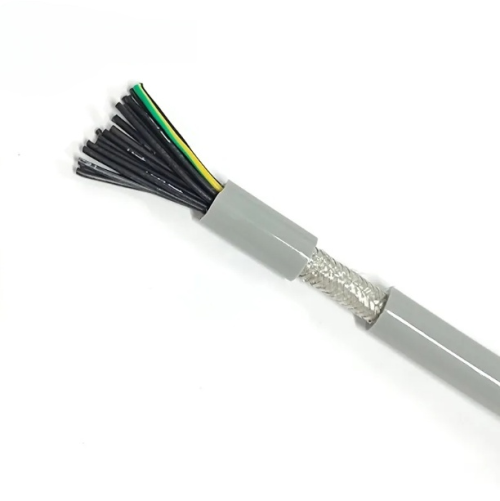
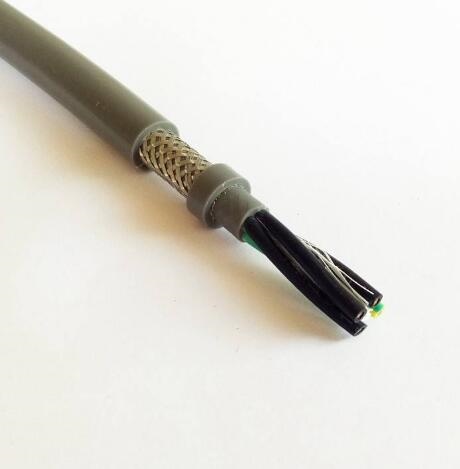
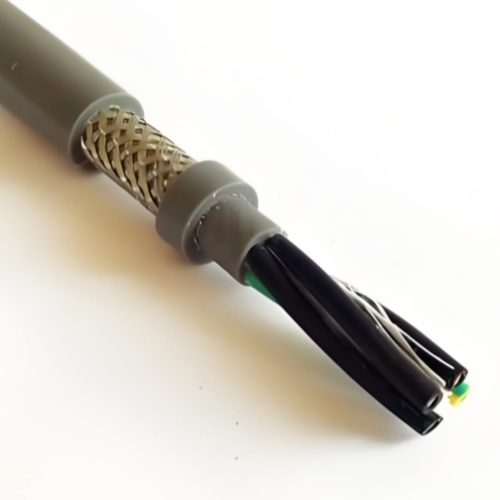
- Effective EMI shielding: Split-phase shielded constructions (e.g., nitrile flat cable) available for VFD and signal integrity applications.
- Flexible at low temperatures: Retains flexibility in cold climates, suitable for -40°C ambient conditions (consult for specific compounds).
- Global standards alignment: Conductors meet relevant IEC/GB DC resistance requirements, using Class 5 flexible copper stranding for dynamic service.
Applications
Primary use cases for the seawater-resistant detection cable include:
- Subsea remotely operated vehicles (ROVs) and autonomous underwater vehicles (AUVs)
- Offshore drilling and production platform movable equipment
- Shipboard cranes, davits and deck machinery power/control
- Harbor and terminal equipment (ship-to-shore cranes, container handling)
- Towing and tethered underwater instrument arrays
- Mining and industrial conveyors exposed to washdown and corrosive media
- Variable frequency drive (VFD) power supply with split-phase shielded flat cable design
The cable is rated for AC 0.6/1kV and can be supplied with multiple cores, overall screens and armoring to match project specifications.
Technical Specifications
| Parameter | Value / Description |
|---|---|
| Rated voltage | 0.6/1kV AC |
| Conductor | Class 5 flexible copper (IEC 60228 / GB/T 3956) |
| Insulation | Imported proprietary waterproof compound (special design) |
| Sheath/jacket | Imported seawater-resistant, oil-resistant, fish-bite resistant compound |
| Shielding options | Al/Pet tape, tinned copper braid, split-phase shielding for VFD |
| Armoring | Galvanized steel wire braid or double steel tape (optional) |
| Minimum insulation resistance | ≥50 MΩ·km at 20°C |
| Voltage test | 3.5kV AC for 5 minutes – no breakdown |
| Temperature range (fixed) | -40°C to +90°C (cable surface) |
| Bending radius | 10× cable outer diameter (static), 15× (dynamic) |
| Standards / Certifications | IEC 60092 series, ABS, DNV, CCS, BV; other certifications on request |
Note: Actual specifications may vary depending on customized constructions. Contact our engineering team for project-specific data sheets.
Why These Cables Reduce Total Project Cost
By combining multiple protective properties into a single cable design, our seawater detection cable eliminates the need for separate conduits, additional armor or frequent replacements. The superior jacket compound resists fish bite and marine fouling, dramatically cutting down maintenance intervals on subsea equipment. The flexibility and high tensile rating allow direct installation on cable chains and winches without derating, saving space and installation time.
Engineering reviews confirm that long-term reliability in harsh marine environments translates into lower lifecycle costs for EPCs and operators.
FAQ – Seawater-Resistant Detection Cable
1. What is the difference between seawater-resistant cables and standard marine cables?
Standard marine cables handle occasional salt spray and oil exposure, but our detection cable is formulated for permanent submersion and direct offshore duty. It resists hydrolysis, fish bite, and aggressive chemicals far beyond conventional marine shipboard cables, and is tested under continuous dynamic flexing.
2. Can I get this cable certified by classification societies (ABS, DNV, CCS)?
Yes. We routinely supply cables with type approval from major classification societies including ABS, DNV, BV, CCS and others. Please specify the required certification in your inquiry, and we will provide the corresponding design and documentation.
3. Does the cable support VFD drive signals without interference?
We provide split-phase shielded constructions (often in flat cable format) that minimize cross-talk and EMI when used between VFD drives and motors. The shielding design can be tailored to the specific drive system frequency and voltage profile.
4. What conductor sizes and core counts are available?
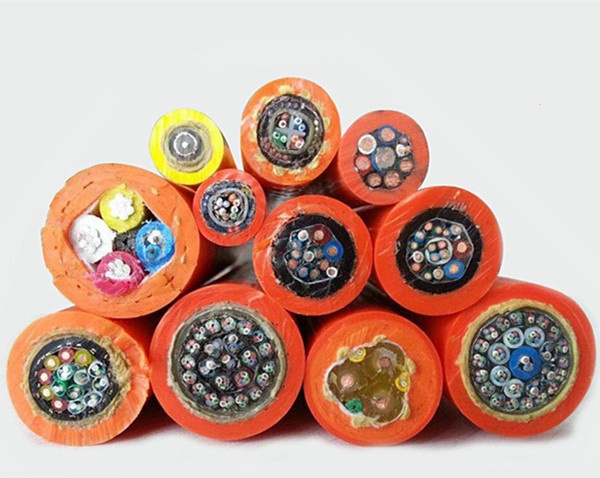
We manufacture from 1.5mm² up to 400mm² with core counts typically ranging from 2 cores to 60 cores. Custom combinations of power, control and signal elements in a single composite cable are also possible.
5. Is the cable truly “fish-bite proof” or only resistant?
The jacket material uses a compound that has proven highly deterrent to fish and marine boring organisms. While no organic material can guarantee 100% immunity, operational data from subsea installations shows a drastic reduction in damage compared to standard PUR or CSP jackets.
6. How do I request a sample or technical datasheet?
Simply click “Get a Quote” or email our cable specialists with your voltage, core configuration, certifications required, and installation conditions. We respond within 24 hours with a datasheet, pricing and lead time.
Get a quote for your project-specific seawater detection cable now – Fast response, full engineering support, global delivery.