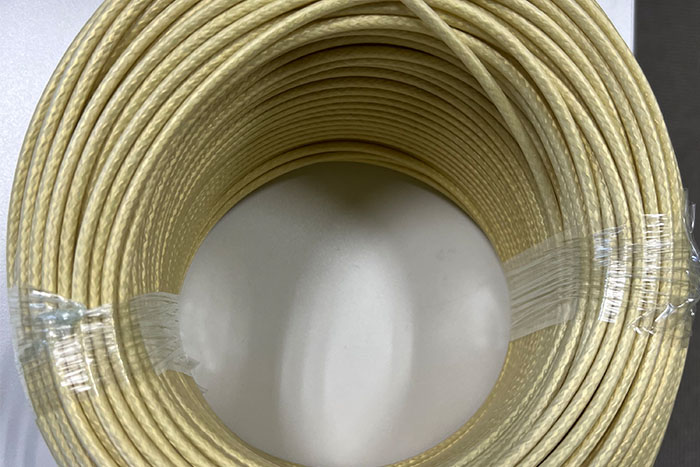
Tethered Drone Cable (Hybrid Power + Fiber Optic)
Product Overview
Our tethered drone cable is engineered to provide uninterrupted ground-fed power and high-bandwidth optical data transmission for unmanned aerial vehicles (UAVs). As the drone climbs, the tether pays out from a ground station, supplying the aircraft with electricity and a real-time fiber optic communication link – enabling true 24/7 operation without battery changes or reliance on RF radio links that can be jammed or suffer latency.
The cable is built for demanding operational environments. It combines flexible yet robust construction with features such as high tensile strength to support its own suspended weight, resistance to abrasion, dragging wear, water ingress, UV degradation, cold climates, oil, chemicals, and aging. Its lightweight design minimizes the payload burden on the drone, ensuring stable flight characteristics across day/night cycles and weather extremes.
Key Features & Benefits
- Continuous ground power – eliminates battery limitations for multi-hour missions.
- Integrated fiber optics – single-mode and multi-mode options deliver high-speed, real-time, interference-free video, sensor, and telemetry data back to the ground control station.
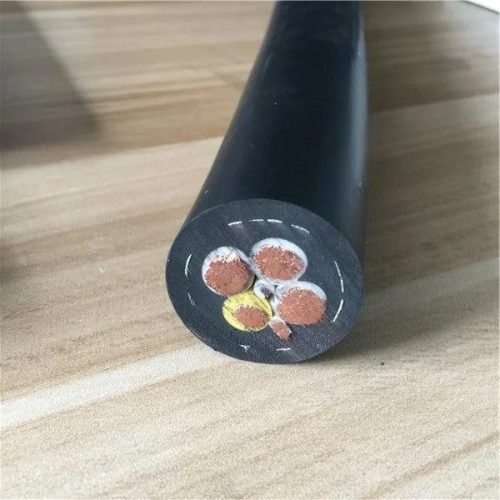
- Premium lightweight strength members – copper-clad aluminum (CCA) conductors co-stranded with Kevlar® provide an optimal balance of conductivity, weight reduction, and axial load capacity. Oxygen-free copper or tinned copper alternatives available.
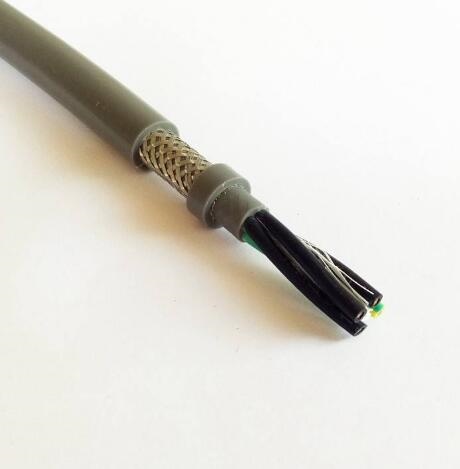
- Dual-layer mechanical protection – a braided shield combined with a dedicated Kevlar® braid layer enhances EMI shielding and mechanical resilience against repeated bending and pull forces.
- All-climate jacket – PE, PUR, or other selectable jacket materials withstand prolonged outdoor exposure, including intense sunlight, rain, snow, and chemical contact.
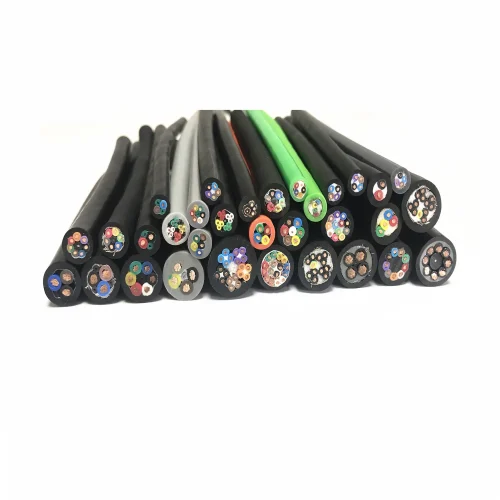
- Customizable constructions – conductor size, voltage rating, fiber count, jacket material, and color are all configurable to match specific UAV platform requirements.
Applications
- Persistent aerial surveillance & security – border patrol, critical infrastructure monitoring, crowd surveillance, police and counter-terrorism operations.
- 24-hour disaster response & search & rescue – tether-powered UAV with optical video feed provides continuous situational awareness.
- Airborne telecommunication relay – acts as a temporary aerial node to extend radio or cellular coverage in remote or emergency areas.
- Environmental & industrial monitoring – airborne sensor platforms for pollution mapping, meteorological data, pipeline patrol, and construction site oversight.
- Airborne radar & ISR – supports micro-SAR, EO/IR turrets, and electronic warfare payloads with high-power and high-bandwidth connectivity.
- Marine & offshore observation – maritime patrol, oil spill monitoring, and shipboard tethered drone operations.
Technical Specifications
| Component | Specification |
|---|---|
| Conductor | Copper-clad aluminum (CCA) + Kevlar® yarns co-stranded (optional: oxygen-free copper, tinned copper) |
| Optical Fiber | Single-mode (G.652D) or multi-mode (OM3/OM4); integrated in the core |
| Insulation | PE, PUR, or other thermoplastic materials per operating environment |
| Shielding | Tinned copper braid (>85% coverage) for effective suppression of EMI/RFI |
| Strength Layer | Full Kevlar® aramid braid for high tensile load capacity and cut resistance |
| Outer Jacket | PE, PUR, or other customizable materials; transparent as standard |
| Jacket Color | Transparent (default); custom colors available upon request |
| Standard Compliance | Designed and tested to meet applicable IEC/EN cable standards; specific certifications on request |
All dimensions, weight, and electrical/optical parameters can be customized to match your tether system specifications. Contact us with your drone voltage, payload, and reel requirements for an engineering proposal.
Frequently Asked Questions
1. What is a tethered drone cable and how does it work?
A tethered drone cable is a hybrid power-and-data umbilical connecting a ground power supply (often a generator or high-capacity battery) to a UAV. Inside the same lightweight sheath, electrical conductors deliver DC high voltage to the drone’s motors and systems, while one or more optical fibers transmit uncompressed, low-latency video and telemetry back to the operator. The tether allows the drone to hover for hours without landing for battery swaps.
2. What are the benefits of integrating optical fiber into the tether?
Optical fiber eliminates the bandwidth, latency, and vulnerability to electromagnetic interference common with radio-based downlinks. It provides a secure, high-capacity data pipeline for 4K video, LIDAR point clouds, or radar data. For defense and critical infrastructure applications, it also removes the risk of signal jamming or interception.
3. How long can the tether cable be?
Cable length is engineered to match your mission ceiling – commonly from 50 m up to 300 m, and custom designs can exceed 500 m. The limiting factors are conductor size (voltage drop), fiber attenuation, and the drone’s lifting capacity. We work with your team to specify the optimal gauge and strength members so the cable pays out reliably while keeping total suspended weight manageable.
4. Can I get a cable with both power conductors and multiple optical fibers?
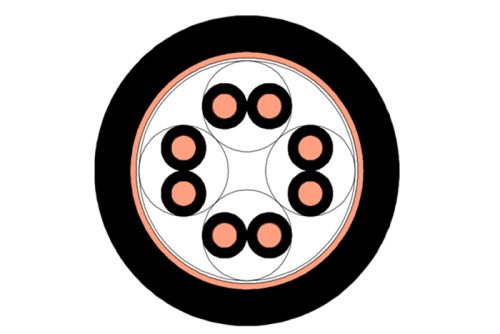
Absolutely. We routinely manufacture tethers with 2 to 6 power conductors plus multiple single-mode or multi-mode fibers. Hybrid constructions with twisted pairs for CAN bus or Ethernet alongside fibers are also available. Please specify your power, signal, and data architecture when requesting a quotation.
5. How do you guarantee the mechanical reliability of repeated winding and unreeling?
The cable is reinforced with high-modulus Kevlar® yarns distributed under the jacket and in a braided harness. Combined with flexible jacket compounds (PUR for dynamic applications), this design is tested for thousands of bend cycles under tension. We recommend a proper engineered cable management system (level‑wind drum) and can work with your ground station supplier to match the cable’s minimum bend radius.
6. What custom options do you offer?
Virtually all parameters are adjustable: conductor material (CCA, OFC, tinned copper), conductor cross-section (AWG or metric), number of fibers, jacket material (PE for static, PUR for dynamic), color, UV-stabilization level, and additional shielding. We also provide integrated strength loops and molded connectors if required.
7. What is your typical MOQ and lead time for custom tethered drone cables?
Prototype quantities start from as low as 100 meters for evaluation. For production orders, MOQ varies by design complexity. Standard lead times are 2–4 weeks after drawing approval; express turnaround may be available. Please contact our engineering sales team with your target specifications.
To discuss your tethered drone cable requirements, receive a tailored solution, or request a sample, click the button below or email our dedicated engineering team.