Detailed Description
What UL1617 Double Insulated Hookup Wire Is Built For
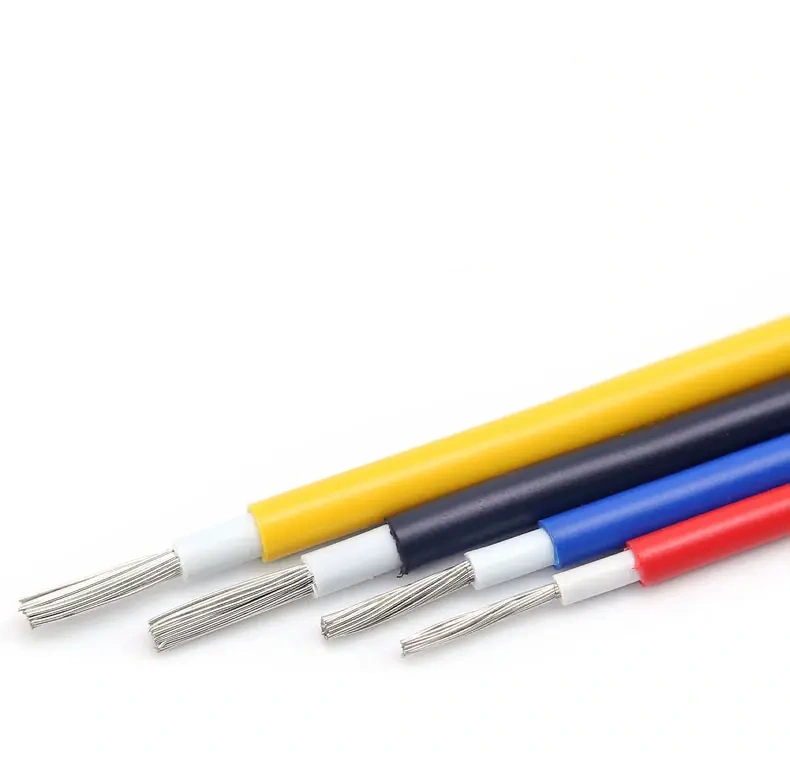
UL1617 double insulated hookup wire is a 600 V, 105 °C AWM lead built on a stranded tinned copper conductor, an inner PVC insulation layer and an outer PVC jacket. It is produced in 26 AWG to 8 AWG and is intended for the fixed internal wiring of equipment — the run from a driver to a board, a transformer lead brought out to a terminal block, the harness inside a control enclosure — rather than for continuous flexing in a cable chain.
The second layer is the reason engineers specify this construction instead of a single-wall hookup wire. The outer PVC jacket takes the mechanical wear of routing, pulling and bundling, while the inner wall stays intact against the conductor. That separation of duties matters in equipment that is assembled by hand: a lead that is pushed through a grommet, cable-tied to a frame and then bent into place can be scuffed on the outside without the conductor's insulation being compromised. The same second layer gives the lead a rounder, more uniform profile, which keeps it sitting predictably in a wire duct.
Construction, Layer by Layer
- Conductor. Lead-free tinned copper, stranded. The tin coating limits oxidation on the strands, and the stranding keeps the copper together during cutting and stripping, so an automatic crimp or a screw terminal closes on the full cross-section rather than on a splayed end.
- Inner insulation. PVC, extruded directly over the conductor. This is the electrical wall — the layer that holds off dielectric breakdown — and it is produced with a low eccentricity so the conductor sits centrally and no thin spot develops on one side.
- Outer jacket. PVC, extruded over the inner layer to form the double insulation. The jacket is drawn to a uniform thickness and a round profile, with a smooth, low-odour surface that does not shed on handling.
- Printing. The outer jacket carries a legible print with the style and size marking, so a harness builder can identify the lead after it has been cut off the roll.
Electrical and Environmental Ratings
| Parameter | Value |
|---|---|
| Voltage rating | 600 V |
| Temperature rating | 105 °C |
| Flame rating | VW-1 |
| Configuration | Double insulated, two PVC layers |
| Conductor | Stranded lead-free tinned copper |
| Insulation and jacket | PVC inner layer, PVC outer jacket |
| AWG range | 26 AWG to 8 AWG |
| Nominal cross-section | 0.14 mm² to 8.40 mm² |
| Overall diameter | 2.85 mm to 7.60 mm (Table 1) |
| Dimensional tolerance | OD ±0.2 mm; ID and conductor structure ±0.01 mm |
| Environmental compliance | RoHS 2.0 and NP grade |
| Standard colors | 10 colors, including Yellow-Green |
| Supply | 305 m/roll (26–10 AWG), 100 m/roll (8 AWG), plus 8 m and 32 m cut lengths |
The VW-1 rating describes behaviour under a flame test: the PVC compound self-extinguishes after the ignition source is removed, and combustion produces a light white smoke rather than a heavy toxic smoke. The 105 °C rating applies to the compound as well as to the finished lead, so a run that passes near a warm transformer or a driver heatsink stays inside its rated envelope.
Size Table: 26 AWG to 8 AWG
Table 1 lists the full range in one place: overall diameter, inner diameter, conductor structure, nominal area and the supplier-provided safety current for each size, together with the roll length.
| AWG | Overall diameter (mm) | Inner diameter (mm) | Conductor structure | Nominal area (mm²) | Safety current (A) | Roll length |
|---|---|---|---|---|---|---|
| 26 AWG | 2.85 | 2.05 | 7/0.16TS | 0.14 | 1.68 | 305 m |
| 24 AWG | 3.00 | 2.20 | 11/0.16TS | 0.22 | 2.64 | 305 m |
| 22 AWG | 3.15 | 2.35 | 17/0.16TS | 0.34 | 4.08 | 305 m |
| 20 AWG | 3.35 | 2.55 | 21/0.178TS | 0.52 | 6.24 | 305 m |
| 18 AWG | 3.60 | 2.80 | 34/0.178TS | 0.85 | 8.50 | 305 m |
| 16 AWG | 3.90 | 3.10 | 26/0.254TS | 1.32 | 13.20 | 305 m |
| 14 AWG | 4.50 | 3.50 | 41/0.254TS | 2.00 | 16.00 | 305 m |
| 12 AWG | 4.90 | 3.90 | 65/0.254TS | 3.30 | 26.4 | 305 m |
| 10 AWG | 6.10 | 5.10 | 105/0.254TS | 5.30 | 42.4 | 305 m |
| 8 AWG | 7.60 | 6.60 | 165/0.254TS | 8.40 | 67.2 | 100 m |
The nominal area column is a name reference only; the actual cross-section follows the conductor structure given in the same row. Overall diameter carries a ±0.2 mm tolerance, and inner diameter and conductor structure carry ±0.01 mm. Safety current figures are supplier-provided values for this construction, not UL or IEC standard ampacity ratings.
Where 600 V Double Insulated Wire Is Used
The sizes and the 600 V rating place this lead in equipment interiors rather than in building or outdoor runs.
- LED lighting. Internal links between an LED driver and the light engine, and between modules inside a luminaire, where the driver's internal rail is above the low-voltage range and the lead has to sit close to a warm housing.
- Transformer lead wire. Primary and secondary leads brought out of a transformer and landed on a terminal block or a PCB, where the double wall protects the lead at the point it leaves the winding.
- Automotive wiring. Fixed harness runs and accessory leads inside the cabin and under the dash, where the printed jacket and the color range make routing and identification straightforward.
- Appliance internal wiring. Board-to-inlet and board-to-load connections in white goods and small appliances, including runs that pass close to a motor or a heating element.
- Machinery and industrial equipment. Panel and enclosure wiring where a double-wall lead is preferred over a single-insulated hookup wire, and where the 105 °C rating covers the ambient inside a closed cabinet.
- Electronic appliances and PCB connections. Board-to-board and board-to-chassis jumpers in instruments, power supplies, control boxes, security equipment and audio fixtures.
Selecting, Stripping and Terminating
Choose the size from Table 1 against the current the circuit will actually carry and the terminal the lead has to enter — not against the nominal area alone. The 18 AWG size, for example, has a 3.60 mm overall diameter, which sets the smallest grommet or strain relief it will pass through.
For stripping and soldering, the stranded tinned conductor is the practical advantage. Because the strands are twisted and tinned, a strip leaves a compact end rather than a brush, so a ferrule or a crimp barrel closes on the full conductor. Tinning also means the copper does not oxidise while the harness sits in stores. The two-layer wall requires a strip depth that clears both the jacket and the inner insulation; set the stripper for the inner diameter in Table 1 rather than for the outside of the lead.
The lead is designed for fixed internal runs. It should be routed with a bend that the jacket can accept without being pinched against a sharp edge, and it should be supported so that vibration is not concentrated at the terminal.
Colors, Roll Lengths and Cut Lengths
Ten colors are stocked: Black, Blue, Yellow, Orange, Red, Grey, White, Brown, Yellow-Green and Green. The Yellow-Green option is the usual choice for an earth or ground conductor inside a harness, and the remaining nine allow a builder to keep a color convention across a whole assembly rather than tagging leads after the fact.
Packaging follows the size. Sizes from 26 AWG to 10 AWG ship on 305 m rolls. The 8 AWG size, at 7.60 mm overall diameter, ships on 100 m rolls. Cut lengths of 8 m (25 ft) and 32 m are also available for prototype builds, first-article approvals and repair work.
Why This Lead Fits an Equipment Build
From a procurement standpoint, the value of a UL1617 lead is that the specification is complete enough to design against. Voltage, temperature, flame rating, conductor structure, overall diameter and tolerance are all published per size, so a designer can check the lead against a terminal, a grommet and a working voltage without waiting for a sample. The double PVC wall means the same part number can be used in a cabinet where a single-insulated hookup wire would need extra sleeving at a chafe point. And with RoHS 2.0 and NP grade compounds, the lead can go into a bill of materials that has to satisfy restricted-substance requirements in the destination market.
If you have the working voltage, the current and the terminal you intend to use, send them through the enquiry form on this page with the AWG size and colors you need, and we will confirm the roll or cut length that matches your build.