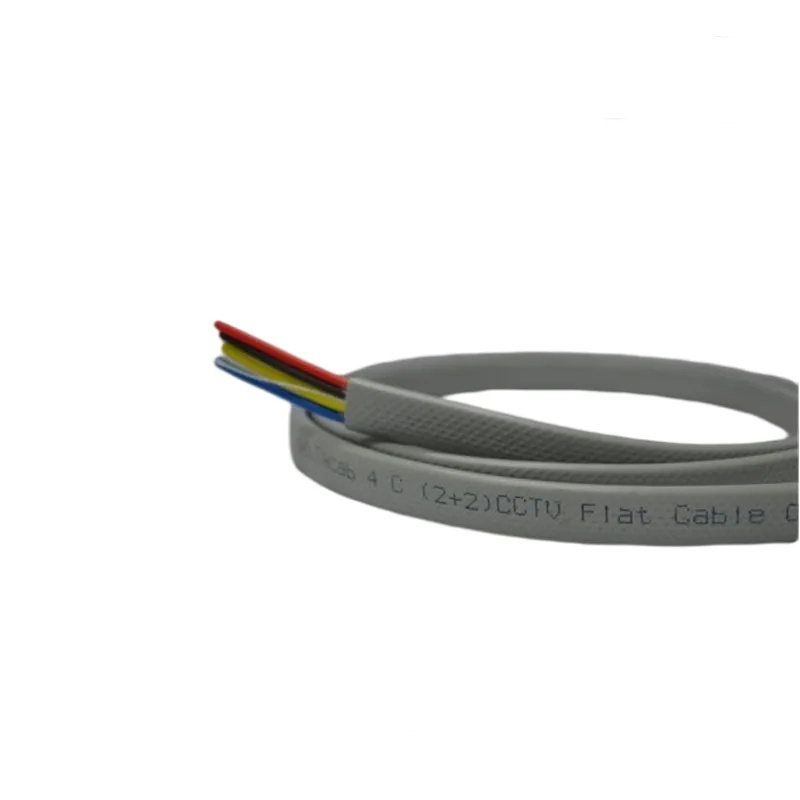
YFFB Elevator Flat Cable — High-Temperature Fluoroplastic (FEP/F46) Insulated Flat Elevator Traveling Cable with Steel Wire Suspension for Fire-Safety-Critical and High-Temperature Shaft Environments
Elevator & Lift Cables /Elevator & Lift Series

YFFB Elevator Flat Cable — High-Temperature Fluoroplastic (FEP/F46) Insulated Flat Elevator Traveling Cable with Steel Wire Suspension for Fire-Safety-Critical and High-Temperature Shaft Environments

YFFB elevator flat cable: premium fluoroplastic (FEP/F46) insulated flat elevator traveling cable for fire-safety-critical and high-temperature elevator shaft environments. IEC 60228 Class 5 copper (0.5–2.5 mm², 12–48 cores) with FEP/F46 insulation rated for continuous operation at 150°C (200°C short-term). Flat construction with galvanized steel wire suspension elements. PVC or LSZH outer sheath. 300/500 V. For glass-walled panoramic elevators, industrial furnace building elevators, chemical plant elevators, and high-rise buildings with enhanced fire safety requirements — low smoke, zero halogen (FEP insulation). CE, RoHS compliant.

Key Features

YFFB designation: Y=mobile/traveling, F=fluoroplastic (FEP/F46) insulation, F=flat construction, B=flat cable — the premium high-temperature elevator traveling cable
FEP/F46 fluoroplastic insulation — continuous rating 150°C (200°C short-term) vs PVC 70°C; inherently flame-retardant; excellent chemical resistance
Inherently low smoke and zero halogen (FEP insulation) — critical for high-rise building fire safety where elevator shaft smoke propagation must be minimized
Flat parallel conductor layout with steel wire suspension — same space-saving flat profile and vertical support as standard elevator traveling cables
IEC 60228 Class 5 finely stranded bare copper — rated for millions of bending cycles; compatible with FEP insulation's thinner wall thickness (higher dielectric strength)
PVC or LSZH outer sheath options — LSZH for maximum fire safety (IEC 61034 smoke / IEC 60754 halogen); PVC for cost-sensitive applications where FEP insulation alone provides the high-temperature rating
Numbered core identification per VDE 0293
CE, RoHS compliant; ISO 9001 manufactured

Applications

Glass-walled panoramic elevator — high-temperature-rated flat traveling cable for elevators in glass shafts exposed to direct solar heating (shaft temperatures can exceed 80°C in summer)Industrial furnace and foundry building elevator — FEP-insulated cable for elevators in buildings where ambient shaft temperature exceeds PVC's 70°C limitChemical plant elevator — fluoroplastic's excellent chemical resistance for elevators in environments with corrosive atmospheresHigh-rise fire-safety-critical elevator — low-smoke, zero-halogen cable for buildings where elevator shaft smoke propagation is a life safety concernHospital and healthcare elevator — enhanced fire safety traveling cable for healthcare facilities with vulnerable occupantsTunnel and underground elevator — FEP insulation for elevators in road/rail tunnels where fire safety standards are stringent

Technical Specifications

Conductor Material Bare copper, IEC 60228 Class 5 finely stranded
Conductor Cross-Section 0.5 mm², 0.75 mm², 1.0 mm², 1.5 mm², 2.5 mm²
Number of Cores 12, 16, 20, 24, 30, 36, 40, 48
Core Identification Number-printed per VDE 0293
Core Insulation FEP (fluorinated ethylene propylene / F46); 150°C continuous, 200°C short-term
Insulation Wall Thickness 0.3–0.5 mm (thinner than PVC due to higher dielectric strength of FEP)
Core Layout Parallel, side-by-side single-plane array
Steel Wire Suspension 2–4 galvanized steel wires (1 770 N/mm²); distributed across cable width
Outer Jacket — PVC PVC ST2; 1.5–2.5 mm; black
Outer Jacket — LSZH Low smoke zero halogen; 1.5–2.5 mm; black; IEC 61034 / IEC 60754
Rated Voltage (U₀/U) 300/500 V
Test Voltage 2 000 V AC, 5 minutes
Temperature (FEP Insulation) -60°C to +150°C (continuous); +200°C (short-term, <200 h/year)
Temperature (PVC Jacket) -15°C to +70°C — the jacket limits overall temperature; LSZH extends to +90°C
Maximum Suspension Height Up to 80 meters
Bending Life >3 000 000 cycles at 400 mm bend radius
Flame Retardant (FEP) Inherent; LOI (limiting oxygen index) >95% — will not sustain combustion in air
Flame Retardant (LSZH Jacket) IEC 60332-1-2; IEC 60332-3-24 (bunched cable vertical flame spread)
Smoke Density (LSZH) IEC 61034; >60% light transmission
Halogen Content (FEP + LSZH) IEC 60754-1; zero halogen (<0.5% HCl)
Certifications CE, RoHS

Detailed Description

Why FEP/F46? — The Material Science

FEP (fluorinated ethylene propylene), also designated F46 in Chinese standards, is a fluoropolymer in the same family as PTFE (Teflon). It combines several properties that make it uniquely suitable for elevated-temperature and fire-safety-critical elevator cable insulation:

Thermal Stability

PVC insulation begins to soften at approximately 70°C and decomposes above 100°C, releasing HCl (hydrogen chloride) gas. FEP remains mechanically stable to 200°C and does not decompose until above 400°C. For an elevator shaft where ambient temperature can reach 80–90°C (glass-walled shaft in summer sun, industrial furnace building, steel mill), PVC insulation is operating above its rated temperature — softening, losing mechanical strength, and degrading over time. FEP operates comfortably within its rating.

Fire Performance

The limiting oxygen index (LOI) of a material is the minimum oxygen concentration required to sustain combustion. Air is 21% oxygen. PVC has an LOI of approximately 25–30% — it will burn in air once ignited. FEP has an LOI greater than 95% — it will not sustain combustion even in pure oxygen. In an elevator shaft fire, PVC-insulated cables contribute fuel and toxic smoke (HCl). FEP-insulated cables contribute neither.

Low Smoke, Zero Halogen

PVC releases dense black smoke and HCl gas when burned — HCl combines with moisture in the lungs and eyes to form hydrochloric acid. FEP and LSZH jacket compounds release minimal smoke and zero halogen gases. For high-rise buildings where elevator shaft smoke propagation is a recognized fire safety hazard (the shaft acts as a chimney), specifying FEP-insulated, LSZH-jacketed cable directly reduces the fire risk.

When Is YFFB Required vs YVFB?

ConditionYVFB (PVC)YFFB (FEP/F46)
Shaft temperature <50°CAcceptableAcceptable (over-specified)
Shaft temperature 50–70°CMarginal — at upper limitAcceptable
Shaft temperature 70–150°CFails — PVC degradesAcceptable — FEP rating
Standard indoor shaft, no fire safety special requirementsRecommended (cost-effective)Acceptable
High-rise building (>30 floors) with fire safety requirementsMay require LSZH jacketRecommended
Glass-walled panoramic shaft (solar heating)Not recommendedRecommended
Hospital, tunnel, undergroundNot recommended (smoke/toxicity)Recommended (LSZH jacket)
Chemical plant, corrosive atmosphereNot recommendedRecommended
Cost guidance: YFFB is approximately 2–3× the cost of YVFB for the same core count and cross-section. The premium is driven by FEP resin cost (approximately 15–20× PVC compound cost per kg). Specify YFFB only where the application genuinely requires high-temperature rating, enhanced fire safety, or chemical resistance.

Yichi YFFB Manufacturing

  • FEP extrusion expertise: FEP has a narrow processing window — it must be extruded at 350–390°C with precise temperature control (±5°C) to avoid thermal decomposition (at >400°C, releasing toxic fumes) or incomplete melting (at <340°C, causing surface roughness and pinholes). Our FEP extrusion lines use multi-zone PID temperature controllers with online melt temperature monitoring
  • FEP insulation wall thickness minimized: FEP's dielectric strength (approximately 20–25 kV/mm) is significantly higher than PVC (approximately 15–20 kV/mm). This allows thinner insulation walls (0.3–0.5 mm vs 0.5–0.8 mm for PVC at 300/500 V) — reducing overall cable thickness and weight
  • FEP core color stable: Unlike PVC colorants that can fade at elevated temperatures, FEP insulation color remains stable throughout the rated temperature range — core identification remains legible for the cable service life
  • LSZH jacket compound verified: Halogen content tested per IEC 60754-1 on every LSZH production batch — zero halogen (<0.5% HCl) is the acceptance criterion. A non-zero result indicates PVC contamination in the LSZH compound

Product Inquiry

Product: YFFB Elevator Flat Cable — High-Temperature Fluoroplastic (FEP/F46) Insulated Flat Elevator Traveling Cable with Steel Wire Suspension for Fire-Safety-Critical and High-Temperature Shaft Environments

Add technical specifications (optional)

The more detail you provide, the faster and more accurate our quotation.

No file chosen

PDF, Office, image or CAD file — up to 5 MB

Need Help?

Certifications

ISO 9001
Quality
CE
European
RoHS
Environmental
TÜV
Certification

Need a Quote for This Product?

Send us your requirements and receive a detailed quotation within 24 hours.