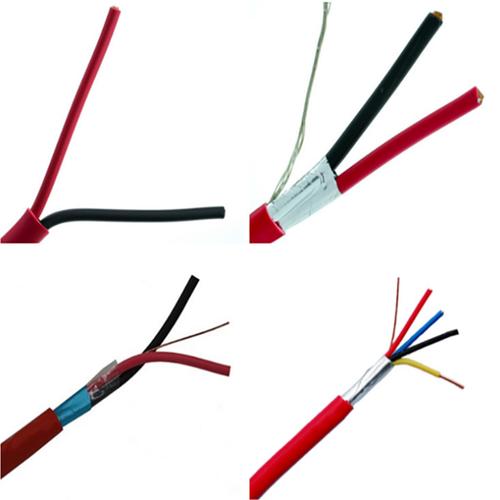
Fire Alarm Cable (Standard & Enhanced) — BS 7629-1 / EN 50200 / IEC 60331 Fire Resistant and Flame Retardant LSZH Sheathed Multi-Core Cable with Mica/Glass Tape Fire Barrier for Fire Detection, Alarm, Emergency Lighting, and Voice Evacuation Systems with 30-Minute (Standard) and 60–120-Minute (Enhanced) Fire Survival Ratings
Fire Resistant, High Temperature & LSZH Cables /Fire Alarm Cable

Fire Alarm Cable (Standard & Enhanced) — BS 7629-1 / EN 50200 / IEC 60331 Fire Resistant and Flame Retardant LSZH Sheathed Multi-Core Cable with Mica/Glass Tape Fire Barrier for Fire Detection, Alarm, Emergency Lighting, and Voice Evacuation Systems with 30-Minute (Standard) and 60–120-Minute (Enhanced) Fire Survival Ratings

Fire alarm cable standard & enhanced: BS 7629-1 / EN 50200 / IEC 60331 fire resistant, LSZH sheathed. Mica/glass tape fire barrier. Standard 30-min PH30, Enhanced 60-min PH60 to 120-min PH120. 2–12 cores, 1.0–2.5 mm². For fire detection, alarm sounders, emergency lighting, voice evacuation. CPR B2ca/Dca. CE, RoHS, LPCB.

Key Features

Fire resistant to IEC 60331 / BS 6387 / EN 50200 — the cable maintains circuit integrity during a fire for the rated survival time (30, 60, or 120 minutes) at temperatures of 830–950°C with mechanical shock and water spray per the enhanced test protocols; this is the defining characteristic that distinguishes a fire alarm cable from a standard flame-retardant cable
Mica/glass tape fire barrier over each conductor — the fire barrier is a composite tape of phlogopite mica paper bonded to a glass fibre carrier, helically wrapped around each insulated conductor; mica is an inorganic mineral that does not burn, melt, or degrade at fire temperatures (up to 1 200°C for phlogopite mica), maintaining electrical insulation between conductors after the organic insulation (XLPE/PE) has been consumed by the fire
Standard (30-minute, PH30) and Enhanced (60-minute, PH60 to 120-minute, PH120) fire survival ratings per BS 8592 / EN 13501-2 — Standard for typical commercial building fire alarm circuits where the evacuation time is expected to be <30 minutes; Enhanced for high-rise buildings, hospitals, tunnels, and underground stations where phased evacuation requires the cable to function for 60–120 minutes during the fire
LSZH (low smoke zero halogen) outer sheath — IEC 60754-1 (halogen-free, HCl <0.5%), IEC 61034-2 (low smoke, minimum 60% light transmittance), IEC 60754-2 (low toxicity, pH >4.3, conductivity <10 μS/mm); the LSZH sheath is mandatory for cables installed in building escape routes and public spaces where smoke and toxic gas from burning PVC cable would impede evacuation and cause casualties
Flame retardant to IEC 60332-1-2 (single cable) and IEC 60332-3-24 Cat C (bunched cables) — the cable does not propagate fire along its length or to adjacent cables in a cable bunch; the LSZH compound is formulated with mineral flame retardants (ATH — aluminum trihydrate, MDH — magnesium dihydrate) that release water vapor when heated, cooling the cable surface and diluting combustible gases
Screened (overall aluminum/polyester foil + tinned copper drain wire) or unscreened construction — screened for fire alarm circuits sharing cable trays with power cables (EMI protection) and for addressable loop circuits where data integrity on the communication loop is essential; unscreened for conventional zone circuits where the signal is a simple voltage level change
Solid or stranded bare copper conductor, 1.0–2.5 mm², 2–12 cores — 1.0 mm² for addressable loop wiring (low current, communication); 1.5 mm² for sounder and conventional detector circuits; 2.5 mm² for long circuits with voltage drop constraints; solid conductor for fixed wiring pulled once; stranded for routing flexibility in control panels
CPR Euroclass B2ca-s1a,d1,a1 or Dca-s2,d2,a2 per EN 50575 — fire alarm cables permanently installed in buildings must carry a CPR (Construction Products Regulation) Euroclass; B2ca is the highest fire performance class achievable for LSZH cables and is required for cables in escape routes in many EU member states

Applications

Addressable fire detection loops — 2-core 1.0 mm² screened cable for the addressable communication loop connecting the fire alarm control panel to addressable detectors, call points, and interface modules; the screened construction ensures data integrity on the digital communication protocol (typically a manufacturer-proprietary protocol operating at 5–24 V DC)Conventional fire detection zones — 2-core 1.5 mm² cable for conventional detector zones where detectors are wired in parallel on a monitored circuit; the end-of-line (EOL) resistor at the last detector allows the panel to monitor for open-circuit and short-circuit faults on the zone wiringAlarm sounder and visual indicator (VAD) circuits — 2-core 1.5 mm² or 2.5 mm² cable for fire alarm sounder and strobe circuits; the cable must carry the sounder operating current (typically 10–30 mA per sounder, 30–60 devices per circuit) with the voltage at the last sounder within the sounder's rated operating voltage rangeVoice evacuation and public address systems — multi-core screened cable for the loudspeaker circuits of voice alarm (VA) systems; the cable carries the 100 V line audio signal and must maintain circuit integrity during the fire for the evacuation message to continue broadcasting during phased evacuationEmergency lighting circuits — 2–4-core cable for maintained and non-maintained emergency lighting luminaires; the cable must maintain circuit integrity for the rated fire survival time to keep escape route lighting operational during evacuationFire telephone and disabled refuge communication — screened twisted-pair cable for fire telephone handset circuits and disabled refuge communication outstations; the screened construction is essential for audio signal quality and immunity to electrical noise in the building services environmentHigh-rise residential and commercial buildings (>18 m) — Enhanced 60-minute or 120-minute fire-resistant cable for the fire alarm, voice evacuation, and emergency lighting circuits per the building's fire safety strategy and the phased evacuation plan

Technical Specifications

Standard — Fire Resistance IEC 60331-1 (fire resistance at 830°C, with mechanical shock IEC 60331-2); BS 6387 Cat CWZ (950°C with water spray and mechanical shock — the most demanding UK fire resistance standard); EN 50200 (fire resistance at 830°C with mechanical shock, 30–120 min); BS 8434-2 (enhanced fire resistance for 120 min at 950°C)
Standard — Cable Construction BS 7629-1 (300/500 V fire-resistant screened multi-core cables with LSZH sheath and limited fire hazard characteristics — the standard UK and international fire alarm cable specification)
Standard — Fire Performance Classification (CPR) EN 50575 (CPR Euroclass); EN 13501-6 (fire classification of cables); B2ca-s1a,d1,a1 (highest performance — for escape routes); Dca-s2,d2,a2 (standard performance — for building general areas)
Rated Voltage (U₀/U) 300/500 V — the standard voltage class for fire alarm and emergency system cables per BS 7629-1
Conductor Material Bare copper; IEC 60228 Class 1 solid (1.0–2.5 mm²) for fixed installation building wiring; Class 2 stranded on request for control panel internal wiring where flexibility is required
Conductor Cross-Sections 1.0, 1.5, 2.5 mm²
Core Count 2-core (addressable loops, conventional zones); 3-core (with spare/common for detector base sounders); 4-core (two independent circuits in one cable); 7-core, 12-core (multi-circuit cable for voice alarm loudspeaker circuits and multi-function fire system wiring)
Core Insulation — XLPE or PE Cross-linked polyethylene (XLPE) or polyethylene (PE); rated 90°C (XLPE) / 75°C (PE); the insulation is selected for its dielectric properties and for compatibility with the mica tape fire barrier — the insulation burns away during the fire exposure, leaving the mica tape as the sole electrical insulation
Fire Barrier — Mica/Glass Tape Phlogopite mica paper (thickness 0.08–0.12 mm) bonded to a glass fibre carrier (total tape thickness 0.1–0.15 mm); helically wrapped over each insulated conductor with ≥25% overlap; the mica tape is the fire-resistant element — at fire temperatures (830–950°C), the organic insulation (XLPE/PE) pyrolyzes and burns away, but the mica remains as a continuous electrical insulation between conductors and between cores
Mica Tape Overlap ≥25% overlap ensures that, even if the mica tape shifts slightly during the fire due to thermal expansion, the conductor remains fully covered; insufficient overlap allows a gap to open between turns of the tape, creating a short-circuit path between adjacent conductors
Core Assembly The fire-barriered and insulated cores are twisted (for 2-core) or concentrically stranded (for multi-core) with non-hygroscopic filler elements; the core assembly is wrapped with a polyester tape binder to create a cylindrical surface for the screen or outer sheath
Overall Screen (Screened Type) Aluminum/polyester foil (100% coverage, aluminum side in contact with the drain wire) + tinned copper drain wire (0.5–0.75 mm², 7-strand); the foil provides 100% coverage for high-frequency EMI shielding; the drain wire provides a low-impedance connection point for the screen at the cable termination in the fire alarm panel and at each device
Outer Sheath — LSZH Low smoke zero halogen thermoset compound; white, red, or orange (standard fire alarm cable colors for visibility in ceiling voids and riser shafts — white is standard for general building fire alarm; red is specified for fire alarm circuits in some national codes; orange for voice alarm and emergency systems); the LSZH compound is mineral-filled (ATH/MDH) for flame retardance and low smoke emission
Sheath Color — Standard White (general building fire alarm, most common); Red (fire alarm circuits per some national codes e.g., BS 7671 for UK fire alarm circuits in voids); Orange (voice alarm, emergency communication, and disabled refuge systems); Violet (specialist fire systems)
Maximum DC Conductor Resistance at 20°C — Solid Copper Per IEC 60228 Class 1; 18.1 Ω/km (1.0 mm²); 12.1 Ω/km (1.5 mm²); 7.41 Ω/km (2.5 mm²)
Insulation Resistance at 20°C — Before Fire ≥100 MΩ·km (core-to-core at 500 V DC, 1 min)
Insulation Resistance — During Fire (830°C, BS 6387 Cat C) The cable must maintain sufficient insulation resistance during the fire test that the circuit's protective device (MCB/fuse) does not operate — the circuit must remain functional, not just survive electrically. The test acceptance criterion is that the 2 A fuse in the test circuit does not blow during the entire fire exposure period — this means the conductor-to-conductor leakage current through the fire-degraded insulation remains below 2 A at the test voltage (typically the cable's rated voltage)
Test Voltage (AC — Routine) 2 000 V AC / 5 min (core-to-core and core-to-screen, finished cable)
Fire Survival Time — Standard (PH30) 30 minutes at 830°C with mechanical shock per EN 50200; the cable maintains circuit integrity for 30 minutes — sufficient for most single-stage evacuation buildings where the fire service expects complete evacuation within 15–20 minutes of the alarm
Fire Survival Time — Enhanced (PH60) 60 minutes at 830°C with mechanical shock per EN 50200 and water spray per BS 8434-2; for buildings with phased evacuation (high-rise residential, hospitals, care homes) where occupants may remain in place for 60+ minutes while the fire is managed
Fire Survival Time — Enhanced (PH120) 120 minutes at 950°C with mechanical shock and water spray per BS 8434-2; for critical infrastructure (tunnels, underground stations, control rooms) where equipment must remain operational for the duration of the fire incident
Temperature — Continuous (Normal Operation) 70°C (conductor temperature, at rated voltage, with LSZH sheath); the LSZH sheath has a slightly lower continuous temperature rating than PVC (70°C vs 70°C) because the ATH/MDH mineral flame retardants begin to decompose above 180–200°C, releasing water vapor — at normal operating temperatures this decomposition does not occur
Temperature — Short-Circuit (Normal) 160°C (max 5 s) — the short-circuit rating is the limiting factor for the XLPE or PE core insulation, not the LSZH sheath
Minimum Bend Radius — During Installation 8× cable OD (solid conductor); 6× cable OD (stranded conductor); the bend radius is larger than standard building cable because the mica tape fire barrier is a rigid layer — tight bends can crack the mica tape, creating a gap in the fire barrier
Flame Retardant — Single Cable IEC 60332-1-2; the cable self-extinguishes within 425 mm of the flame source
Flame Retardant — Bunched Cables (IEC 60332-3-24 Cat C) The cable passes the bunched cable vertical flame propagation test, demonstrating that a fire in one cable in a cable tray will not propagate along the cable bunch — essential for riser shafts and ceiling voids with multiple fire system circuits
Halogen-Free (LSZH) IEC 60754-1: HCl emission <0.5% (halogen-free classification); the LSZH compound contains no PVC, no chlorinated polyethylene, no brominated flame retardants — zero intentional halogen content
Low Smoke (LSZH) IEC 61034-2: minimum 60% light transmittance during smoke emission test; the low smoke density maintains visibility for occupants evacuating and firefighters entering the building
Low Toxicity (LSZH) IEC 60754-2: pH of combustion gases >4.3; conductivity <10 μS/mm; the combustion products of the LSZH compound are significantly less acidic and less toxic than those of PVC, reducing the post-fire corrosion damage to electrical and electronic equipment in the building
CPR Euroclass (Standard) Dca-s2,d2,a2 per EN 50575 / EN 13501-6 — appropriate for building general areas
CPR Euroclass (Enhanced) B2ca-s1a,d1,a1 — required for cables installed in escape routes and high-risk fire areas in many EU member states; the highest fire performance classification achievable for LSZH cables
Certifications CE; RoHS; LPCB (Loss Prevention Certification Board, UK) on request; BASEC (UK) on request; VDE on request; EN 50575 CPR Declaration of Performance (DoP) provided with every cable batch per EU regulation

Detailed Description

What Is Fire Alarm Cable?

Fire alarm cable is a multi-core cable designed to maintain electrical circuit integrity during a building fire — continuing to carry power and signals for the fire detection, alarm, emergency lighting, and voice evacuation systems when the building is burning. It is the single most safety-critical cable in any building, because if it fails during a fire, the fire alarm system may not detect the fire, the alarm sounders may not activate, the voice evacuation messages may not play, and the emergency lighting may extinguish — all when they are needed most.

The distinction between a fire-resistant cable and a flame-retardant cable is fundamental:

  • Flame-retardant (FR) cable: Does not burn easily when exposed to flame, and self-extinguishes when the flame source is removed. A standard building power cable with flame-retardant PVC sheath is FR — it will not propagate a fire along its length. But it will fail electrically during a fire: the PVC insulation melts, the conductors short together, and the circuit breaker trips
  • Fire-resistant (also FR, but meaning "fire-resistant" in the context of fire alarm cables) cable: Maintains circuit integrity during a fire for a rated period (30, 60, or 120 minutes). The fire-resistant cable has an additional fire barrier — a mica/glass tape wrapped around each conductor — that remains intact and electrically insulating after the organic insulation (XLPE/PE) has been consumed by the fire
A building's fire safety strategy depends on the fire alarm cable continuing to function. If the cable fails, the entire fire detection and alarm system fails. The fire survival time of the cable must match the building's evacuation strategy: 30 minutes for single-stage evacuation, 60 minutes for phased evacuation in high-rise buildings, 120 minutes for critical infrastructure.

Standard vs Enhanced Fire Resistance — PH30, PH60, PH120

ClassificationFire Survival TimeTest TemperatureMechanical ShockWater SprayApplication
PH30 (Standard)30 minutes830°CYes (EN 50200)No (standard only)Single-stage evacuation buildings — offices, retail, low-rise residential
PH60 (Enhanced)60 minutes830°CYes (EN 50200)Yes (BS 8434-2 for enhanced)High-rise residential and commercial (>18 m), hospitals, care homes — phased evacuation
PH120 (Enhanced)120 minutes950°C (BS 6387 Cat C)YesYes (BS 8434-2)Tunnels, underground stations, control rooms, critical national infrastructure

The PH (for "PH" classification in EN 13501-2 for fire resistance) number is the guaranteed circuit integrity survival time in minutes. The classification is not a design estimate — it is verified by a fire test in an accredited laboratory where a sample of the cable is exposed to the fire curve, mechanical shock (from falling debris), and water spray (from firefighting and sprinkler activation) while a 2 A fuse monitors circuit continuity. If the fuse blows, the cable has failed.

The enhanced classifications (PH60 and PH120) add the water spray test because, in a real building fire, the firefighting water from hoses and sprinkler systems sprays onto cables in ceiling voids, riser shafts, and equipment rooms. A cable that survives 120 minutes of dry fire but fails in the first 30 seconds of water spray is not a useful enhanced cable. The water spray test is the distinguishing feature of an Enhanced cable.

Why Choose Yichi Fire Alarm Cables

  • Mica/glass tape fire barrier on every conductor — not a substitute material: The fire barrier is genuine phlogopite mica paper on a glass fibre carrier, helically wrapped with >25% overlap. We do not substitute lower-cost muscovite mica (which begins to degrade at 600–700°C vs >1 200°C for phlogopite) or reduce the overlap to save material cost. The fire barrier is what maintains circuit integrity during the fire — compromising it for cost saving defeats the purpose of a fire-resistant cable
  • Standard (PH30) and Enhanced (PH60, PH120) fire survival times — verified by third-party fire testing: The fire resistance classification is verified by testing at an ISO/IEC 17025 accredited fire test laboratory. The test report demonstrates the cable's circuit integrity survival time under the fire test conditions (temperature, mechanical shock, water spray) — not a manufacturer's self-declaration
  • LSZH sheath with CPR Euroclass B2ca or Dca — the correct fire performance for building cables: All fire alarm cables are LSZH sheathed — PVC is not an option for fire alarm and emergency system cables because the smoke and HCl gas from burning PVC in a building fire is incompatible with safe evacuation. The LSZH compound is formulated with ATH/MDH mineral flame retardants and verified for halogen content, smoke density, and toxicity per the full IEC 60754 / IEC 61034 test suite
  • Screened and unscreened options for addressable and conventional systems: Screened cable for addressable loops where data integrity is critical and the loop may share a cable tray with power circuits; unscreened cable for conventional zone circuits where the signal is a voltage level change and EMI immunity is not a system requirement
  • Full third-party certification — LPCB, BASEC, VDE on request: For the UK and international markets where third-party product certification is required for fire alarm system compliance, Yichi fire alarm cables can be supplied with LPCB (Loss Prevention Certification Board) or BASEC certification. The certification confirms that the cable construction and fire performance have been independently verified and that the manufacturing quality system maintains the certified design

Product Inquiry

Product: Fire Alarm Cable (Standard & Enhanced) — BS 7629-1 / EN 50200 / IEC 60331 Fire Resistant and Flame Retardant LSZH Sheathed Multi-Core Cable with Mica/Glass Tape Fire Barrier for Fire Detection, Alarm, Emergency Lighting, and Voice Evacuation Systems with 30-Minute (Standard) and 60–120-Minute (Enhanced) Fire Survival Ratings

Add technical specifications (optional)

The more detail you provide, the faster and more accurate our quotation.

No file chosen

PDF, Office, image or CAD file — up to 5 MB

Need Help?

Certifications

ISO 9001
Quality
CE
European
RoHS
Environmental
TÜV
Certification

Need a Quote for This Product?

Send us your requirements and receive a detailed quotation within 24 hours.