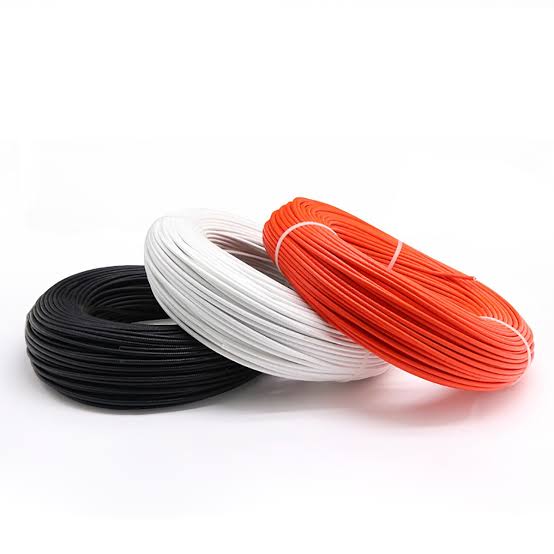
High Temperature Cable (up to 250°C) — Silicone Rubber / PTFE / Glass Fibre Braid Insulated Multi-Core and Single-Core Flexible Cable for Continuous Service at 180°C to 250°C in Steel Mills, Foundries, Glass Plants, Boiler Rooms, Industrial Ovens, and Furnace Equipment Wiring
Fire Resistant, High Temperature & LSZH Cables /High Temperature (up to 250°C)

High Temperature Cable (up to 250°C) — Silicone Rubber / PTFE / Glass Fibre Braid Insulated Multi-Core and Single-Core Flexible Cable for Continuous Service at 180°C to 250°C in Steel Mills, Foundries, Glass Plants, Boiler Rooms, Industrial Ovens, and Furnace Equipment Wiring

High temperature cable up to 250°C: silicone rubber, PTFE, or glass fibre braid insulated. 180°C, 200°C, 250°C continuous ratings. Flexible Class 5 copper or nickel-plated copper, 0.5–120 mm². For steel mills, foundries, glass plants, furnaces, boilers, oven wiring. CE, RoHS.

Key Features

Continuous conductor temperature ratings from 180°C to 250°C — three temperature classes covering the high-temperature industrial environment spectrum: silicone rubber (180°C continuous, 200°C short-term), PTFE (200°C continuous, 260°C short-term), and glass/silicone fibre braid over silicone (250°C continuous)
Silicone rubber core insulation — the standard insulation for high-temperature cables because silicone is an inorganic polymer (Si-O backbone) with thermal stability to 250°C+ for short-term exposure; silicone's flexibility at all temperatures, corona resistance, and non-melting characteristic (silicone does not melt — it decomposes to non-conductive silica at >300°C) make it the preferred material for industrial high-temperature flexible cable
Nickel-plated copper or bare copper conductor — nickel-plated copper for continuous operation above 180°C because bare copper oxidizes rapidly at these temperatures, increasing the conductor resistance and causing localized heating at terminal connections; nickel plating protects the copper from oxidation to 250°C; bare copper for applications up to 150–180°C where the oxidation rate is manageable
Fibreglass or K-fibre outer braid over silicone insulation — the braid provides mechanical protection for the soft silicone insulation, prevents the silicone from sticking to hot surfaces, and provides additional thermal insulation for the conductors; fibreglass braid impregnated with high-temperature varnish or silicone resin for abrasion resistance
Multi-core (2–12 cores) and single-core configurations — power and control cables for high-temperature equipment where multiple circuits must be routed through a common hot zone; the cables connect motors, solenoids, sensors, and heaters that operate in or near the heat source
Halogen-free and low smoke — silicone rubber is inherently halogen-free; when exposed to fire at its decomposition temperature (>300°C), silicone produces silica ash (SiO₂, non-toxic, non-conductive) and minimal smoke; the cable does not contribute HCl or other corrosive gases to the high-temperature environment
Flexible at elevated temperatures — unlike PVC (which softens and melts at 70–160°C) and XLPE (which melts at ~105°C before cross-linking, then chars), silicone rubber remains flexible and electrically insulating at its rated continuous temperature; the cable can be repositioned while hot without insulation damage
Cross-section range 0.5–120 mm² — from 0.5 mm² thermocouple extension and sensor wiring to 120 mm² high-temperature power cable for furnace heating elements and ladle preheater power supply

Applications

Steel mill and foundry equipment wiring — high-temperature cable for ladle preheaters, tundish heaters, continuous casting machine sensors, and furnace charging equipment where the cable is exposed to radiant heat from molten metal (1 400–1 600°C), with the cable's outer surface temperature reaching 200–250°C from radiation aloneGlass plant and furnace wiring — cable for glass melting furnace instrumentation, forehearth burner controls, and annealing lehr conveyor motors where the ambient air temperature around the cable route is 80–150°C and radiant heat from the furnace refractories adds additional thermal loadIndustrial oven and kiln wiring — power and control cable for paint curing ovens, powder coating ovens, ceramic kilns, and heat treatment furnaces where the cable enters the hot zone through a sealed penetration and operates at the oven internal temperature (150–250°C)Boiler and steam plant instrumentation — high-temperature cable for boiler drum level sensors, superheater thermocouples, and burner flame detectors where the cable is routed close to the boiler casing at 100–200°C ambient and may be exposed to superheated steam leaksPower generation — generator RTD (resistance temperature detector) wiring, turbine casing thermocouple extension cable, and exhaust gas temperature sensor cable in gas turbine and diesel generator installations where the ambient temperature can exceed 150°CPlastics and rubber processing — cable for extruder barrel heaters, injection molding machine hot runner controls, and rubber curing press wiring where the cable operates within centimeters of heater bands at 200–300°CCommercial kitchen and bakery equipment — high-temperature flexible cable for pizza ovens, conveyor toasters, commercial deep fryers, and bakery deck ovens where the cable is routed inside the appliance housing at ambient temperatures up to 200°C

Technical Specifications

Standard IEC 60245 (rubber insulated cables — applicable test methods for silicone rubber cables); VDE 0250-502 (silicone rubber insulated cables, Germany); UL 3074/3122 (silicone rubber AWM, North America — see High Temperature Wire product); GB/T 5013.3 (equivalent to IEC 60245 for silicone insulated cables, China)
Rated Voltage — Multi-Core 300/500 V (standard for control and instrumentation); 450/750 V (for power circuits); the voltage rating is maintained at the rated continuous conductor temperature — the silicone insulation's dielectric strength does not degrade significantly at temperatures up to its decomposition point
Rated Voltage — Single-Core 300/500 V, 450/750 V, or 0.6/1 kV per the cable's design and insulation thickness
Conductor Material — Up to 180°C (Continuous) Bare copper; IEC 60228 Class 5 flexible stranded; bare copper is acceptable at up to 180°C because the copper oxidation rate is moderate and the oxide layer (Cu₂O) is thin and does not significantly affect conductor resistance or terminal contact resistance over the cable's service life
Conductor Material — Above 180°C (Continuous) Nickel-plated copper; the nickel plating (typically 2–5 μm thickness) prevents copper oxidation at temperatures up to 250°C; at 250°C, bare copper develops a thick, high-resistance oxide scale (CuO, black) within days to weeks that increases the conductor resistance and creates high-resistance terminal connections leading to localized overheating
Conductor Material — Special High-Temp Pure nickel conductor (for >450°C applications where copper would melt — copper melts at 1 083°C, but nickel melts at 1 455°C, providing additional temperature margin for the conductor itself); silver-plated copper (for 200–250°C where better solderability than nickel-plated is required for termination)
Conductor Cross-Sections 0.5, 0.75, 1.0, 1.5, 2.5, 4, 6, 10, 16, 25, 35, 50, 70, 95, 120 mm²
Core Count Single-core; 2-core; 3-core; 4-core; 5-core; 7-core; 12-core; custom core counts for equipment manufacturers
Core Insulation — Silicone Rubber (180°C) Peroxide-cured methyl-vinyl silicone rubber (VMQ) or methyl-phenyl-vinyl silicone (PVMQ for improved low-temperature and radiation resistance); rated 180°C continuous conductor temperature; Shore A 60–80; the insulation thickness per the cable's voltage class per IEC 60245
Core Insulation — Silicone Rubber (200°C) High-temperature silicone compound with enhanced thermal stabilizer; rated 200°C continuous; for applications where 180°C is insufficient margin for the measured hot-zone conductor temperature
Core Insulation — Fibreglass + Silicone Varnish (250°C) Fibreglass yarn served (wrapped) around the conductor, impregnated with high-temperature silicone varnish; the fibreglass provides the mechanical structure and the silicone varnish provides the electrical insulation and moisture resistance; rated 250°C continuous; the construction is thicker and less flexible than solid silicone extrusion but provides the highest continuous temperature rating in the silicone cable family
Core Insulation — PTFE (200°C) Polytetrafluoroethylene (PTFE) extruded or tape-wrapped insulation; rated 200°C continuous (260°C short-term); PTFE has a higher dielectric strength (18–20 kV/mm) and lower dielectric loss (tan δ <0.0002) than silicone; specified where thinner insulation wall is required or where the cable is exposed to chemicals that attack silicone (aromatic and chlorinated solvents)
Core Identification — Silicone Insulated Solid color insulation per HD 308 S2; or numbered using high-temperature ink or printed high-temperature tape markers; standard PVC colour-code sleeving cannot be used — it would melt at the cable's operating temperature; all identification must be high-temperature rated
Core Assembly (Multi-Core) Cores are concentrically stranded with a controlled lay length; fibreglass filler elements in the interstices maintain circularity; the core assembly is wrapped with a high-temperature polyester or polyimide (Kapton) tape binder
Inner Sheath Silicone rubber extrusion over the core assembly; provides additional electrical insulation and mechanical protection; optional for multi-core cables
Overall Braid — Fibreglass Fibreglass yarn braid over the core assembly or inner sheath; the braid provides abrasion protection for the soft silicone surface, prevents the cable from sticking to hot metal surfaces, and provides an additional thermal barrier; the white color of the fibreglass braid also reflects radiant heat, reducing the cable's surface temperature compared to a dark-coloured silicone surface
Overall Braid — Stainless Steel Wire (Optional) Stainless steel wire braid for mechanical protection in harsh industrial environments — furnace charging areas, molten metal splash zones, areas where the cable contacts sharp metal edges; the steel braid also provides additional EMI shielding
Maximum DC Conductor Resistance at 20°C Per IEC 60228 Class 5; 39.0 Ω/km (0.5 mm²) to 0.169 Ω/km (120 mm²) for copper
Insulation Resistance at 20°C — Silicone ≥200 MΩ·km (core-to-core at 500 V DC, 1 min)
Insulation Resistance at 200°C — Silicone ≥0.1 MΩ·km (minimum at rated temperature); silicone's insulation resistance decreases with temperature — the IR at 200°C is approximately 3–4 orders of magnitude lower than at 20°C; this is normal and is accounted for in the cable's design; the lower IR may be significant for low-current instrument circuits (<1 mA) where leakage current through the insulation at elevated temperature could affect measurement accuracy
Test Voltage (AC) — 300/500 V 2 000 V AC / 5 min per IEC 60245
Test Voltage (AC) — 450/750 V 2 500 V AC / 5 min
Temperature — Silicone (Continuous, 180°C Class) 180°C conductor temperature; the silicone insulation maintains its mechanical and electrical properties at this temperature for 10 000+ hours cumulative exposure — the cable's design life at the rated temperature per the thermal endurance classification per IEC 60216
Temperature — Silicone (Continuous, 200°C Class) 200°C conductor temperature; the higher temperature class uses an enhanced silicone compound with additional thermal stabilizer; life at 200°C is shorter than at 180°C — typically 5 000–10 000 hours cumulative
Temperature — Fibreglass / Silicone Varnish (250°C) 250°C conductor temperature; for applications where the temperature periodically reaches 250°C — the fibreglass provides the mechanical stability at these temperatures and the silicone varnish degrades slowly over time, reducing the cable's service life to typically 2 000–5 000 hours cumulative at 250°C
Temperature — Short-Term Excursion (Silicone) 250°C for limited periods (hours, not days); silicone does not melt but the decomposition accelerates significantly above 250°C, reducing insulation thickness and dielectric strength
Temperature — Low-Temperature Flexibility (Silicone) -60°C; silicone retains flexibility at cryogenic temperatures where PVC is glass-brittle at -5°C and XLPE at -20°C; this is important for outdoor high-temperature equipment that may be at -30°C on a winter morning and 200°C after startup
Minimum Bend Radius — Silicone Insulated 5× cable OD (fixed routing); 8× cable OD (occasional flexing during installation); the soft silicone insulation tolerates tighter bends than XLPE or PVC cables, but the core assembly (particularly the fibreglass filler and braid) limits the bend radius
Flame Retardant — Silicone IEC 60332-1-2; silicone is inherently flame-retardant — it ignites with difficulty, burns with a low flame when the ignition source is present, and self-extinguishes when the source is removed, forming a non-conductive silica (SiO₂) ash residue
Halogen-Free — Silicone IEC 60754-1; silicone is halogen-free (no chlorine, bromine, or fluorine in the silicone polymer); the combustion products are silica (SiO₂), carbon dioxide, and water vapor
Corona Resistance — Silicone Excellent; silicone's inorganic backbone resists the ozone and UV radiation produced by corona discharge at the conductor surface; this is an important characteristic for high-temperature cables operating at voltages where corona may form at conductor surface defects — the silicone insulation erodes slowly and the erosion product (silica) is non-conductive, unlike the conductive carbon residue from organic polymer corona erosion
Current Rating — De-Rating at Elevated Temperature The cable's current rating must be de-rated for the elevated ambient temperature. For a cable rated 180°C in a 150°C ambient, the permissible conductor temperature rise from I²R heating is only 30°C (180−150), compared to 140°C in a 40°C ambient (180−40). The de-rating factor = √[(180−T_ambient) / (180−40)] for a cable rated 180°C. At 150°C ambient, de-rating factor = √(30/140) = 0.46 — the cable's current rating at 150°C ambient is 46% of its 40°C ambient rating
Certifications CE; RoHS; UL recognized on request; VDE on request; ISO 9001 manufactured

Detailed Description

What Is High Temperature Cable?

A high temperature cable is a flexible single-core or multi-core cable with silicone rubber, PTFE, or fibreglass/silicone insulation that maintains its electrical and mechanical properties at continuous conductor temperatures from 180°C to 250°C — temperatures at which standard PVC (70°C), XLPE (90°C), and even EPR (90°C) cables have catastrophically failed (PVC melts at 70–160°C, XLPE and EPR char and lose dielectric strength above 200°C).

High temperature cable is specified for the zones around industrial heat sources — the cable that connects the power supply to the furnace heating element, the cable from the thermocouple to the temperature controller, the cable that enters the oven hot zone through a thermal barrier. In these zones, the ambient air temperature and the radiant heat load combine to raise the cable's surface temperature far above the rating of standard cable materials. The cable must survive this thermal environment without the insulation hardening, cracking, melting, or losing its dielectric strength — and it must do so for the equipment's expected operating life (thousands of hours at elevated temperature).

Insulation Material Selection — Temperature vs Service Life

Insulation MaterialMax Continuous TempShort-Term TempFlexibilityChemical ResistanceTypical ApplicationApproximate Life at Max Temp
Silicone Rubber (Standard)180°C200°C (hours)Excellent — most flexible HT insulationGood — attacked by aromatic/chlorinated solvents; excellent water and ozone resistanceGeneral industrial high-temp to 180°C10 000–20 000 h
Silicone Rubber (High-Temp)200°C250°C (hours)ExcellentAs aboveSteel mill, foundry continuous service5 000–10 000 h
Fibreglass / Silicone Varnish250°C300°C (hours)Moderate — less flexible than solid siliconeGood — silicone varnish has similar chemical resistance to solid siliconeFurnace and kiln instrumentation near the hot face2 000–5 000 h
PTFE (Teflon)200°C260°C (hours)Moderate — stiffer than siliconeExcellent — resistant to nearly all chemicals except molten alkali metals and fluorine gasChemical plant high-temp instrumentation10 000–20 000 h
PTFE / Polyimide (Kapton) Composite220°C280°CPoor — stiff, semi-rigidExcellentAerospace engine bay wiring10 000+ h
Pure Nickel Conductor + MgO (MI Cable)450°C+1 000°C+None — rigidExcellent (metal sheath)Furnace core, nuclear reactor>50 000 h

The "life at max temperature" values are approximate and depend on the specific compound formulation, the presence or absence of mechanical stress (vibration, flexing), and the atmosphere (oxidizing vs inert). For a cable continuously operated at its maximum temperature rating, the life is defined by the thermal endurance test per IEC 60216 — the cable is aged at multiple elevated temperatures and the time to reach 50% elongation at break is extrapolated to the rated operating temperature using the Arrhenius model.

Why Choose Yichi High Temperature Cables

  • Silicone rubber insulation as standard — the correct material for high-temperature flexible cable: Silicone is the dominant insulation for industrial high-temperature cable because it combines thermal stability (180–250°C), flexibility at all temperatures, corona resistance, and halogen-free fire performance. Yichi manufactures silicone-insulated cables in three temperature classes (180°C, 200°C, 250°C) to match the application's thermal environment
  • Nickel-plated copper conductor for >180°C applications: The nickel plating prevents copper oxidation at temperatures where bare copper develops a thick, high-resistance oxide scale in days to weeks. The nickel plating is continuous, uniform, and verified by eddy current or visual inspection on every production batch
  • Fibreglass outer braid — mechanical and thermal protection: The fibreglass braid protects the soft silicone surface from abrasion, prevents sticking to hot surfaces, and reflects radiant heat (white braid), reducing the cable's surface temperature. The braid is impregnated with silicone varnish for durability and can be supplied in natural (white) or custom-coloured finishes
  • Full 0.5–120 mm² cross-section range in single-core and multi-core: From thin instrument and sensor wiring to heavy power cables — all with the same silicone insulation system and the same temperature rating. One manufacturer for the complete high-temperature cable specification on the equipment or plant
  • De-rating calculation support: The current rating of a high-temperature cable at the installation's ambient temperature is not the published 40°C ambient rating. Provide the actual operating ambient temperature and we calculate the de-rated ampacity per IEC 60287/60364 — ensuring the cable is correctly sized for both continuous operation and fault conditions in the hot-zone environment

Product Inquiry

Product: High Temperature Cable (up to 250°C) — Silicone Rubber / PTFE / Glass Fibre Braid Insulated Multi-Core and Single-Core Flexible Cable for Continuous Service at 180°C to 250°C in Steel Mills, Foundries, Glass Plants, Boiler Rooms, Industrial Ovens, and Furnace Equipment Wiring

Add technical specifications (optional)

The more detail you provide, the faster and more accurate our quotation.

No file chosen

PDF, Office, image or CAD file — up to 5 MB

Need Help?

Certifications

ISO 9001
Quality
CE
European
RoHS
Environmental
TÜV
Certification

Need a Quote for This Product?

Send us your requirements and receive a detailed quotation within 24 hours.