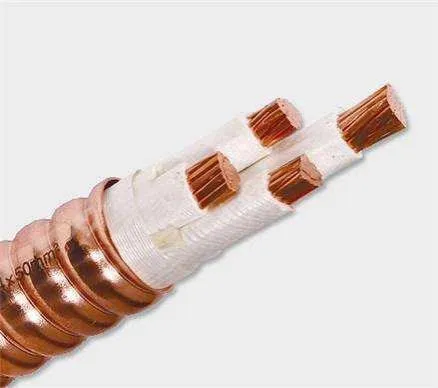
Fire Resistant Cable (IEC 60331) — Mica/Glass Tape Fire Barrier LSZH Sheathed Multi-Core Cable with 30–120 Minute Circuit Integrity at 830–950°C per IEC 60331/BS 6387 for Emergency Lighting, Fire Pumps, Smoke Extraction Fans, Escape Route Pressurization, and Critical Life Safety Circuits in Buildings and Tunnels
Fire Resistant, High Temperature & LSZH Cables /Fire Resistant Cable (IEC 60331)

Fire Resistant Cable (IEC 60331) — Mica/Glass Tape Fire Barrier LSZH Sheathed Multi-Core Cable with 30–120 Minute Circuit Integrity at 830–950°C per IEC 60331/BS 6387 for Emergency Lighting, Fire Pumps, Smoke Extraction Fans, Escape Route Pressurization, and Critical Life Safety Circuits in Buildings and Tunnels

Fire resistant cable IEC 60331: mica/glass fire barrier on each conductor, LSZH sheath. 30/60/120 min circuit integrity at 830-950°C. For emergency lighting, fire pumps, smoke fans, pressurization, lift homing. XLPE/PE core + mica tape. PH30 to PH120. CPR B2ca. CE, RoHS, LPCB.

Key Features

IEC 60331 fire resistance certified — the international standard for cables required to maintain circuit integrity under fire conditions; the cable continues to conduct electricity at 830°C for the rated survival time (30–120 minutes) after the organic insulation has been consumed by the fire, maintaining power to life safety equipment when the building is burning
Phlogopite mica/glass tape fire barrier on every conductor — mica is an inorganic mineral (KMg₃(AlSi₃O₁₀)(OH)₂) with a melting point >1 200°C; helically wrapped over each XLPE or PE insulated conductor with ≥25% overlap; when the organic insulation burns away at 300–400°C, the overlapping mica tape remains as the sole electrical insulation between conductors, maintaining the circuit
BS 6387 Category CWZ tested — the most demanding fire resistance cable standard in the world: 950°C flame (Category C) + water spray from firefighting hoses (Category W) + mechanical shock from falling debris (Category Z), all applied simultaneously; cables passing CWZ are qualified for the most critical life safety applications including tunnels, underground stations, and high-rise buildings
LSZH (low smoke zero halogen) outer sheath — the cable does not emit dense smoke or corrosive halogen gases when exposed to fire; essential for cables installed in building escape routes where smoke from burning PVC cables is a leading cause of death in building fires by reducing visibility and causing toxic inhalation
PH30, PH60, and PH120 enhanced fire resistance classifications per EN 13501-2 / BS 8592 — PH30 (standard) for 30-minute evacuation buildings; PH60 (enhanced) for high-rise phased evacuation; PH120 (enhanced) for tunnels and critical infrastructure where the fire may burn for 2+ hours before control
Single-core and multi-core (2–19 cores) in cross-sections 1.5–300 mm² — covering the full range of life safety circuit requirements from 1.5 mm² fire alarm and emergency lighting circuits to 300 mm² fire-fighting pump and smoke extraction fan motor power supplies
Flame retardant to IEC 60332-1-2 (single) and IEC 60332-3-24 Cat C (bunched) — in addition to fire resistance (surviving the fire), the cable does not propagate fire along its length or to adjacent cables in a cable tray or riser shaft
CPR Euroclass B2ca-s1a,d1,a1 available — the highest fire performance classification for LSZH cables per EN 50575; required for cables installed in escape routes in many EU member states; the classification confirms flame spread, smoke production, flaming droplets, and acidity are all controlled to the highest standard

Applications

Emergency lighting circuits — fire resistant cable for maintained and non-maintained emergency luminaires in escape routes, stairwells, and exit doors; the cable must maintain circuit integrity for the rated survival time so that escape route lighting remains operational throughout the evacuation periodFire-fighting pump power supply — fire resistant power cable from the generator or utility supply to the electric fire pump motor; the cable must continue to deliver power to the pump at full rated current while the fire burns around the cable route — the most demanding fire resistant cable application in any buildingSmoke extraction fan power and control — fire resistant cable for smoke extraction fans that must operate during the fire to remove smoke from escape routes and maintain tenable conditions; both the power cable to the fan motor and the control cable to the fan damper actuators must be fire resistantStaircase and escape route pressurization fans — cable for fans that pressurize escape staircases to prevent smoke ingress; the pressurization system must operate throughout the fire and the cable must maintain circuit integrity in the fire-affected zonesFire-fighting lift power supply — fire resistant cable for the dedicated fire-fighting lift that enables firefighters to reach upper floors; the lift must operate during the fire and the supply cable must survive in the lift shaft environmentVoice alarm and public address systems — fire resistant cable for the loudspeaker circuits and amplifier power supplies of voice evacuation systems; the evacuation messages must continue to broadcast for the duration of the phased evacuationTunnel safety systems — fire resistant cable for tunnel emergency lighting, ventilation fan power, fire detection, and communication systems where the fire can reach temperatures >1 000°C and the cable must function for the full incident duration (typically 120 minutes minimum)

Technical Specifications

Standard — Fire Resistance (International) IEC 60331-1 (fire resistance at 830°C); IEC 60331-2 (fire resistance at 830°C with mechanical shock); IEC 60331-3 (fire resistance with water spray); the IEC 60331 series defines the test methods and performance criteria for fire-resistant cables
Standard — Fire Resistance (UK) BS 6387 Cat C (950°C), Cat W (water spray), Cat Z (mechanical shock); BS 6387 CWZ is the definitive UK fire resistance cable standard, combining all three tests at 950°C — the most demanding fire cable specification globally
Standard — Enhanced Fire Resistance BS 8434-2 (enhanced fire resistance, 120 min at 950°C with water and shock); BS 8592 (fire-resistant cable classification for life safety systems — PH30, PH60, PH120); EN 50200 (fire resistance at 830°C with mechanical shock)
Standard — Cable Construction BS 7629-1 (300/500 V fire-resistant screened multi-core LSZH cables) for fire alarm and emergency systems; BS 7846 (0.6/1 kV fire-resistant armoured power cables) for fire pump and smoke fan power circuits
Rated Voltage — Control / Signal Types 300/500 V (per BS 7629-1 for fire alarm and emergency control circuits)
Rated Voltage — Power Types 0.6/1 kV (per BS 7846 / IEC 60502-1 for fire pump, smoke fan, and lift power circuits)
Conductor Material Bare copper; IEC 60228 Class 1 solid (≤4 mm²), Class 2 stranded (≥6 mm²) for power cables; Class 5 flexible on request for control panel wiring
Conductor Cross-Sections — Control/Signal 1.0, 1.5, 2.5 mm²; 2–19 cores
Conductor Cross-Sections — Power 1.5, 2.5, 4, 6, 10, 16, 25, 35, 50, 70, 95, 120, 150, 185, 240, 300 mm²; 2–5 cores for three-phase circuits; single-core for large feeder circuits
Core Insulation — XLPE Cross-linked polyethylene; rated 90°C continuous; 250°C short-circuit; the XLPE insulation provides the standard electrical insulation during normal (non-fire) operation; during a fire, the XLPE burns away at >300°C and the mica tape fire barrier becomes the sole insulation
Fire Barrier — Mica/Glass Tape Phlogopite mica paper (0.08–0.12 mm) on glass fibre carrier; helically wrapped over the XLPE-insulated conductor with ≥25% overlap; the mica tape is the fire-resistant element — it does not burn, melt, or degrade at fire temperatures up to 1 200°C
Mica Tape Overlap — Critical Design Parameter ≥25% overlap is mandatory; the overlap ensures that, as the mica tape expands and shifts slightly under thermal stress during the fire, no gap opens between adjacent turns that would expose the bare conductor and create a short circuit to an adjacent phase conductor or to earth
Core Assembly — Multi-Core The fire-barriered and XLPE-insulated cores are concentrically stranded with non-hygroscopic filler elements to create a circular cross-section; the filler material should also be fire-resistant or the filler voids should not create a short-circuit path after the filler has been consumed by the fire
Inner Covering — Fire Barrier Tape (Power Cables) An additional mica/glass tape wrap over the core assembly in larger power cables provides a second fire barrier layer protecting against conductor-to-armour short circuits during the fire
Armour — SWA (Power Cables) Galvanized steel wire armour for mechanical protection; the armour is not fire-resistant per se, but the metallic armour provides additional protection against falling debris impact during the fire
Outer Sheath — LSZH Low smoke zero halogen thermoset compound; white, red, or orange per the building's fire safety cable color identification scheme; the LSZH compound is mineral-filled (ATH/MDH — aluminum trihydrate/magnesium dihydrate) for flame retardance
Sheath Color — UK Standard (BS 8519) White (general emergency and life safety circuits); Red (fire alarm circuits per BS 7671); Orange (variation in some national codes for voice alarm or specific life safety functions)
Maximum DC Conductor Resistance at 20°C Per IEC 60228; 18.1 Ω/km (1.0 mm²) to 0.0601 Ω/km (300 mm²) for copper
Insulation Resistance at 20°C — XLPE ≥1 000 MΩ·km (core-to-core and core-to-earth at 500 V DC, 1 min during routine test)
Test Voltage (AC) — 300/500 V Types 2 000 V AC / 5 min per BS 7629-1
Test Voltage (AC) — 0.6/1 kV Types 3 500 V AC / 5 min per IEC 60502-1
Fire Survival Time — PH30 (Standard) 30 minutes at 830°C with mechanical shock per EN 50200; the cable maintains circuit integrity for 30 minutes — sufficient for standard evacuation buildings
Fire Survival Time — PH60 (Enhanced) 60 minutes at 830°C with mechanical shock (EN 50200) and water spray (BS 8434-2); for high-rise phased evacuation
Fire Survival Time — PH120 (Enhanced) 120 minutes at 950°C with mechanical shock and water spray (BS 8434-2 / BS 6387 CWZ); for tunnels and critical infrastructure
Fire Test Acceptance Criterion During the fire test, a 2 A fuse is connected in series with the cable conductors at the cable's rated voltage; if the fuse blows (current >2 A due to conductor-to-conductor or conductor-to-earth leakage through the degraded insulation), the cable has failed — the circuit integrity has been lost
Temperature — Continuous (Normal Operation) 90°C conductor temperature (XLPE); 70°C sheath surface (LSZH)
Short-Circuit Temperature — XLPE 250°C (max 5 s)
Minimum Bending Radius — During Installation 8× cable OD (solid conductor); the larger bend radius compared to standard building cable accommodates the mica tape layer — tighter bends can fracture the mica tape, creating gaps in the fire barrier
Flame Retardant — Single Cable IEC 60332-1-2; the cable is self-extinguishing
Flame Retardant — Bunched Cables IEC 60332-3-24 Cat C; fire in one cable does not propagate through the bunch
Halogen-Free (LSZH) IEC 60754-1: HCl <0.5%
Low Smoke (LSZH) IEC 61034-2: minimum 60% light transmittance
CPR Euroclass B2ca-s1a,d1,a1 (enhanced); Dca-s2,d2,a2 (standard); per EN 50575
Certifications CE; RoHS; LPCB (UK) on request; BASEC (UK) on request; EN 50575 CPR Declaration of Performance (DoP) provided with every cable batch

Detailed Description

What Is Fire Resistant Cable?

A fire resistant cable (IEC 60331) is a cable that maintains electrical circuit integrity during a fire — continuing to conduct power and signals for the life safety systems that protect building occupants: emergency lighting, fire pumps, smoke extraction fans, escape route pressurization, fire-fighting lifts, and voice evacuation systems. The defining characteristic is the mica/glass tape fire barrier wrapped around each conductor — a layer of inorganic mineral that does not burn, melt, or electrically degrade at fire temperatures, maintaining insulation between conductors after the organic XLPE or PE insulation has been consumed by the fire.

The distinction between fire resistant, flame retardant, and fireproof cables is essential to correct specification:

Cable TypeFire BehaviorStandardExample Application
Flame Retardant (IEC 60332)Does not propagate fire; self-extinguishes when flame removedIEC 60332-1/3General building wiring — prevents fire spread along cables
Fire Resistant (IEC 60331)Maintains circuit integrity DURING the fire for 30–120 minIEC 60331 / BS 6387 / EN 50200Emergency lighting, fire pumps, smoke fans — must keep working during the fire
Fireproof (MI cable)Does not burn, does not propagate fire, maintains circuit integrity indefinitelyBS 6207 / IEC 60702Critical circuits where absolute fire survival is required regardless of duration

The Mica Tape — How a Cable Survives Fire

The core of fire resistant cable technology is a thin tape — 0.1–0.15 mm total thickness — wrapped helically around each conductor. The tape consists of phlogopite mica paper bonded to a glass fibre carrier. When the cable is operating normally, the mica tape is just another layer under the XLPE or PE insulation. When a fire engulfs the cable:

  • 0–2 minutes: The LSZH outer sheath absorbs heat; the mineral flame retardants (ATH/MDH) release water vapor, cooling the sheath surface and delaying the temperature rise inside the cable
  • 2–5 minutes: The XLPE/PE core insulation reaches 300–400°C and pyrolyzes — it decomposes into gaseous products and carbonaceous char. The insulation effectively disappears as an electrical barrier
  • At this point, the fire resistant cable and a standard cable diverge critically:
- Standard cable: The conductors are now bare — adjacent conductors short together, the circuit breaker trips, and the life safety equipment loses power

- Fire resistant cable: The mica tape remains intact. The overlapping mica turns maintain electrical insulation between the conductor and adjacent conductors. The mica tape's dielectric strength at 830°C is approximately 0.5–1 kV/mm — sufficient to maintain the 300/500 V or 0.6/1 kV insulation level at the fire temperature for the rated survival time

  • 30–120 minutes: The mica tape continues to function as the sole insulation. The glass fibre carrier prevents the mica paper from disintegrating under the mechanical stress of thermal expansion, vibration from the fire, and the impact of water spray from firefighting hoses. After the rated survival time, the mica tape may begin to degrade — the glass fibre softens (glass transition ~700–800°C depending on composition) and the mica paper may lose mechanical integrity under sustained thermal stress

Fire Resistant vs Fire Alarm Cable — Same Technology, Different Standards

A fire alarm cable (BS 7629-1) is a specific type of fire resistant cable with additional requirements specific to fire alarm systems: the 300/500 V voltage rating, the optional overall aluminum/polyester foil screen for EMI protection on addressable loops, and the specific core color coding for fire alarm circuits. A fire resistant power cable (BS 7846 / IEC 60502-1) is a fire resistant cable rated 0.6/1 kV for power circuits — fire pumps, smoke fans, lifts. Both use the mica/glass tape fire barrier technology; the difference is the voltage class, the core configuration, and the specific cable standards applied.

The table that matters for specification:

ApplicationCable TypeStandardVoltageCore Configuration
Fire alarm detection loopsFire alarm cableBS 7629-1300/500 V2-core screened
Alarm sounder circuitsFire alarm cableBS 7629-1300/500 V2-core, 1.5–2.5 mm²
Emergency lightingFire resistant cableBS 7629-1 or BS 7846300/500 V or 0.6/1 kV2–4 core
Fire pump motor powerFire resistant power cableBS 7846 / IEC 60502-10.6/1 kV4-core (3P+PE), 10–300 mm²
Smoke fan motor powerFire resistant power cableBS 7846 / IEC 60502-10.6/1 kV4-core, 4–95 mm²
Fire-fighting lift powerFire resistant power cableBS 7846 / IEC 60502-10.6/1 kV4-core, 16–50 mm²

Why Choose Yichi Fire Resistant Cables

  • Mica/glass tape fire barrier — genuine phlogopite mica, not a substitute: The fire barrier on every conductor is phlogopite mica paper on a glass fibre carrier, helically applied with ≥25% overlap. We use phlogopite because it withstands >1 200°C — muscovite mica degrades at 600–700°C and is not suitable for the 950°C BS 6387 CWZ test
  • PH30, PH60, PH120 — fire tested and certified: The fire resistance classification is not a design claim — it is verified by testing at an ISO/IEC 17025 accredited fire laboratory. The test report demonstrates circuit integrity survival under the rated fire conditions (temperature, time, mechanical shock, water spray)
  • LSZH sheath as standard — no PVC in fire resistant cable: The LSZH compound is standard on all fire resistant cables. PVC is not an option because the dense smoke and HCl gas from burning PVC in a fire is incompatible with the life safety function of the cable — the cable that powers the smoke extraction fan should not itself produce toxic smoke
  • BS 6387 CWZ tested — the definitive fire cable standard: Cables certified to CWZ have demonstrated circuit integrity at 950°C with simultaneous water spray and mechanical shock — the conditions of a real building fire. This is the specification for tunnels, underground stations, and critical life safety circuits where failure is not an option
  • Full range from fire alarm signal cable to fire pump power cable: 1.0 mm² 2-core screened fire alarm cable to 300 mm² 4-core armoured fire pump power cable — one manufacturer for the complete building life safety cable specification, simplifying procurement, documentation, and system certification

Frequently Asked Questions

How does the mica tape keep the circuit alive during a fire?

A phlogopite mica/glass tape is helically wrapped over each XLPE-insulated conductor. Mica is inorganic with a melting point above 1 200°C, so as the polymer insulation is destroyed the mica layer remains as a dielectric and the circuit keeps conducting.

Why is the mica tape overlap specified at 25% or more?

Because the tape expands and shifts slightly as the cable is heated. A minimum 25% overlap is mandatory so the fire barrier stays continuous and does not open a gap at the conductor.

Which fire tests does the cable pass?

IEC 60331-1 and IEC 60331-2 at 830°C, plus BS 6387 Category CWZ, which combines 950°C flame (C), water spray from firefighting (W), and mechanical shock (Z). Enhanced variants meet BS 8434-2 and BS 8592, giving PH30, PH60, or PH120 classification per EN 13501-2. CPR Euroclass B2ca-s1a,d1,a1 is available.

What is the difference between fire resistance and flame retardance?

They are separate properties. Flame retardance to IEC 60332-1-2 and IEC 60332-3-24 Cat C means the cable will not propagate fire along its length. Fire resistance to IEC 60331 means the circuit keeps working while the fire is burning. Life safety circuits require both.

Product Inquiry

Product: Fire Resistant Cable (IEC 60331) — Mica/Glass Tape Fire Barrier LSZH Sheathed Multi-Core Cable with 30–120 Minute Circuit Integrity at 830–950°C per IEC 60331/BS 6387 for Emergency Lighting, Fire Pumps, Smoke Extraction Fans, Escape Route Pressurization, and Critical Life Safety Circuits in Buildings and Tunnels

Add technical specifications (optional)

The more detail you provide, the faster and more accurate our quotation.

No file chosen

PDF, Office, image or CAD file — up to 5 MB

Need Help?

Certifications

ISO 9001
Quality
CE
European
RoHS
Environmental
TÜV
Certification

Need a Quote for This Product?

Send us your requirements and receive a detailed quotation within 24 hours.