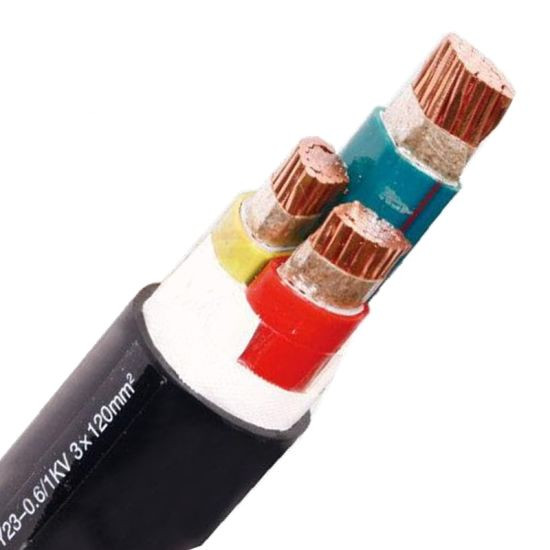
Flame Retardant Cable (IEC 60332) — PVC/XLPE/LSZH Insulated and Sheathed Power and Control Cable with Verified Flame Propagation Resistance per IEC 60332-1 (Single Cable) and IEC 60332-3 (Bunched Cables) for General Building Wiring, Industrial Cable Trays, and Riser Shaft Installations Requiring Fire Spread Prevention
Fire Resistant, High Temperature & LSZH Cables /Flame Retardant (IEC 60332)

Flame Retardant Cable (IEC 60332) — PVC/XLPE/LSZH Insulated and Sheathed Power and Control Cable with Verified Flame Propagation Resistance per IEC 60332-1 (Single Cable) and IEC 60332-3 (Bunched Cables) for General Building Wiring, Industrial Cable Trays, and Riser Shaft Installations Requiring Fire Spread Prevention

Flame retardant cable IEC 60332: PVC, XLPE, or LSZH insulated and sheathed, single cable IEC 60332-1-2 and bunched cable IEC 60332-3 tested. Does not propagate fire, self-extinguishing. For building wiring, cable trays, risers. CPR Euroclass Dca/B2ca/Cca. CE, RoHS.

Key Features

IEC 60332-1-2 flame retardant (single cable) — the cable self-extinguishes within 425 mm of the flame source when a single cable is tested vertically with a 1 kW gas flame applied for the specified time; the flame does not propagate upward along the cable
IEC 60332-3 Cat A/B/C/D flame retardant (bunched cables) — the definitive test for cables installed in vertical cable trays and riser shafts; multiple cables are bunched together and exposed to a flame source at the base; the flame must not propagate more than 2.5 m above the flame source; Category A is the most severe test (7 L/m of combustible material), Category C is the standard for general building cable (1.5 L/m)
Flame-retardant PVC compound — the PVC insulation and sheath are formulated with flame-retardant plasticizers and stabilizers; the chlorine content of PVC (57% by weight) provides the inherent flame-retardant mechanism — chlorine radicals interrupt the free-radical combustion chain reaction, causing the PVC to self-extinguish when the flame source is removed
LSZH (low smoke zero halogen) option for enhanced fire safety — LSZH cables pass the same flame retardant tests as PVC but with the additional benefit of halogen-free combustion (no HCl gas) and low smoke emission (IEC 61034); specified for public buildings, transport infrastructure, and enclosed spaces where smoke and toxic gas from burning PVC cables pose an unacceptable risk to occupants
XLPE insulated + flame-retardant PVC or LSZH sheath — the XLPE core insulation provides 90°C continuous rating and 250°C short-circuit withstand; the flame-retardant sheath provides the fire propagation resistance; the combined construction delivers both electrical performance and fire safety
Single-core and multi-core (2–5 cores), 0.6/1 kV power and 300/500 V control — the full range of building and industrial cable configurations manufactured with verified flame retardant performance
CPR Euroclass per EN 50575 — Eca (basic), Dca (standard building), Cca (enhanced), B2ca (escape routes); the CPR classification integrates flame propagation, smoke production, flaming droplets, and acidity into a single Euroclass that defines where the cable can be installed in a building
Halogen-free LSZH option — IEC 60754-1/2 tested; for buildings where the fire safety strategy requires zero halogen emission from cables to protect sensitive electronic equipment from corrosion and to reduce toxic gas exposure to occupants and firefighters

Applications

General building power distribution — flame retardant PVC or XLPE insulated power cable for sub-main and final distribution circuits in commercial buildings, where the cables are installed in horizontal and vertical cable trays through multiple fire compartments and must not propagate a fire from one compartment to anotherIndustrial cable tray and ladder rack installation — flame retardant cable for congested cable trays in factories, process plants, and power stations where a fire in one cable could ignite all cables in the tray; the IEC 60332-3 bunched cable test verifies that the cable will not contribute to fire propagation in a tray fire scenarioBuilding riser shafts — vertical cable risers from the basement substation to upper-floor distribution boards; the vertical orientation of cables in a riser shaft creates a chimney effect that accelerates fire propagation; IEC 60332-3 tested cables are mandatory for riser installations in most building codesControl and instrumentation circuits — flame retardant multi-core control cable for process plant and factory automation where control cables may run adjacent to power cables in common cable trays, and a fire in the power cables must not propagate along the control cables to the control roomPublic building LSZH wiring — LSZH sheathed flame retardant cable for hospitals, schools, museums, cinemas, and transport terminals where building regulations or fire safety strategy require halogen-free and low-smoke cable constructionTunnel and underground station wiring — flame retardant LSZH cable for lighting, power, and control circuits in road and rail tunnels and underground stations where fire propagation along cables in the confined tunnel environment could create an unsurvivable condition for evacuationTemporary event and exhibition wiring — flame retardant flexible cable for temporary power and lighting at events where the cables are laid in public areas and the fire risk is elevated by the dense cable routing and the presence of flammable materials (exhibition stands, stage sets, decorations)

Technical Specifications

Standard — Single Cable Flame Test IEC 60332-1-2: Test for vertical flame propagation for a single insulated wire or cable; the test applies a 1 kW premixed gas flame to a vertically mounted cable for 60–120 seconds (depending on cable diameter); pass criterion: the charred portion must not extend beyond 425 mm from the top of the flame application point, and any burning must self-extinguish after the flame is removed
Standard — Bunched Cable Flame Test IEC 60332-3-2x: Test for vertical flame spread of vertically-mounted bunched wires or cables; the test categories are defined by the volume of combustible material per meter of cable bunch: Category A (7 L/m — most severe, for high cable density installations), Category B (3.5 L/m), Category C (1.5 L/m — standard for general building cable), Category D (0.5 L/m — for low fire load installations); pass criterion: the charred portion must not exceed 2.5 m above the burner
Standard — Smoke Emission (LSZH) IEC 61034-2: Measurement of smoke density of cables burning under defined conditions; minimum 60% light transmittance for LSZH classification
Standard — Halogen Content (LSZH) IEC 60754-1: Determination of halogen acid gas content; HCl <0.5% (halogen-free)
Standard — CPR Classification EN 50575: Power, control and communication cables — CPR (Construction Products Regulation) for cables used in construction works; EN 13501-6: Fire classification of construction products — electric cables
Rated Voltage — Power Cable 0.6/1 kV (U₀/U); per IEC 60502-1
Rated Voltage — Control Cable 300/500 V; per IEC 60227 or BS 7629-1 for screened control
Conductor Material Bare copper; IEC 60228 Class 1 (solid), Class 2 (stranded), or Class 5 (flexible) depending on cable type
Conductor Cross-Sections 1.5–630 mm² (power); 0.5–2.5 mm² (control); full standard ranges
Core Count Single-core to 5-core (power); 2–37 core (control)
Insulation — PVC PVC type A (IEC 60502-1); 70°C; flame-retardant PVC compound formulated with antimony trioxide (Sb₂O₃) and other flame-retardant synergists to achieve IEC 60332 performance
Insulation — XLPE XLPE; 90°C; 250°C short-circuit; the XLPE itself is not flame-retardant (polyethylene burns readily); the flame retardant performance is provided by the outer sheath material
Insulation — LSZH LSZH compound; 70–90°C; for total halogen-free construction — both insulation and sheath are LSZH
Outer Sheath — Flame-Retardant PVC ST2 PVC type ST2 with flame-retardant additives; black, grey, or white; standard for indoor and general building installation
Outer Sheath — LSZH Low smoke zero halogen compound; white, grey, black, or safety colors; for public buildings and transport infrastructure
Flame Retardant Mechanism — PVC The chlorine in PVC (57% by weight) acts as a gas-phase flame retardant: when heated, PVC releases HCl (hydrogen chloride) gas, which captures the H• and OH• free radicals that sustain the combustion chain reaction; this interrupts combustion and causes self-extinguishing when the external flame source is removed
Flame Retardant Mechanism — LSZH Mineral flame retardants (ATH — aluminum trihydrate, MDH — magnesium dihydrate) decompose endothermically when heated, absorbing heat from the flame and releasing water vapor (typically 30–35% of the mineral's weight as H₂O); the water vapor dilutes combustible gases and cools the flame zone; the mineral residue forms a ceramic-like char layer on the cable surface that insulates the underlying material from further heat exposure
Temperature — Continuous (PVC) 70°C conductor, 70°C sheath surface
Temperature — Continuous (XLPE) 90°C conductor, 70°C sheath surface (PVC) or 70–80°C (LSZH)
Minimum Bending Radius Standard per IEC 60502-1 for the cable construction type
CPR Euroclass — Standard PVC Eca or Dca-s2,d2,a2 per EN 50575; standard for general building areas
CPR Euroclass — Enhanced LSZH Cca-s1b,d1,a1 or B2ca-s1a,d1,a1 per EN 50575; for escape routes and high-risk areas
Certifications CE; RoHS; CPR Declaration of Performance (DoP); VDE, KEMA KEUR, BASEC on request; ISO 9001 manufactured

Detailed Description

What Is Flame Retardant Cable?

A flame retardant cable is a cable that resists flame propagation — when exposed to a flame source, it does not continue to burn after the flame is removed (single cable test, IEC 60332-1), and it does not propagate fire upward along a vertical bunch of cables (bunched cable test, IEC 60332-3). The flame retardance is a property of the cable's sheath and insulation material — the PVC or LSZH compound is formulated with chemical additives (flame retardants) that interrupt the combustion process.

The distinction from fire resistant cable is critical: a flame retardant cable reduces fire spread but does not survive a fire. A fire resistant cable (IEC 60331) maintains circuit integrity at 830–950°C for 30–120 minutes, continuing to conduct electricity while the cable is burning. The two properties serve different fire safety strategies:

StrategyCable TypeStandardFunction
Prevent fire spreadFlame retardant (IEC 60332)IEC 60332-1/3The cable does not propagate fire along its length or to adjacent cables; limits the extent of a cable fire
Survive the fireFire resistant (IEC 60331)IEC 60331 / BS 6387The cable maintains circuit integrity during the fire; life safety equipment continues to operate
Zero fire contributionFireproof (MI cable)BS 6207 / IEC 60702The cable contains no combustible materials; it cannot burn

For a building's electrical installation, both flame retardant and fire resistant cables are specified — flame retardant for the general power and lighting circuits (to prevent a local electrical fire from propagating through the building), and fire resistant for the life safety circuits (emergency lighting, fire pumps, smoke fans — to ensure they continue operating during the fire).

The Bunched Cable Test — Why IEC 60332-3 Matters

The IEC 60332-3 bunched cable vertical flame propagation test is the definitive standard for cables installed in cable trays and risers. A single cable tested per IEC 60332-1 that passes (self-extinguishes) can behave differently when it is part of a bunch of cables in a cable tray. The mutual heating from adjacent burning cables can overwhelm a marginal flame-retardant compound, causing flame propagation that would not occur in the single-cable test.

The test procedure:

  1. Cable samples are mounted vertically in a ladder configuration, bunched together as they would be in a cable tray
  2. The volume of combustible material per meter of cable determines the test category (A: 7 L/m, B: 3.5 L/m, C: 1.5 L/m)
  3. A 20.6 kW ribbon burner flame is applied at the base of the cable bunch for 20 minutes (Category A/B) or 40 minutes (Category C/D)
  4. The flame must not propagate more than 2.5 m above the burner within the test duration
  5. After the burner is extinguished, any burning on the cables must self-extinguish within 1 hour (or the charred length must not exceed 2.5 m)
Cables passing Category A (7 L/m) are suitable for the highest cable density installations — congested trays in power stations and industrial plants. Category C (1.5 L/m) is the standard for general building cable — the majority of commercial and residential building installation conditions.

Why Choose Yichi Flame Retardant Cables

  • IEC 60332-1 and IEC 60332-3 tested — the test reports are available: The flame retardance is verified by testing at an ISO/IEC 17025 accredited laboratory. The test report demonstrates the cable's performance under the specific test category — not a manufacturer's self-declaration based on the material data sheet
  • PVC, XLPE, and LSZH constructions — all flame retardant: Yichi manufactures flame retardant cable in all three insulation/sheath material families. Select the material that matches your installation's electrical requirements (XLPE for 90°C, PVC for 70°C) and fire safety requirements (LSZH for public buildings, PVC for standard commercial)
  • CPR Euroclass declared — Dca to B2ca: Every cable batch ships with a Declaration of Performance (DoP) stating the CPR Euroclass per EN 50575. This is a legal requirement for cables placed on the EU market for permanent building installation — the DoP is your evidence of compliance
  • Category A, B, C, or D bunched cable testing — match to the installation density: Standard Category C for general building; Category A for congested industrial cable trays and power station cable galleries. The test category on the cable's certification must match or exceed the cable density in the installed condition

Product Inquiry

Product: Flame Retardant Cable (IEC 60332) — PVC/XLPE/LSZH Insulated and Sheathed Power and Control Cable with Verified Flame Propagation Resistance per IEC 60332-1 (Single Cable) and IEC 60332-3 (Bunched Cables) for General Building Wiring, Industrial Cable Trays, and Riser Shaft Installations Requiring Fire Spread Prevention

Add technical specifications (optional)

The more detail you provide, the faster and more accurate our quotation.

No file chosen

PDF, Office, image or CAD file — up to 5 MB

Need Help?

Certifications

ISO 9001
Quality
CE
European
RoHS
Environmental
TÜV
Certification

Need a Quote for This Product?

Send us your requirements and receive a detailed quotation within 24 hours.