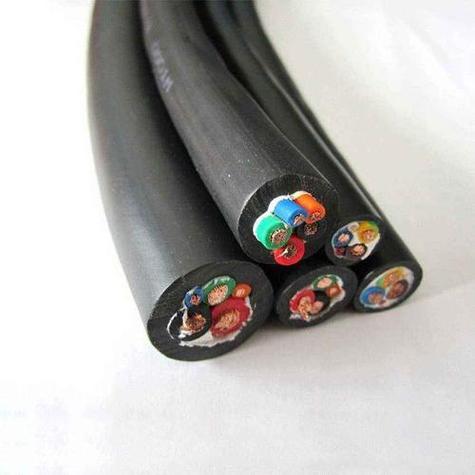
PVC Insulated Cable — IEC 60502-1 / IEC 60227 Polyvinyl Chloride Insulated 0.6/1 kV and 300/500V Power and Wiring Cable, 70°C Rated, Copper or Aluminum, Single-Core and Multi-Core, for Indoor Fixed Installation, Building Wiring, and General Industrial Power Distribution
Power & High Voltage Cables /PVC Insulation Series

PVC Insulated Cable — IEC 60502-1 / IEC 60227 Polyvinyl Chloride Insulated 0.6/1 kV and 300/500V Power and Wiring Cable, 70°C Rated, Copper or Aluminum, Single-Core and Multi-Core, for Indoor Fixed Installation, Building Wiring, and General Industrial Power Distribution

PVC insulated cable: IEC 60502-1 (0.6/1 kV) and IEC 60227 (300/500V & 450/750V) PVC insulated power and wiring cable. 70°C continuous, 160°C short-circuit. Copper or aluminum 0.5–630 mm². Single-core, multi-core, armoured, unarmoured. For indoor building wiring, industrial distribution, control panels. Flame retardant IEC 60332-1-2. CE, RoHS.

Key Features

IEC 60502-1 (0.6/1 kV power cable) and IEC 60227 (300/500V & 450/750V wiring cable) compliant — PVC insulated cable covers the full low voltage spectrum from building wiring wire to power distribution cable in a single insulation material family
PVC (polyvinyl chloride) insulation — the most widely used cable insulation material globally; 70°C continuous conductor temperature; 160°C short-circuit withstand; formulated with plasticizers for flexibility and flame retardants for fire safety
Cost-effective insulation — PVC's lower material cost compared to XLPE makes it the economic choice for indoor installations where the 70°C temperature rating is adequate for the expected load profile and the installation environment is clean and dry
Flame-retardant PVC compound — IEC 60332-1-2 compliant; the chlorine content of PVC (approximately 57% by weight of the polymer) makes it inherently flame-retardant; PVC ignites with difficulty and self-extinguishes when the flame source is removed
Single-core and full multi-core range (2–5 cores) — from single-core building wire (BV/BVR/H07V-U/H07V-R) to 5-core power cable (3P+N+PE); one insulation material across the complete LV cable portfolio
Copper or aluminum conductor — copper 0.5–630 mm²; aluminum 16–630 mm² for weight and cost reduction in large feeder applications; bare or tinned copper for corrosion resistance in humid environments
Armoured (SWA/STA) or unarmoured — steel wire or steel tape armour for mechanical protection in underground and industrial installations; unarmoured for cable tray, conduit, and indoor surface mounting
PVC outer sheath over PVC insulation — the traditional VV construction (PVC/PVC); the insulation and sheath share the same material chemistry, simplifying recycling at end of life compared to mixed-material cables

Applications

Indoor building power distribution — PVC/PVC (VV type) armoured or unarmoured cable for sub-main and final distribution circuits in commercial buildings, warehouses, and industrial facilities where the installation is indoors and dryResidential building wiring — PVC insulated single-core building wire (BV/BVR) in conduit and trunking for lighting circuits, socket outlets, and fixed appliance connections per national wiring regulationsControl panel and switchgear wiring — PVC insulated single-core and multi-core wire for control circuit connections, relay wiring, and auxiliary power circuits in industrial control panels where the ambient temperature does not exceed 40°CCable tray and ladder rack installation — PVC insulated and PVC sheathed unarmoured cable for above-ground industrial power distribution where mechanical protection is provided by the cable management systemUnderground duct installation — PVC sheathed armoured cable in buried ducts and conduits; the PVC sheath is suitable for underground ducts where it is not in direct contact with soil and water for extended periodsLighting and small power circuits — PVC insulated building wire for indoor and outdoor lighting installations, emergency lighting circuits, and small power distribution in commercial premisesTemporary and construction site power — PVC insulated flexible cable for temporary distribution boards and equipment connections on construction sites where the cable will be removed and re-used and the cost of rubber cable is not justified

Technical Specifications

Standard — Power Cable (0.6/1 kV) IEC 60502-1: Power cables with extruded insulation and their accessories for rated voltages from 1 kV up to 30 kV — PVC/A type insulation
Standard — Wiring Cable (300/500V & 450/750V) IEC 60227 (parts 1, 3, 4, 5, 6, 7); HD 21; VDE 0281; BS 6004; covers single-core non-sheathed, single-core sheathed, and multi-core PVC insulated cables up to 450/750 V
Rated Voltage — Power Cable 0.6/1 kV (Um = 1.2 kV)
Rated Voltage — Wiring Cable 300/300 V, 300/500 V (light duty); 450/750 V (standard building wiring)
Conductor Material — Copper Bare copper (standard) or tinned copper (humid environments); Cu-ETP; IEC 60228 Class 1 (solid ≤4 mm²), Class 2 (stranded ≥6 mm² for fixed installation), Class 5 (flexible for equipment wiring)
Conductor Material — Aluminum Aluminum (99.5%); IEC 60228 Class 2; ≥16 mm² for power cable
Conductor Cross-Sections — Power Cable (0.6/1 kV, Copper) 1.5, 2.5, 4, 6, 10, 16, 25, 35, 50, 70, 95, 120, 150, 185, 240, 300, 400, 500, 630 mm²
Conductor Cross-Sections — Wiring Cable (450/750V, Copper) 0.5, 0.75, 1.0, 1.5, 2.5, 4, 6, 10, 16, 25, 35, 50, 70, 95, 120, 150, 185, 240, 300, 400 mm² (BV/BVR type)
Conductor Cross-Sections — Aluminum Power Cable 16, 25, 35, 50, 70, 95, 120, 150, 185, 240, 300, 400, 500, 630 mm²
Core Configuration — Power Cable Single-core; 2-core; 3-core; 3.5-core (3-phase + reduced neutral); 4-core (3-phase + full neutral); 5-core (3-phase + N + PE)
Core Configuration — Wiring Cable Single-core (non-sheathed, for conduit); 2-core to 5-core (sheathed, for surface and appliance wiring)
Insulation — PVC Type PVC type A per IEC 60502-1; PVC type TI1 (70°C) per IEC 60227-1; the PVC compound contains plasticizer (for flexibility), stabilizer (for thermal stability), flame retardant (for fire safety), and filler (for cost and mechanical properties)
Insulation Thickness — 0.6/1 kV Power Cable (PVC) Per IEC 60502-1 Table 3; 0.8 mm (1.5–6 mm²); 1.0 mm (10–16 mm²); 1.2 mm (25–35 mm²); 1.4 mm (50–95 mm²); 1.6 mm (120–150 mm²); 1.8 mm (185–240 mm²); 2.0 mm (300 mm²); 2.2 mm (400 mm²); 2.4 mm (500–630 mm²)
Insulation Thickness — 450/750V Wiring Cable (PVC) Per IEC 60227-1 Table 1; 0.6 mm (0.5–1.0 mm²); 0.7 mm (1.5 mm²); 0.8 mm (2.5–6 mm²); 1.0 mm (10–16 mm²); 1.2 mm (25–35 mm²); per H07V-U/H07V-R type
Core Identification — Power Cable Per HD 308 S2: brown, black, grey (L1, L2, L3), blue (N), green-yellow (PE); numbered black cores on request
Core Identification — Wiring Cable (Single-Core) Solid colors: brown, black, grey, blue, green-yellow; additionally red, white, yellow, orange, violet on request
Core Assembly (Multi-Core) Concentric stranding of insulated cores with non-hygroscopic PP filler elements to produce a circular cross-section
Inner Covering / Bedding Extruded PVC ST2; or lapped PVC binder tape for unarmoured cables; provides cylindrical bedding for armour
Armour — SWA Galvanized steel wire armour; wire diameter per IEC 60502-1 Table 5; applied helically
Armour — STA Galvanized steel tape armour; double tape with ≥25% overlap; tape thickness 0.2–0.8 mm
Outer Sheath — PVC ST2 Extruded PVC type ST2 per IEC 60502-1; black RAL 9005 as standard; grey RAL 7035 on request (e.g., NYM type); UV-stabilized for outdoor exposure
Sheath Thickness (Power Cable) Per IEC 60502-1 Table 7; calculated from the diameter over armour or core assembly; from 1.4 mm to 3.4 mm
Maximum DC Conductor Resistance at 20°C — Copper (Power Cable) Per IEC 60228 Class 2; 12.1 Ω/km (1.5 mm²) to 0.0283 Ω/km (630 mm²)
Maximum DC Conductor Resistance at 20°C — Copper (Wiring Cable) Per IEC 60228 Class 1 (solid) or Class 2 (stranded); 12.1 Ω/km (1.5 mm²) to 4.61 Ω/km (4 mm² solid)
Insulation Resistance at 20°C — PVC Power Cable ≥36.8 MΩ·km (core-to-core and core-to-earth at 500 V DC, 1 min) per IEC 60502-1
Insulation Resistance at 70°C — PVC Wiring Cable ≥0.005 MΩ·km (minimum); ≥0.010 MΩ·km (typical new installation) per IEC 60227-2
Test Voltage (AC — Power Cable) 3 500 V AC / 5 min (routine test, all cores to all other cores and armour)
Test Voltage (AC — Wiring Cable) 2 500 V AC / 5 min (450/750 V types); 2 000 V AC / 5 min (300/500 V types); per IEC 60227-2
Temperature Range — Continuous (Power Cable) 70°C conductor temperature; sheath surface: 70°C max (PVC ST2); ambient air: typically 30°C (ampacity tables basis); de-rate for higher ambient
Temperature Range — Continuous (Wiring Cable) -15°C to +70°C (PVC TI1); the lower ambient limit is set by PVC embrittlement at low temperatures — PVC insulated cable must not be installed below 0°C without pre-heating to avoid insulation cracking during bending
Overload Temperature — PVC (Power Cable) 100°C (limited; repeated or prolonged operation at 100°C accelerates plasticizer migration and insulation ageing)
Short-Circuit Temperature — PVC 160°C (max 5 s) per IEC 60949 for conductor cross-sections ≤300 mm²
Minimum Bending Radius — Power Cable 15× cable OD (single-core); 12× cable OD (multi-core unarmoured); 15× cable OD (multi-core armoured); per IEC 60502-1
Minimum Bending Radius — Wiring Cable 4× wire OD (solid conductor, fixed); 3× wire OD (stranded conductor, fixed); 6× cable OD (flexible multi-core, occasional flexing)
Maximum Pulling Tension — Power Cable 50 N/mm² total copper conductor cross-section; 30 N/mm² aluminum; use cable stocking over outer sheath
Current Rating (Typical, Copper/PVC/PVC, 3-Core, Air, 30°C) Per IEC 60364-5-52; 1.5 mm² = 17.5 A; 2.5 mm² = 24 A; 4 mm² = 32 A; 10 mm² = 60 A; 25 mm² = 103 A; 50 mm² = 158 A; 95 mm² = 237 A; 150 mm² = 317 A; 240 mm² = 432 A; de-rate per installation method
Flame Retardant IEC 60332-1-2 (single cable, vertical flame propagation, self-extinguishing within 425 mm of the flame source); IEC 60332-3 (bunched cable flame propagation, on request)
CPR Euroclass (EN 50575) — Power Cable Eca (standard PVC); Dca on request with enhanced flame-retardant PVC compound; CPR classification is mandatory for cables permanently installed in EU buildings
CPR Euroclass (EN 50575) — Wiring Cable Eca (standard); Dca or Cca available for buildings with enhanced fire safety requirements
Certifications CE, RoHS; HAR (harmonized) marking for wiring cable; BASEC, KEMA KEUR, VDE on request per national market

Detailed Description

What Is PVC Insulated Cable?

PVC (polyvinyl chloride) insulated cable is the original mass-produced plastic-insulated power cable — and remains the most widely manufactured and installed cable insulation type globally. The PVC molecule, with its chlorine content (approximately 57% by weight of the polymer), gives the insulation its defining characteristics: inherent flame retardance, good dielectric properties at low voltage, and the ability to be formulated with plasticizers for flexibility across a wide range of applications — from rigid single-core building wire to flexible multi-core appliance cable.

PVC insulated cable spans two IEC standards families:

  • IEC 60502-1: PVC/A type insulation for 0.6/1 kV power cables — single-core and multi-core, armoured and unarmoured, for fixed installation in power distribution
  • IEC 60227 (and HD 21): PVC TI1 type insulation for 300/500 V and 450/750 V wiring cables — single-core non-sheathed building wire (BV/BVR/H07V-U/H07V-R), sheathed flexible cables (H05VV-F/H07VV-F), and multi-core control cables
The "VV" designation in cable type codes (e.g., VV, VV22) denotes PVC insulation + PVC sheath — the traditional and most common low voltage cable construction.

PVC vs XLPE — When PVC Is the Right Choice

XLPE (90°C) has largely replaced PVC in new-build power distribution because of its higher current-carrying capacity and longer service life. But PVC remains the correct specification in several situations:

ScenarioWhy PVC?
Indoor, dry installation with well-defined load ≤70°CPVC's 70°C rating is adequate; XLPE's 90°C rating provides unused headroom at additional cost
Existing PVC cable networkNew cable additions to an existing PVC installation should match the existing cable insulation type for consistent jointing, termination, and de-rating methodology
Short cable runs where ampacity is not the limiting factorFor a 10 m cable run between a distribution board and a load where the conductor is sized for fault withstand rather than ampacity, the higher temperature rating of XLPE provides no practical benefit
Cost-sensitive residential and light commercial constructionThe installed cost of PVC cable is lower, and in these applications the 70°C rating is adequate for the 25–30 year design life of the building
Building wiring in conduit (BV/BVR type)PVC is the standard insulation for building wire per national wiring regulations; XLPE insulated building wire is available but rarely specified because PVC's 70°C is adequate for conduit wiring where the ambient temperature is well below 40°C
Control panel internal wiringPVC insulated hookup wire is the industry standard; the ambient temperature inside a ventilated control panel is ≤40°C, well within PVC's rating
PVC conduit systemsPVC insulated wire in PVC conduit is a matched material system — both materials share similar thermal expansion and chemical compatibility characteristics

The general rule: specify XLPE for feeders, distribution cables, and any installation where the conductor operating temperature is expected to approach 70°C under full load or where the service life is expected to exceed 30 years. Specify PVC for indoor wiring, control circuits, and cost-sensitive installations where the load is well within the 70°C rating and the replacement cycle is shorter than the cable's design life.

PVC Insulation Ageing — Understanding the Service Life

PVC insulation has a finite service life determined primarily by the loss of plasticizer. The PVC polymer itself is rigid and brittle at room temperature. Plasticizers — typically phthalate esters — are added during compounding to give the insulation its flexibility. Over time, these plasticizers migrate out of the PVC matrix:

  • Thermal ageing: At the rated continuous temperature (70°C), the plasticizer migration rate is controlled such that the insulation retains adequate flexibility for 25–30 years. At 90°C, the migration rate increases exponentially — approximately doubling for every 10°C increase — which is why PVC's overload temperature is limited to 100°C and only for short durations
  • Contact with chemicals: Oils, greases, and solvents extract plasticizers from PVC, accelerating embrittlement. PVC cable must not be installed in contact with hydrocarbon-based materials that are incompatible with the PVC compound
  • UV exposure: PVC degrades under prolonged UV radiation — the surface chalks, cracks, and loses mechanical strength. PVC cable for outdoor installation must have a UV-stabilized (carbon-black reinforced) sheath formulation. Indoor-grade PVC rapidly degrades outdoors
The end-of-life indicator for PVC cable is insulation embrittlement — the insulation cracks when the cable is bent. This is the field test that signals the cable should be considered for replacement, regardless of whether the electrical properties still meet specification.

PVC Insulation and Fire Safety

PVC's fire behavior is both an advantage and a limitation:

Advantage — Inherent flame retardance: The chlorine atoms in PVC act as a flame retardant. When heated, PVC releases HCl (hydrogen chloride) gas, which interrupts the free-radical chain reaction of combustion. PVC ignites at a higher temperature than PE (approximately 390°C vs 340°C) and self-extinguishes when the ignition source is removed. This is why PVC meets IEC 60332-1-2 with the standard compound formulation — no additional flame-retardant additives are required. Limitation — Halogen emission: The same HCl that retards the flame is a toxic and corrosive gas. In a building fire, HCl from burning PVC cable combines with water (from combustion and firefighting) to form hydrochloric acid, which corrodes steel reinforcement, electronic equipment, and building structure. Smoke from burning PVC is dense and opaque, reducing visibility for evacuation. This is why LSZH (low smoke zero halogen) cables are specified for enclosed public spaces — they eliminate halogen and minimize smoke, at the cost of reduced flame retardance (LSZH compounds require higher loading of mineral flame retardants such as ATH/MDH).

For most industrial and commercial installations, PVC's inherent flame retardance is the correct balance between fire safety and cost. For public buildings, tunnels, underground stations, and hospitals — where smoke and halogen emission are regulated by building codes — LSZH cable should be specified instead.

Why Choose Yichi PVC Insulated Cables

  • Full IEC 60502-1 and IEC 60227 compliance — the complete PVC cable portfolio: From 0.5 mm² building wire to 630 mm² armoured power cable — one manufacturer, one insulation material family, one quality system
  • Flame-retardant PVC compound as standard: No minimum order quantity for flame-retardant PVC — it is the only PVC compound we use for power and wiring cable. The IEC 60332-1-2 flame test is a routine production test, not a type test
  • Cost-effective without compromising safety: PVC cable at competitive pricing, with full test certification for every production batch. Lower cost does not mean lower quality — the PVC compound, the conductor, and the manufacturing process are the same regardless of order size
  • UV-stabilized black PVC sheath for outdoor installation: The carbon black content of the sheath compound (≥2.5%) provides UV stabilization for outdoor cable tray and exposed installations. Indoor-grade grey or white sheath PVC is not UV-stabilized and should not be used outdoors
  • CPR Euroclass Eca as standard, Dca on request: All PVC power and wiring cable is classified Eca minimum for the EU market. For buildings with enhanced fire safety requirements, Dca classification with enhanced flame-retardant PVC compound is available — specify at order stage
  • Custom core configurations and color codes: PVC's formulation flexibility allows a wide range of insulation colors, enabling custom color coding for national wiring regulations that deviate from the harmonized HD 308 S2 standard

Product Inquiry

Product: PVC Insulated Cable — IEC 60502-1 / IEC 60227 Polyvinyl Chloride Insulated 0.6/1 kV and 300/500V Power and Wiring Cable, 70°C Rated, Copper or Aluminum, Single-Core and Multi-Core, for Indoor Fixed Installation, Building Wiring, and General Industrial Power Distribution

Add technical specifications (optional)

The more detail you provide, the faster and more accurate our quotation.

No file chosen

PDF, Office, image or CAD file — up to 5 MB

Need Help?

Certifications

ISO 9001
Quality
CE
European
RoHS
Environmental
TÜV
Certification

Need a Quote for This Product?

Send us your requirements and receive a detailed quotation within 24 hours.