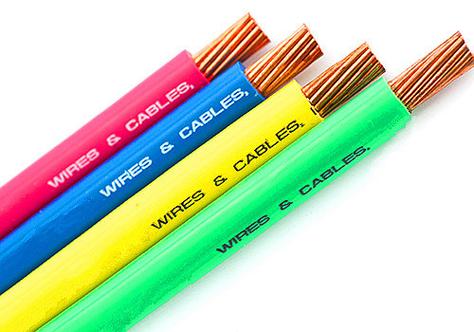
Building / House Wiring Cable — IEC 60227 Single-Core PVC Insulated Fixed Installation Wire (BV/BVR/H07V-U/H07V-R Types) for Residential and Commercial Electrical Wiring, Conduit, Trunking, and Surface Mounting in Lighting and Socket Circuits
Power & High Voltage Cables /Building Wiring (300/500V & 450/750V)

Building / House Wiring Cable — IEC 60227 Single-Core PVC Insulated Fixed Installation Wire (BV/BVR/H07V-U/H07V-R Types) for Residential and Commercial Electrical Wiring, Conduit, Trunking, and Surface Mounting in Lighting and Socket Circuits

Building house wiring cable: IEC 60227 single-core PVC insulated fixed installation wire, 450/750V. BV solid / BVR stranded copper, H07V-U / H07V-R harmonized types. For residential & commercial wiring in conduit, trunking, lighting circuits, socket outlets. 1.5–400 mm² conductor. Flame retardant IEC 60332-1-2. CE, RoHS.

Key Features

IEC 60227-3 compliant — the international standard for single-core non-sheathed PVC insulated cables for fixed wiring at rated voltages up to 450/750 V; covers BV, BVR, H07V-U, and H07V-R type designations
Available in solid (Class 1, ≤6 mm²) and stranded (Class 2, ≥6 mm²) bare copper conductor — solid for permanent wiring pulled once and terminated; stranded for wiring that requires routing flexibility in crowded distribution boards and junction boxes
PVC insulation type TI1 rated 70°C continuous — the standard insulation for indoor building wiring where ambient temperature does not exceed 40°C; TI2 heat-resistant 90°C PVC available for lighting circuits in insulated ceilings and other elevated-temperature locations
Standard color coding per HD 308 S2 / national wiring regulations — brown, black, grey for phase; blue for neutral; green-yellow for protective earth; single-color manufacturing simplifies conduit identification and reduces wiring errors during installation
Flame retardant PVC compound to IEC 60332-1-2 — self-extinguishing; the PVC insulation compound is formulated with flame-retardant plasticizers that inhibit flame propagation along the wire in the event of a short circuit or overload
Cross-section range 1.5–400 mm² — from 1.5 mm² for lighting circuits to 25 mm² for sub-main distribution to 400 mm² for main feeder connections between the meter cabinet and the consumer unit
Low minimum bend radius — 4× wire OD for solid conductors, 3× for stranded; allows tight routing in conduit bends, distribution board terminals, and junction box connections without insulation damage
Compatible with standard screw-terminal, cage-clamp, and push-in connection systems — the conductor diameter and insulation strip length match industry-standard terminal blocks and circuit breaker terminals for fast, reliable termination

Applications

Residential lighting circuits — 1.5 mm² solid conductor (BV / H07V-U) in 16 mm or 20 mm PVC conduit for ceiling lights, wall lights, and associated switch wiring in houses and apartmentsResidential socket outlet circuits — 2.5 mm² solid conductor in conduit or trunking for 13 A (UK), 16 A (EU) socket radial or ring final circuits in kitchens, living rooms, and bedroomsCommercial building electrical installation — 4–16 mm² stranded conductor (BVR / H07V-R) for lighting and power circuits in offices, retail spaces, and hospitality venues where higher load density requires larger cross-sectionsDistribution board and consumer unit internal wiring — stranded single-core wire for connections between main switch, RCDs, MCBs, and busbars in electrical distribution panels; the flexibility of stranded wire simplifies wiring in the confined space of a distribution boardFixed appliance connection — 2.5–6 mm² wire from the fused connection unit or isolator to permanently connected appliances: water heaters, electric cookers, air conditioning units, and extractor fansConduit and trunking systems — single-core wires pulled through rigid PVC, flexible, or metal conduit systems where the conduit provides the mechanical protection and the wire provides the electrical circuitIndustrial control and auxiliary circuits — 1.5–2.5 mm² building wire used within industrial control panels and machine wiring for auxiliary circuits where the environment is clean and dry and PVC insulation is adequate

Technical Specifications

Standards IEC 60227-3: PVC insulated cables of rated voltages up to and including 450/750 V — non-sheathed cables for fixed wiring; HD 21.3 S3 (CENELEC); VDE 0281-3; BS 6004
Type Designation — Solid Conductor BV (China: 60227 IEC 01); H07V-U (CENELEC harmonized); single solid copper conductor, ≤6 mm²
Type Designation — Stranded Conductor BVR (China: 60227 IEC 02); H07V-R (CENELEC harmonized); Class 2 stranded copper, ≥6 mm²
Rated Voltage (U₀/U) 450/750 V (standard building wiring class); 300/500 V available for extra-low-voltage control and signal circuits within buildings
Conductor Material Bare copper; electrolytic Cu-ETP; tinned copper available on request for coastal/high-humidity installation environments
Conductor Class — BV / H07V-U IEC 60228 Class 1 (solid); 1.5, 2.5, 4, 6 mm²
Conductor Class — BVR / H07V-R IEC 60228 Class 2 (stranded); 1.5, 2.5, 4, 6, 10, 16, 25, 35, 50, 70, 95, 120, 150, 185, 240, 300, 400 mm²
Conductor Shape Circular; compacted for cross-sections ≥50 mm² to reduce overall wire diameter
Insulation — PVC TI1 PVC type TI1 per IEC 60227-1; 70°C continuous conductor temperature; standard for indoor building wiring
Insulation — PVC TI2 (Optional) PVC type TI2 per IEC 60227-1; 90°C continuous; for wiring in thermally insulated walls, ceilings, and proximity to heating equipment
Insulation Thickness (450/750 V) 0.6 mm (1.5 mm²); 0.7 mm (2.5–4 mm²); 0.8 mm (6 mm²); 1.0 mm (10–16 mm²); 1.2 mm (25–35 mm²); 1.4 mm (50 mm²); 1.4 mm (70–120 mm²); 1.6 mm (150–185 mm²); 1.8 mm (240 mm²); 2.0 mm (300 mm²); per IEC 60227-1 Table 1
Insulation Color Coding Per HD 308 S2: brown (L1), black (L2), grey (L3), blue (N), green-yellow (PE); also available: red, yellow, white, orange on request for national wiring code compliance
Maximum DC Conductor Resistance at 20°C — Solid (BV) Per IEC 60228 Class 1; 12.1 Ω/km (1.5 mm²); 7.41 Ω/km (2.5 mm²); 4.61 Ω/km (4 mm²); 3.08 Ω/km (6 mm²)
Maximum DC Conductor Resistance at 20°C — Stranded (BVR) Per IEC 60228 Class 2; 12.1 Ω/km (1.5 mm²) to 0.0470 Ω/km (400 mm²)
Insulation Resistance at 70°C ≥0.005 MΩ·km (minimum per IEC 60227-2); typical >0.010 MΩ·km for new installation
Test Voltage (AC) 2 500 V AC / 5 min (450/750 V types); 2 000 V AC / 5 min (300/500 V types); per IEC 60227-2
Dielectric Strength ≥15 kV/mm (short-term); ≥5 kV/mm (continuous DC)
Temperature Range — PVC TI1 -15°C to +70°C (continuous); 0°C minimum during installation without pre-heating
Temperature Range — PVC TI2 -15°C to +90°C (continuous)
Minimum Bend Radius — Solid Conductor (BV) 4× wire OD (fixed installation); do not re-bend solid conductors after termination as work-hardening can cause fracture
Minimum Bend Radius — Stranded Conductor (BVR) 3× wire OD (fixed installation); 6× wire OD if re-routed after initial installation
Flame Retardant IEC 60332-1-2 (single wire vertical flame test); the PVC compound is inherently flame-retardant and self-extinguishes when the flame source is removed
CPR Euroclass (EN 50575) Eca (standard PVC); Dca on request with enhanced flame-retardant PVC; for building cables permanently installed in the EU, CPR classification is mandatory
Copper Conductor Ampacity — In Conduit (Typical) Per IEC 60364-5-52, installation method B1 (single-core in conduit): 1.5 mm² = 14.5 A; 2.5 mm² = 19.5 A; 4 mm² = 26 A; 6 mm² = 34 A; 10 mm² = 46 A; 16 mm² = 61 A; at 30°C ambient, PVC 70°C insulation
Copper Conductor Ampacity — Clipped Direct (Typical) Per IEC 60364-5-52, installation method C: 1.5 mm² = 19.5 A; 2.5 mm² = 27 A; 4 mm² = 36 A; 6 mm² = 46 A; 10 mm² = 63 A; 16 mm² = 85 A; at 30°C ambient, PVC 70°C insulation
Short-Circuit Temperature — PVC 160°C (max 5 s) per IEC 60949; the conductor reaches this temperature during a short circuit before the protective device clears the fault
Certifications CE, RoHS; HAR (CENELEC harmonized) marking; VDE, KEMA KEUR, or BASEC on request per national market

Detailed Description

What Is a Building / House Wiring Cable?

A building wiring cable is a single-core PVC insulated non-sheathed wire designed for fixed installation inside electrical conduit, trunking, and surface-mounting systems in residential, commercial, and light industrial buildings. It is the wire that an electrician pulls through conduit every day — the brown wire for the lighting switched live, the blue wire for the neutral, the green-yellow wire for the earth.

In the IEC world, this cable is designated 60227 IEC 01 (solid conductor, known as BV in China) or 60227 IEC 02 (stranded conductor, known as BVR in China). In the CENELEC harmonized system, the equivalent designations are H07V-U (solid) and H07V-R (stranded). The voltage rating is 450/750 V — the standard for fixed building wiring — which provides sufficient insulation coordination for 230/400 V residential and commercial electrical systems.

The key characteristic of building wiring cable is that it is non-sheathed — a single insulated conductor, not a multi-core cable with an outer sheath. The mechanical protection is provided by the conduit or trunking system in which it is installed. This design allows the electrician to pull individual wires to each point in the circuit, selecting the correct color for each function (phase, neutral, earth) and the correct cross-section for each circuit's load current.

Solid vs Stranded Conductor — Which for Which Application?

ParameterSolid Conductor (BV / H07V-U)Stranded Conductor (BVR / H07V-R)
Conductor classIEC 60228 Class 1IEC 60228 Class 2
Cross-section range1.5–6 mm²1.5–400 mm²
FlexibilityRigid — holds its shape after bendingSemi-flexible — can be routed around corners without spring-back
TerminationDirect insertion into screw and cage-clamp terminals; no ferrule requiredRequires ferrule for cage-clamp terminals ≥10 mm²; crimped lug for screw terminals ≥16 mm²
Best forLighting and socket circuits ≤6 mm² in conduit — one-time pull, permanent installationDistribution board wiring, sub-main circuits ≥10 mm², any application where the wire must be routed through confined spaces
CostLower — simpler manufacturingSlightly higher — additional stranding step

Solid conductor is the default for lighting (1.5 mm²) and socket (2.5 mm²) circuits — the standard domestic wiring cross-sections. The wire is pulled once, terminated, and never moved. Stranded conductor is used for distribution circuits (10–25 mm² sub-mains) and for internal wiring inside distribution boards where the flexibility of stranded wire makes it possible to route conductors neatly between devices in the confined space of a consumer unit.

Color Coding — The Language of Electrical Wiring

Correct color identification is the first line of defense against wiring errors. The harmonized European color code per HD 308 S2 (and adopted by most IEC countries) is:

Conductor FunctionColor (HD 308 S2)Common Legacy Colors
Line / Phase (L1)BrownRed (old UK), Black (old Germany)
Line / Phase (L2)BlackYellow (old UK), Blue (old Germany)
Line / Phase (L3)GreyBlue (old UK)
Neutral (N)BlueBlack (old UK, old Germany)
Protective Earth (PE)Green-Yellow (bi-color)Green (old); bare (in some conduit systems)

Yichi building wires are manufactured in all standard colors. The insulation color is integral to the PVC compound — it is not a surface coating — so it does not rub off during pulling and remains identifiable for the life of the installation. For markets with national color code deviations (e.g., North American: black/red/blue phases, white neutral, green earth), custom color coding is available on request.

Installation Best Practices

  • Conduit fill: The total cross-sectional area of all wires in a conduit must not exceed 40% of the conduit's internal cross-sectional area (for conduits longer than 3 m with up to 3 bends). Exceeding this limit makes pulling difficult and can damage the insulation through friction heating during pulling
  • De-rating for grouping: When more than three current-carrying conductors are installed in the same conduit, the current-carrying capacity (ampacity) of each conductor must be de-rated per IEC 60364-5-52 Table B.52.17. For example, 6 current-carrying conductors in one conduit → de-rating factor 0.57 → a 2.5 mm² wire rated 19.5 A (clipped direct) drops to 11.1 A
  • Conductor identification: Every conductor must be identifiable at every accessible point — at the distribution board, at every junction box, at every accessory. Do not rely on "tracing the wire" — the color coding is the identification
  • Earth conductor: In most national wiring regulations, the protective earth conductor must be green-yellow throughout its length. It cannot be an over-sleeved conductor of another color — the insulation color must be green-yellow from manufacture. Yichi earth conductors are green-yellow bi-color extruded as standard
  • Do not paint or cover: The PVC insulation is the electrical safety barrier. Painting, plastering over, or covering the insulation with tape or sleeving that is not rated for the voltage compromises the insulation system. If a wire needs a different color at the termination, use an appropriately rated identification sleeve over the visible portion only

Why Choose Yichi Building Wiring Cables

  • IEC 60227-3 compliant — the definitive standard for building wire: Every production batch is tested for conductor resistance, insulation thickness, high-voltage withstand, and flame retardance per the full IEC 60227 test schedule. The standard is not optional — it is the minimum
  • Solid and stranded conductors from a single manufacturer: BV (solid) and BVR (stranded) types across the full 1.5–400 mm² range — one supplier for the complete building wiring specification, from the 1.5 mm² lighting circuit wire to the 240 mm² main feeder between the meter and the consumer unit
  • Color coding to your national standard: HD 308 S2 harmonized colors as standard; custom color codes for national markets that deviate from the European harmonized system; bi-color green-yellow earth conductor manufactured with true co-extrusion, not surface painting
  • CPR Euroclass Eca as standard: All building wire is CPR-classified to Eca minimum, meeting the legal requirement for cable placed on the EU market for permanent installation in buildings. Dca class available on request with enhanced flame-retardant PVC
  • Full coil and drum packaging: Standard lengths of 100 m coils for small cross-sections (1.5–6 mm²) used by electrical contractors; 500 m and 1 000 m drums for larger cross-sections used in commercial and industrial projects

Product Inquiry

Product: Building / House Wiring Cable — IEC 60227 Single-Core PVC Insulated Fixed Installation Wire (BV/BVR/H07V-U/H07V-R Types) for Residential and Commercial Electrical Wiring, Conduit, Trunking, and Surface Mounting in Lighting and Socket Circuits

Add technical specifications (optional)

The more detail you provide, the faster and more accurate our quotation.

No file chosen

PDF, Office, image or CAD file — up to 5 MB

Need Help?

Certifications

ISO 9001
Quality
CE
European
RoHS
Environmental
TÜV
Certification

Need a Quote for This Product?

Send us your requirements and receive a detailed quotation within 24 hours.