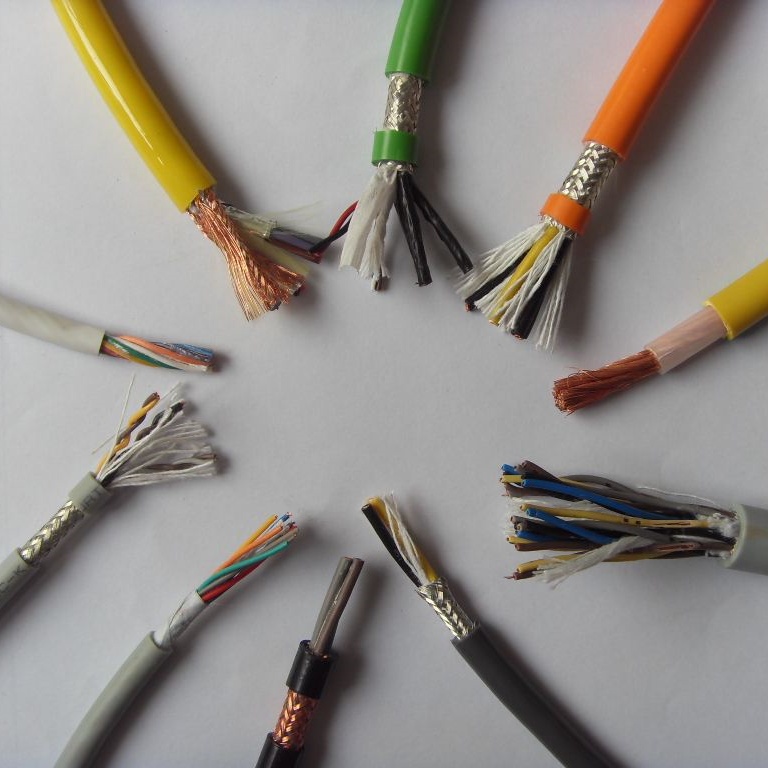
Detailed Description
PUR — The Jacket Material That Makes the Cable
In most industrial cables, the copper conductor is the expensive part and the jacket is just a protective cover. With PUR cable, the jacket is the defining feature — it determines where the cable can be used, how long it will last, and what environments it will survive.
PUR (polyurethane) is a thermoplastic elastomer that combines:
- The flexibility of rubber — remains elastic and bendable across a wide temperature range
- The toughness of plastic — high abrasion resistance, cut and tear strength
- The chemical inertness of a specialized polymer — resists oils, solvents, UV, water, and microbes
Where PUR Cables Are Used — Beyond Drag Chains
PUR is strongly associated with drag chain cables because that is the most demanding moving-cable application. But PUR's properties make it the optimal jacket material for many other applications:
Cable Reels
Motorized and spring-driven cable reels subject the cable to constant winding and unwinding under tension. The cable compresses against the drum, abrades against adjacent turns, and experiences tensile load at the take-off point. PUR's abrasion resistance and tensile strength directly extend reeling life.
Festoon Systems
Overhead festoon cables hang in loops between trolleys, exposed to sun, rain, wind, and temperature extremes. PUR's UV stability and weather resistance eliminate the need for protective covers or shaded routing — the jacket itself is the weather protection.
Fixed Installation in Harsh Environments
Not all industrial cables move. Fixed cables in chemical plants, wastewater treatment facilities, offshore platforms, and food processing plants face constant chemical exposure with zero mechanical stress. PUR's chemical resistance protects the conductors indefinitely — PVC would degrade within months to years.
Portable and Mobile Equipment
Extension cords, welding cables, and portable power cables are abused daily — dragged across concrete, run over by forklifts, coiled and uncoiled. PUR's cut, tear, and abrasion resistance survives handling that would destroy PVC jackets.
PUR vs Other Jacket Materials
| Jacket Material | Abrasion | Oil | UV | Cold Flex | Halogen-Free | Flame | Relative Cost | Best Application |
|---|---|---|---|---|---|---|---|---|
| PVC | ⭐⭐ | ⭐ | ⭐ | ⭐ | ❌ | ✅ | 1.0× | Indoor, clean, budget |
| NBR-PVC | ⭐⭐⭐ | ⭐⭐ | ⭐⭐ | ⭐⭐ | ❌ | ✅ | 1.1× | Indoor, moderate oil |
| CR (Neoprene) | ⭐⭐⭐ | ⭐⭐ | ⭐⭐⭐ | ⭐⭐ | ❌ | ✅✅ | 1.3× | Mining, welding |
| TPE | ⭐⭐⭐ | ⭐⭐⭐ | ⭐⭐⭐ | ⭐⭐⭐⭐ | ✅ | ✅ | 1.2× | Cold, lightweight |
| PUR | ⭐⭐⭐⭐⭐ | ⭐⭐⭐⭐ | ⭐⭐⭐⭐ | ⭐⭐⭐⭐ | ✅ | ✅ | 1.3× | All harsh environments |
| FEP/Teflon | ⭐⭐ | ⭐⭐⭐⭐⭐ | ⭐⭐⭐⭐ | ⭐⭐⭐ | ✅ | ✅✅ | 4–6× | Extreme chemical, high-temp |
PUR is not the best at any single property — but it is the best all-around performer. No other material scores 4+ stars across all categories.
When PUR Is NOT the Best Choice
Being honest about limitations builds credibility:
- Extreme high temperature (> 90°C continuous): PUR softens. Use silicone or FEP for > 150°C
- Lowest possible cost in a clean, dry indoor environment: PVC is sufficient and 25–30% cheaper
- Weight-sensitive applications (aerospace, drones): PUR is denser than TPE — use TPE for weight savings
- Requirement for PVC-specific approvals: Some legacy industry standards specify PVC — verify before substituting PUR
Why Choose Yichi Cable PUR?
- Polyether PUR as standard: We default to hydrolysis-resistant polyether PUR — no risk of polyester PUR degrading in your humid or outdoor application
- Application guidance, not catalog reading: Tell us where and how the cable will be used. We confirm PUR is the right choice — or tell you if another material is better
- Full test documentation: Every batch is tested for halogen content (IEC 60754-1), oil resistance (IEC 60811-404), and mechanical properties — batch-specific reports, not industry averages
- No minimum order for standard colors: Black, gray, orange, and yellow in stock — order what you need
- Certification support: CE, RoHS, REACH standard; UL/CSA per configuration — documentation provided with every shipment