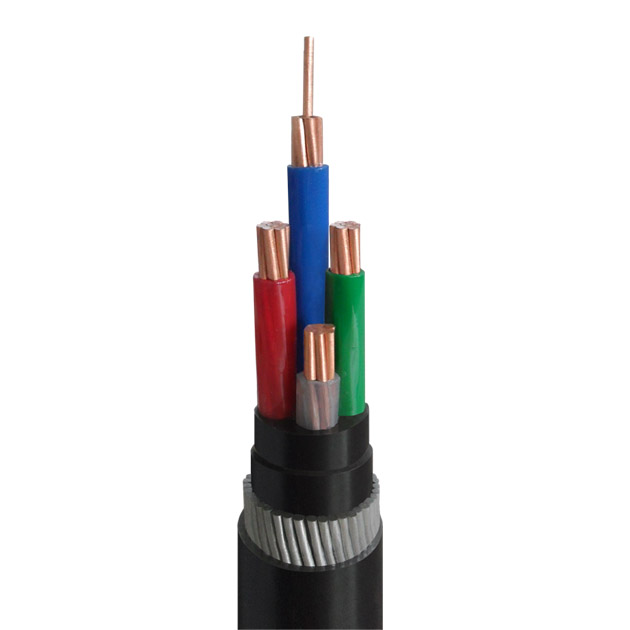
Halogen Free Cable — IEC 60754 Zero Halogen XLPE/PE Insulated and LSZH or PE Sheathed Power and Control Cable with Verified Zero Halogen Acid Gas Emission for Data Centers, Control Rooms, Marine Vessels, Semiconductor Fabs, Cleanrooms, and Electronics Manufacturing Environments Requiring Corrosion-Free Fire Performance
Fire Resistant, High Temperature & LSZH Cables /Halogen Free

Halogen Free Cable — IEC 60754 Zero Halogen XLPE/PE Insulated and LSZH or PE Sheathed Power and Control Cable with Verified Zero Halogen Acid Gas Emission for Data Centers, Control Rooms, Marine Vessels, Semiconductor Fabs, Cleanrooms, and Electronics Manufacturing Environments Requiring Corrosion-Free Fire Performance

Halogen free cable: IEC 60754 verified zero halogen (<0.5% HCl). XLPE or PE insulation, LSZH or PE sheath. 0.6/1kV power, 300/500V control. For data centers, marine, semiconductor fabs, cleanrooms, control rooms. Prevents HCl corrosion damage to electronics. CE, RoHS, DNV/ABS on request.

Key Features

IEC 60754-1 verified zero halogen — HCl emission <0.5% confirmed by laboratory testing of the finished cable; the cable contains no PVC, no chlorinated polyethylene, no brominated flame retardants, and no fluoropolymers — zero intentional halogen content in any cable component
XLPE (cross-linked polyethylene) or PE (polyethylene) core insulation — both are inherently halogen-free materials (polyethylene is C₂H₄ — carbon and hydrogen only); the insulation provides the cable's electrical performance: 90°C (XLPE) or 75°C (PE) continuous temperature rating, high insulation resistance, and low dielectric loss
LSZH or PE outer sheath — LSZH sheath for general halogen-free applications where low smoke and flame retardance are also required; PE sheath for installations where moisture resistance, UV stability, and mechanical properties are the primary requirements and the fire safety strategy does not demand LSZH smoke performance
Corrosion-free fire performance — the defining characteristic of halogen-free cable: when exposed to fire, the cable emits no HCl, HBr, or HF gases; these halogen acids, when combined with water (from firefighting, sprinklers, or atmospheric humidity), form hydrochloric, hydrobromic, or hydrofluoric acid that corrodes copper, solder, steel, and concrete — causing millions in post-fire damage that often exceeds the direct fire damage
Mandatory for data centers, semiconductor fabs, and control rooms — these environments contain high-value electronic equipment where the cost of HCl corrosion damage from a PVC cable fire would be catastrophic: server racks destroyed, wafer fabrication equipment contaminated, DCS/PLC systems corroded beyond repair; halogen-free cable is the only cable type permitted in these facilities
Available as power cable (0.6/1 kV, 1.5–300 mm², 1–5 cores) and control cable (300/500 V, 0.5–2.5 mm², 2–37 cores) — the full cable portfolio required for a halogen-free building or facility electrical installation
Flame retardant — LSZH sheathed cables pass IEC 60332-1-2 (single) and IEC 60332-3 (bunched) using mineral flame retardants (ATH/MDH); PE sheathed cables can be formulated with halogen-free intumescent flame retardants (ammonium polyphosphate, APP) to achieve IEC 60332 performance without halogen
Marine classification society approval available — DNV, ABS, Lloyd's Register, Bureau Veritas; halogen-free cable is mandatory for SOLAS passenger vessels and is specified for all new-build commercial vessels to prevent toxic gas and corrosion hazards in the confined shipboard environment

Applications

Data center power distribution and networking — halogen-free cable for the high-density cable installations from the UPS output to the server rack PDUs; the zero-halogen specification is mandatory in data center design standards (Tier III/IV, Uptime Institute) because HCl corrosion of server motherboards, connectors, and storage arrays from a cable fire would destroy the entire data hallSemiconductor fabrication facility (fab) — halogen-free cable for the extensive process tool power, control, and instrumentation wiring in cleanroom environments; halogen contamination from any source (including cables) can contaminate the silicon wafer fabrication process; halogen-free cable eliminates this contamination riskIndustrial control room and DCS/PLC cabinet wiring — halogen-free control and signal cable for the cable-intensive installations in process plant control rooms; if a fire occurs in a control room cable tray, PVC cable HCl gas would corrode every electronic card, terminal block, and connector in the room within hours — a multi-million dollar loss beyond the fire damageMarine and offshore vessel electrical installation — halogen-free cable for all shipboard circuits per SOLAS and IACS requirements; the confined, steel-enclosed shipboard environment means that PVC cable smoke and HCl gas in a fire would quickly fill compartments and cause casualties; halogen-free cable is the only cable type accepted for new-build passenger and naval vesselsMuseum, archive, and heritage building wiring — halogen-free cable to protect irreplaceable artifacts, documents, and building fabric from HCl corrosion damage in the event of a fire; the fire may damage the building, but the post-fire HCl corrosion from PVC cables would destroy what the fire sparedTelecommunications exchange and broadcasting center — halogen-free cable for the extensive DC power distribution, equipment rack wiring, and signal cabling in telecom exchanges and broadcast facilities where HCl gas from a PVC cable fire would corrode the copper connections on every distribution frame and equipment cardHospital and healthcare facility — halogen-free cable for the patient care areas, operating theatres, and medical equipment rooms where the combination of vulnerable occupants and high-value medical electronics demands the highest fire safety cable performance

Technical Specifications

Standard — Halogen-Free Verification IEC 60754-1: Determination of halogen acid gas content — HCl <0.5% (limit of detection for the test method); the test combusts a 1 g sample of the cable material at 935°C and measures the halogen acid gases evolved
Standard — Halogen-Free (Alternative Tests) EN 50267-2-1 (equivalent to IEC 60754-1); BS EN 60754-1 (UK); VDE 0482-754-1 (Germany); the zero-halogen classification is consistent across all national standards
Standard — Cable Construction IEC 60502-1 (0.6/1 kV XLPE insulated power cables); IEC 60227 (300/500 V PVC insulated — not applicable to halogen-free; replaced by BS 7629 or equivalent halogen-free control cable standards); BS 6724 (LSZH sheathed armoured power cables, UK)
Rated Voltage — Power 0.6/1 kV (U₀/U)
Rated Voltage — Control 300/500 V
Conductor Material Bare copper (standard); tinned copper (marine and humid environments); IEC 60228 Class 1 solid, Class 2 stranded, or Class 5 flexible per the cable type
Conductor Cross-Sections — Power 1.5–300 mm² copper; aluminum on request for large feeders
Conductor Cross-Sections — Control 0.5, 0.75, 1.0, 1.5, 2.5 mm²
Core Count — Power 1–5 cores
Core Count — Control 2–37 cores
Core Insulation — XLPE (Standard) Cross-linked polyethylene; 90°C continuous; 250°C short-circuit; XLPE is inherently halogen-free (C, H only); the insulation thickness per IEC 60502-1
Core Insulation — PE (Alternative) Polyethylene; 75°C continuous; for applications where XLPE's cross-linking adds cost without benefit (the operating temperature is well within PE's 75°C rating)
Core Insulation — LSZH (Full Halogen-Free) LSZH compound; 70–90°C; for total halogen-free cable — both insulation and sheath are halogen-free; specified where every layer must be verified zero-halogen (typically for data centers and semiconductor fabs)
Outer Sheath — LSZH (Standard) Mineral-filled LSZH thermoset compound; provides halogen-free fire safety plus flame retardance and low smoke; white, grey, black, or safety colors
Outer Sheath — PE (Alternative for Non-Fire-Safety Applications) Polyethylene ST7; black; inherently halogen-free; the best moisture barrier for underground and submarine applications; PE is not flame-retardant — for fire safety applications, LSZH is specified
Halogen-Free Verification — All Cable Components IEC 60754-1 tested on: core insulation (XLPE/PE/LSZH), filler elements, binder tapes, inner covering, and outer sheath; every organic component of the cable must pass the <0.5% HCl test — a PVC filler yarn or PVC binder tape in an otherwise halogen-free cable would contaminate the halogen-free classification
Flame Retardant — LSZH Sheath IEC 60332-1-2 (single cable); IEC 60332-3 (bunched, on request); the LSZH compound achieves flame retardance through the endothermic decomposition of ATH/MDH mineral fillers — no halogen required
Flame Retardant — PE Sheath PE is not inherently flame-retardant; for halogen-free + flame-retardant cable, LSZH sheath is mandatory; halogen-free PE-sheathed cable without flame retardance is used where fire propagation is controlled by the installation method (buried, in metal conduit)
CPR Euroclass — LSZH Sheath B2ca, Cca, or Dca per EN 50575; the CPR classification integrates flame spread, smoke, droplets, and acidity into a single Euroclass
CPR Euroclass — PE Sheath Eca or Fca (PE does not pass the flame propagation tests required for higher CPR classes); PE-sheathed cable is not suitable for building permanent installation per CPR requirements unless in conduit
Marine Approvals (On Request) DNV (Det Norske Veritas), ABS (American Bureau of Shipping), LR (Lloyd's Register), BV (Bureau Veritas), CCS (China Classification Society); the marine approval verifies halogen-free performance, flame retardance, and mechanical/environmental durability for the shipboard environment
Maximum DC Conductor Resistance at 20°C Per IEC 60228 for the conductor class and cross-section
Insulation Resistance at 20°C — XLPE ≥1 000 MΩ·km
Test Voltage (AC) — Routine 3 500 V / 5 min (0.6/1 kV); 2 000 V / 5 min (300/500 V)
Temperature — Continuous (XLPE) 90°C conductor; LSZH sheath surface: 70°C; PE sheath surface: 80°C
Minimum Bending Radius Per IEC 60502-1 / IEC 60227; standard for the cable construction type
Certifications CE; RoHS; CPR DoP (EN 50575); DNV/ABS/LR/BV/CCS on request; BASEC on request; ISO 9001 manufactured

Detailed Description

What Is Halogen Free Cable?

Halogen free cable is a power or control cable in which every organic component — core insulation, filler elements, binder tapes, inner covering, and outer sheath — is verified to emit less than 0.5% hydrogen chloride (HCl) equivalent halogen acid gases when combusted per IEC 60754-1. The cable contains no PVC (polyvinyl chloride — 57% chlorine by polymer weight), no chlorinated polyethylene, no brominated flame retardants, and no fluoropolymers (PTFE, FEP, PVDF) in any layer.

The distinction from LSZH cable is important: all LSZH cables are halogen-free, but not all halogen-free cables are LSZH. LSZH adds the "low smoke" requirement (IEC 61034-2, >60% light transmittance) and typically includes flame retardance (IEC 60332) through mineral fillers. A halogen-free cable with a PE (polyethylene) sheath is halogen-free but not LSZH — PE produces more smoke and is not inherently flame-retardant. The specification "halogen free" focuses on the absence of halogen — the characteristic that prevents post-fire corrosion damage.

The HCl Corrosion Problem — Why Halogen-Free Matters

When PVC cable burns, approximately 20–30% of the cable's weight is released as hydrogen chloride (HCl) gas. In the presence of moisture — from firefighting water, sprinkler activation, or atmospheric humidity — HCl dissolves to form hydrochloric acid. This acid:

  • Corrodes copper: The copper conductors, terminal blocks, busbars, and PCB traces in electrical and electronic equipment are attacked by HCl, forming copper chloride (CuCl₂) — a green, water-soluble corrosion product that destroys electrical connections
  • Corrodes solder: Tin-lead and tin-silver-copper solder joints on printed circuit boards are rapidly corroded by HCl, causing open circuits, increased resistance, and intermittent failures — often across thousands of solder joints on hundreds of circuit boards
  • Attacks steel and concrete: The structural steel reinforcement in concrete, the steel cable tray and ladder rack, the steel equipment cabinets — all corrode in the presence of HCl and moisture
  • Contaminates cleanrooms: In semiconductor fabrication, pharmaceutical manufacturing, and precision engineering, HCl contamination from a cable fire would require complete decontamination of the cleanroom environment — a process costing millions and taking months
The cost of HCl corrosion damage after a fire typically exceeds the direct fire damage by a factor of 2–10×. In a data center, a PVC cable fire in a single cable tray might cause $50,000 in direct fire damage but $500,000–$5,000,000 in corrosion damage to servers, switches, storage arrays, and structured cabling throughout the data hall — because the HCl gas disperses through the entire air-conditioned space, depositing acid on every exposed metal surface. Halogen-free cable eliminates this corrosion risk entirely.

Why Choose Yichi Halogen Free Cables

  • IEC 60754-1 verified — every cable component tested: The zero-halogen classification is not claimed from the material formulation — it is verified by combustion testing of the finished cable per IEC 60754-1. Every organic component of the cable must pass the <0.5% HCl test: insulation, fillers, tapes, inner covering, sheath. A single PVC filler yarn in an otherwise halogen-free cable would fail the test
  • XLPE insulation as standard — halogen-free by chemistry: XLPE is polyethylene (C₂H₄) cross-linked with peroxide — carbon and hydrogen only, zero halogens. The insulation's 90°C continuous rating and 250°C short-circuit rating provide the electrical performance; the halogen-free chemistry provides the fire safety
  • LSZH or PE sheath — select for the fire safety requirement: LSZH sheath for general halogen-free cable where flame retardance and low smoke are also required (data centers, semiconductor fabs, control rooms). PE sheath for halogen-free cable where moisture resistance and mechanical properties are the priority and flame retardance is provided by the installation method (underground, in metal conduit)
  • Marine classification society approval on request: DNV, ABS, Lloyd's Register, Bureau Veritas, CCS — the major international marine classification societies that certify cable for shipboard installation. Halogen-free cable is mandatory for SOLAS passenger vessels and is standard for all new-build commercial vessels. The marine approval verifies the cable's halogen-free performance plus the additional environmental and mechanical durability tests required for the marine environment
  • Full power and control cable range — halogen-free throughout: 0.6/1 kV power distribution to 300/500 V multi-core control — all manufactured with the same qualified halogen-free materials, one manufacturer, one quality system, one compliance certificate package for the building or facility

Product Inquiry

Product: Halogen Free Cable — IEC 60754 Zero Halogen XLPE/PE Insulated and LSZH or PE Sheathed Power and Control Cable with Verified Zero Halogen Acid Gas Emission for Data Centers, Control Rooms, Marine Vessels, Semiconductor Fabs, Cleanrooms, and Electronics Manufacturing Environments Requiring Corrosion-Free Fire Performance

Add technical specifications (optional)

The more detail you provide, the faster and more accurate our quotation.

No file chosen

PDF, Office, image or CAD file — up to 5 MB

Need Help?

Certifications

ISO 9001
Quality
CE
European
RoHS
Environmental
TÜV
Certification

Need a Quote for This Product?

Send us your requirements and receive a detailed quotation within 24 hours.