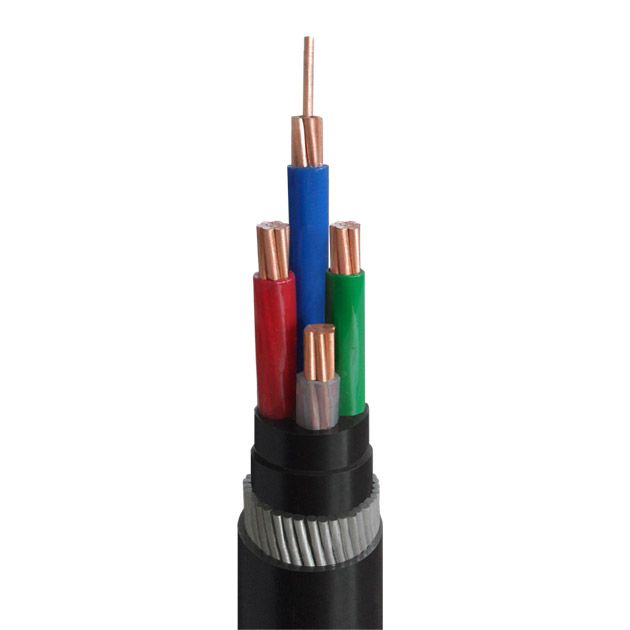
LSZH Cable (Low Smoke Zero Halogen) — IEC 60754 / IEC 61034 / EN 50575 CPR Classified Halogen-Free Low Smoke Multi-Core Power and Control Cable with LSZH Insulation and Sheath for Public Buildings, Tunnels, Transport Infrastructure, Data Centers, and Enclosed Spaces Requiring Fire Safety Cable Performance
Fire Resistant, High Temperature & LSZH Cables /LSZH Cable

LSZH Cable (Low Smoke Zero Halogen) — IEC 60754 / IEC 61034 / EN 50575 CPR Classified Halogen-Free Low Smoke Multi-Core Power and Control Cable with LSZH Insulation and Sheath for Public Buildings, Tunnels, Transport Infrastructure, Data Centers, and Enclosed Spaces Requiring Fire Safety Cable Performance

LSZH cable low smoke zero halogen: IEC 60754 halogen-free, IEC 61034 low smoke, EN 50575 CPR B2ca/Cca classified. LSZH insulation and sheath. 0.6/1 kV power, 300/500V control, 1.5–300 mm², 2–37 cores. For public buildings, tunnels, transport, data centers, hospitals. CE, RoHS, CPR DoP.

Key Features

IEC 60754-1/2 halogen-free certified — HCl emission <0.5%, pH of combustion gases >4.3, conductivity <10 μS/mm; the LSZH compound contains zero PVC, zero chlorinated polyethylene, and zero brominated flame retardants — the cable does not emit corrosive or toxic halogen gases in a fire
IEC 61034-2 low smoke certified — minimum 60% light transmittance during the smoke emission test; in a building fire, smoke is the leading cause of death (reduced visibility for evacuation, toxic inhalation); LSZH cables minimize smoke production, maintaining tenable conditions in escape routes for longer than PVC cables
LSZH insulation + LSZH sheath — a homogeneous zero-halogen construction throughout the cable; both the core insulation and the outer sheath are LSZH compound, ensuring that no layer of the cable emits halogen gases or dense smoke when exposed to fire
Mineral flame retardant system — ATH (aluminum trihydrate, Al(OH)₃) and MDH (magnesium dihydrate, Mg(OH)₂) are the primary flame retardants in the LSZH compound; when heated, these minerals decompose endothermically, absorbing heat and releasing water vapor that cools the flame zone and dilutes combustible gases; the mineral residue forms a ceramic-like char that insulates the underlying material
CPR Euroclass B2ca-s1a,d1,a1 or Cca-s1b,d1,a1 per EN 50575 — the Construction Products Regulation classification is mandatory for cables permanently installed in EU buildings; B2ca is the highest fire performance class for LSZH cables and is required for cables in escape routes in many EU member states
XLPE core insulation (90°C) with LSZH sheath — the XLPE insulation provides the electrical performance (90°C rating, 250°C short-circuit, ≥1 000 MΩ·km IR) while the LSZH sheath provides the fire safety performance; halogen-free XLPE + halogen-free LSZH sheath = a fully halogen-free cable
Multi-core power (0.6/1 kV, 2–5 cores) and control (300/500 V, 2–37 cores) — the full range of building and industrial cable configurations manufactured with LSZH sheath for any application where fire safety demands halogen-free and low-smoke cable performance
Flame retardant to IEC 60332-1-2 (single) and IEC 60332-3 (bunched) — the LSZH cable does not propagate fire; the mineral flame retardant system provides the same or better flame retardance as PVC without the halogen penalty

Applications

Public building electrical installation — LSZH cable for power, lighting, and control circuits in hospitals, schools, museums, libraries, cinemas, shopping centers, and sports venues where building regulations mandate halogen-free and low-smoke cable for occupant safetyTunnel and underground transport infrastructure — LSZH cable for road and rail tunnel lighting, ventilation, communication, and safety systems where the confined space and limited ventilation mean that PVC cable smoke and HCl gas would create an unsurvivable conditionRailway station and airport terminal wiring — LSZH cable for the extensive electrical and data cabling in transport terminals where the density of cables and the high occupant load demand the highest fire safety cable performanceData center power and network cabling — LSZH cable for the high-density cable installations in data centers; the zero-halogen characteristic prevents the release of corrosive HCl gas that would damage sensitive server and networking equipment in the event of a cable fire — the cost of HCl corrosion damage to IT equipment far exceeds the cost premium of LSZH cableHotel and residential high-rise building wiring — LSZH cable for the electrical risers and horizontal distribution in high-rise residential and hotel buildings where the fire strategy requires cables that do not contribute to smoke logging of escape stairs and corridorsShip and marine electrical installation — LSZH cable for shipboard power, lighting, and control circuits per IACS (International Association of Classification Societies) requirements and SOLAS (Safety of Life at Sea) regulations mandating halogen-free cable for passenger vesselsIndustrial plant control rooms and equipment rooms — LSZH cable for the cable-intensive control and instrumentation wiring in process plant control rooms where HCl gas from a PVC cable fire would corrode the DCS/PLC electronics, extending the plant outage from days to months

Technical Specifications

Standard — Halogen-Free IEC 60754-1: Determination of halogen acid gas content (HCl <0.5% for halogen-free classification); IEC 60754-2: Determination of acidity of gases (pH >4.3, conductivity <10 μS/mm)
Standard — Low Smoke IEC 61034-2: Measurement of smoke density of cables burning under defined conditions (minimum 60% light transmittance for LSZH)
Standard — Flame Retardant IEC 60332-1-2 (single cable); IEC 60332-3 Cat A/B/C (bunched cables, depending on the cable density class required for the installation)
Standard — CPR Classification EN 50575: Power, control and communication cables — CPR for construction works; EN 13501-6: Fire classification of construction products — electric cables; Euroclass: B2ca-s1a,d1,a1 (highest), Cca-s1b,d1,a1, Dca-s2,d2,a2 (standard building)
Standard — Cable Construction IEC 60502-1 (0.6/1 kV power cables with LSZH sheath); BS 6724 (LSZH sheathed power cables, UK); IEC 60227/BS 7629 (300/500 V control and fire alarm cables with LSZH sheath)
Rated Voltage — Power Cable 0.6/1 kV (U₀/U); for building sub-main and final distribution circuits
Rated Voltage — Control Cable 300/500 V; for building control, monitoring, and communication circuits
Conductor Material Bare copper; IEC 60228 Class 1 solid (≤4 mm²), Class 2 stranded (≥6 mm²) for power; Class 2 or Class 5 for control
Conductor Cross-Sections — Power 1.5, 2.5, 4, 6, 10, 16, 25, 35, 50, 70, 95, 120, 150, 185, 240, 300 mm²
Conductor Cross-Sections — Control 0.5, 0.75, 1.0, 1.5, 2.5 mm²
Core Count — Power Single-core; 2-core; 3-core; 4-core; 5-core
Core Count — Control 2, 3, 4, 5, 7, 12, 19, 27, 37 cores
Core Insulation — XLPE Cross-linked polyethylene (halogen-free by chemistry — PE contains no chlorine); rated 90°C continuous, 250°C short-circuit; the XLPE insulation provides the cable's electrical performance
Core Insulation — LSZH (Alternative) LSZH compound; rated 70–90°C; for total LSZH construction — both insulation and sheath are halogen-free and low-smoke; specified where every layer of the cable must be LSZH (typically for data center, hospital, and tunnel applications)
Core Identification — Power Per HD 308 S2: brown, black, grey (L1/L2/L3), blue (N), green-yellow (PE)
Core Identification — Control Numbered black cores per VDE 0293 (standard); color coded on request
Core Assembly Concentric stranding with non-hygroscopic filler elements (LSZH or halogen-free PP yarn); the filler must also be halogen-free to maintain the cable's overall halogen-free classification
Binder Tape Halogen-free polyester or PP tape; the binder tape material must be halogen-free — standard PVC tape binders would contaminate the LSZH performance
Inner Covering / Bedding — LSZH Extruded LSZH compound; provides a cylindrical bedding surface for armour application and an additional halogen-free fire barrier layer
Armour — SWA (Optional) Galvanized steel wire armour; for mechanical protection in direct burial and industrial installations; the armour is metallic and does not affect the LSZH classification
Armour — STA (Optional) Galvanized steel tape armour; for lighter mechanical protection
Outer Sheath — LSZH Mineral-filled LSZH thermoset compound; white, grey, black, red, orange, or violet per the building's fire safety cable color scheme; the LSZH compound contains approximately 50–60% by weight of ATH/MDH mineral flame retardant filler
Maximum DC Conductor Resistance at 20°C — Copper Per IEC 60228; 12.1 Ω/km (1.5 mm²) to 0.0601 Ω/km (300 mm²) for Class 2
Insulation Resistance at 20°C — XLPE ≥1 000 MΩ·km (core-to-core and core-to-earth)
Insulation Resistance at 20°C — LSZH ≥100 MΩ·km
Test Voltage (AC) — 0.6/1 kV 3 500 V AC / 5 min per IEC 60502-1
Test Voltage (AC) — 300/500 V 2 000 V AC / 5 min
Temperature — Continuous (XLPE Conductor) 90°C; LSZH sheath surface: 70°C (standard LSZH continuous rating)
Temperature — Short-Circuit (XLPE) 250°C (max 5 s)
Minimum Bending Radius Per IEC 60502-1; 12× cable OD (multi-core unarmoured); 15× cable OD (armoured)
Halogen-Free — LSZH Sheath (IEC 60754-1) HCl emission <0.5% (pass); the LSZH compound is verified by testing — the test involves combusting a sample of the sheath material in a tube furnace at 935°C and measuring the halogen acid gases evolved
Acidity — LSZH Sheath (IEC 60754-2) pH >4.3 (the combustion gases dissolved in water must be less acidic than this threshold); conductivity <10 μS/mm (low ionic content in the combustion gas solution — indicating minimal corrosive ion content)
Low Smoke — LSZH Sheath (IEC 61034-2) Minimum 60% light transmittance during the 40-minute smoke density test; the test measures the attenuation of a light beam passing through the smoke generated by burning cable samples in a 27 m³ chamber; 60% transmittance means the visibility through the smoke is approximately 8–10 m (vs <2 m for PVC cable smoke)
CPR Euroclass — B2ca B2ca-s1a,d1,a1: B2ca (limited flame spread — highest class for cables), s1a (very low smoke production), d1 (no flaming droplets during the first 1 200 s), a1 (very low acidity); required for cables in escape routes
CPR Euroclass — Cca Cca-s1b,d1,a1: Cca (medium flame spread), s1b (low smoke), d1 (no flaming droplets), a1 (very low acidity); for cables in building general areas
Certifications CE; RoHS; CPR Declaration of Performance (DoP) per EN 50575; BASEC (UK) on request; VDE on request; LPCB on request; ISO 9001 manufactured

Detailed Description

What Is LSZH Cable?

LSZH (Low Smoke Zero Halogen) cable is a power or control cable in which the outer sheath — and optionally the core insulation — is made from a mineral-filled polymer compound that, when exposed to fire, emits no halogen acid gases (HCl, HBr, HF) and produces minimal smoke. The LSZH designation is defined by three IEC standards: IEC 60754-1 (zero halogen — HCl <0.5%), IEC 60754-2 (low acidity — pH >4.3, conductivity <10 μS/mm), and IEC 61034-2 (low smoke — ≥60% light transmittance).

LSZH cable is specified for buildings and enclosed spaces where the fire safety strategy requires cables that do not contribute to the two primary hazards of burning cables: toxic and corrosive gas (from PVC's chlorine content) and dense, vision-obscuring smoke. In a building fire, the majority of fatalities are caused by smoke inhalation, not burns. PVC cables contribute significantly to both smoke density and toxic gas production. LSZH cables eliminate the halogen gas hazard and reduce the smoke hazard to a level that maintains visibility for evacuation and firefighting.

LSZH vs PVC — The Fire Safety Comparison

Fire Safety ParameterPVC CableLSZH CableTest Standard
Halogen acid gas (HCl)20–30% HCl by weight of PVC<0.5% (halogen-free)IEC 60754-1
Smoke density (light transmittance)<20% (dense black smoke — visibility <2 m)>60% (visibility 8–10 m)IEC 61034-2
Combustion gas acidity (pH)<2.0 (highly acidic — HCl dissolves to hydrochloric acid)>4.3 (mildly acidic from CO₂ dissolution only)IEC 60754-2
Corrosion damage to electronicsSevere — HCl + moisture = hydrochloric acid corrosion of copper, solder, steelMinimal — no halogen acids to cause corrosion—
Flame retardance mechanismChlorine radicals in gas phaseEndothermic decomposition of ATH/MDH + water vapor release + char formation—
Flame retardance effectivenessGood — PVC is inherently flame-retardantGood — mineral flame retardant loading of 50–60% by weight provides equivalent or better flame retardanceIEC 60332-1/3
CPR Euroclass (typical)Dca or EcaCca or B2caEN 50575 / EN 13501-6

The practical consequence for building design: a building wired with PVC cable that experiences an electrical fire in a cable riser shaft will have the riser shaft filled with dense, black, acidic smoke. The smoke will migrate to upper floors through the riser, reducing visibility in escape stairs to near zero, and the HCl gas will cause respiratory distress and eye irritation in occupants. The same building wired with LSZH cable will have significantly less smoke (visibility maintained for minutes longer, which can be the difference between successful evacuation and fatalities) and no HCl gas to attack occupants' respiratory systems or the building's steel reinforcement and electronic systems after the fire.

Why Choose Yichi LSZH Cables

  • IEC 60754 / IEC 61034 type-tested and certified: The halogen-free and low-smoke performance is verified by testing at an ISO/IEC 17025 accredited laboratory. The test report demonstrates the cable's HCl emission (<0.5%), smoke density (>60% transmittance), and combustion gas acidity — not claims from the material data sheet
  • CPR Euroclass B2ca to Dca — your choice per the building fire strategy: B2ca-s1a,d1,a1 for escape routes and high-risk areas; Cca for general building areas; the CPR Declaration of Performance (DoP) is provided with every cable batch and is the legal evidence of compliance for the EU market
  • XLPE + LSZH or full LSZH construction: Standard construction uses XLPE core insulation (halogen-free PE) + LSZH sheath — a cost-effective combination that provides the electrical performance of XLPE with the fire safety of LSZH. Full LSZH construction (LSZH insulation + LSZH sheath) is available for applications where every cable layer must be LSZH — typically hospitals, data centers, and tunnels
  • Mineral flame retardant system — ATH/MDH, not halogenated additives: The LSZH compound's flame retardance comes from aluminum trihydrate and magnesium dihydrate — minerals that absorb heat and release water vapor when heated. This is why LSZH is halogen-free: it does not rely on halogen chemistry for flame retardance. The mineral loading (50–60% by weight) provides the fire performance; the polymer binder provides the mechanical properties
  • Full 0.6/1 kV power and 300/500 V control range — halogen-free throughout: One manufacturer for the complete building LSZH cable specification — power distribution cables, control cables, and (with fire-resistant options) life safety cables — all with the same qualified LSZH compound on the outer sheath

Product Inquiry

Product: LSZH Cable (Low Smoke Zero Halogen) — IEC 60754 / IEC 61034 / EN 50575 CPR Classified Halogen-Free Low Smoke Multi-Core Power and Control Cable with LSZH Insulation and Sheath for Public Buildings, Tunnels, Transport Infrastructure, Data Centers, and Enclosed Spaces Requiring Fire Safety Cable Performance

Add technical specifications (optional)

The more detail you provide, the faster and more accurate our quotation.

No file chosen

PDF, Office, image or CAD file — up to 5 MB

Need Help?

Certifications

ISO 9001
Quality
CE
European
RoHS
Environmental
TÜV
Certification

Need a Quote for This Product?

Send us your requirements and receive a detailed quotation within 24 hours.