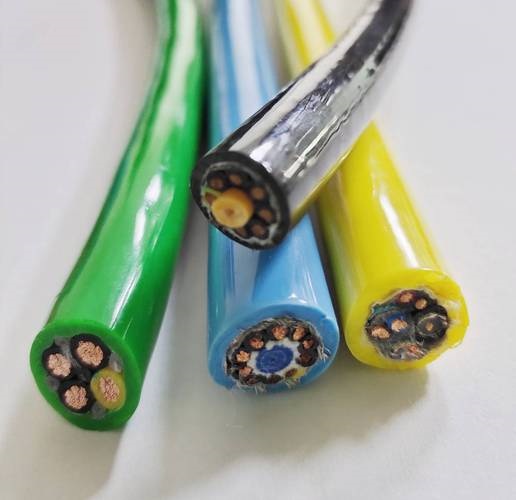
Interlocking Armor Submarine Cable — Mechanically Protected Subsea Power and Fiber Optic Cable with Helical Interlocking Metal Tape Armor for Seabed Installation, Trenching, and Burial in Marine Environments
Underwater, Marine & ROV Cables /Submarine & Armored

Interlocking Armor Submarine Cable — Mechanically Protected Subsea Power and Fiber Optic Cable with Helical Interlocking Metal Tape Armor for Seabed Installation, Trenching, and Burial in Marine Environments

Interlocking armor submarine cable: protected subsea cable with interlocking armour, PE sheath, 0.6/1-36 kV, Al/Cu/steel tape, seabed burial. CE, RoHS.

Key Features

Helical interlocking metal tape armour — flat or shaped aluminium, copper, or galvanized steel tape wound helically around the cable core; each turn mechanically interlocks with the previous, forming a continuous flexible armour that protects against anchor strikes, fishing gear, and seabed abrasion
Lighter and more flexible than steel wire armour (SWA) — interlocking armour typically reduces cable weight by 20–30% compared to equivalent SWA; the interlocking joints allow a smaller minimum bend radius and easier handling during cable laying operations
Aluminium armour option for combined mechanical protection and corrosion resistance — aluminium interlocking tape provides mechanical protection without adding ferrous material that would corrode in seawater; eliminates the need for an additional corrosion protection layer over the armour
PE (polyethylene) outer sheath over the armour — provides the primary seawater barrier; high-density PE is resistant to water absorption, marine boring organisms, and abrasion from seabed sediment movement
Available for power (0.6/1 kV to 36 kV), fiber optic, and hybrid electro-optical submarine cable cores — interlocking armour can be applied over any subsea cable core; the armour design is independent of the electrical/optical design
Tinned copper conductors and water-blocked core construction — all metallic elements are corrosion-resistant; longitudinal water blocking prevents water propagation along the cable if the outer PE sheath is damaged during cable laying or by third-party impact
Suitable for direct seabed laying, trenching, jetting, and directional drilling installation — the interlocking armour withstands the tensile and compressive loads of subsea cable installation methods
CE, RoHS compliant; manufactured to IEC 60228, IEC 60502 (power), and ITU-T G.652/G.655 (fiber) standards; submarine cable type approval on request

Applications

Submarine power cable for island and remote community electrification — interlocking armour-protected medium-voltage subsea cable (up to 36 kV) for power supply to islands, offshore installations, and remote coastal communitiesSubmarine fiber optic communication cable — interlocking armour-protected fiber cable for inter-island, coastal, and river-crossing telecommunication links where the cable is laid on or buried in the seabedOffshore wind farm export and inter-array cables — armoured subsea power cables connecting offshore wind turbines to each other (inter-array, 33–66 kV) and to the onshore substation (export, 132–220 kV)Tidal and wave energy export cables — armoured subsea cable from tidal turbine arrays and wave energy converters to the shore-based grid connectionSubsea equipment power and control — armoured cable for power and data to subsea processing equipment, multiphase pumps, and subsea compression stations on the seafloorRiver, lake, and harbour crossing cables — armoured cable installed under navigable waterways by horizontal directional drilling (HDD) or direct laying in a pre-cut trench

Technical Specifications

Cable Type Interlocking armour submarine cable
Cable Core Options Power (0.6/1 kV to 36 kV); Fiber optic (SM/MM, 2–192 fibers); Hybrid electro-optical
Power Conductors Tinned copper, IEC 60228 Class 2 (solid/stranded) or Class 5 (flexible); cross-section per project specification
Power Insulation XLPE (cross-linked polyethylene); rated per voltage class; water-tree retardant compound for submarine duty
Fiber Type Single-mode (G.652D, G.655, G.654); multi-mode (OM3/OM4); fiber count per project
Fiber Protection Gel-filled stainless steel loose tube(s); central or stranded around a central strength member
Core Assembly Water Blocking Longitudinal: swellable tapes and yarns; Radial: water-blocking compound or continuous metallic barrier (lead or copper tape on request)
Inner Sheath PE (polyethylene); extruded over the core assembly
Bedding Layer Polypropylene yarn or extruded PE; provides a smooth surface for armour application
Interlocking Armour Tape Aluminium alloy (corrosion resistant, lightweight), copper alloy, or galvanized steel; tape width and thickness per mechanical protection requirement
Armour Configuration Single-layer helical interlocking; each turn mechanically overlaps and interlocks with the previous turn
Outer Sheath HDPE (high-density polyethylene); 2.0–5.0 mm wall; black with UV stabilizer and carbon black for marine service
Cable OD (Including Armour) 25–150 mm depending on core design and voltage class
Weight in Air 2–40 kg/m depending on core design
Weight in Seawater 1–25 kg/m (submerged weight for laying tension calculation)
Rated Voltage (Power) 0.6/1 kV, 3.6/6 kV, 6/10 kV, 8.7/15 kV, 12/20 kV, 18/30 kV, 26/35 kV (higher on request)
Maximum Water Depth 500 m standard; deeper with increased PE sheath and armour thickness for hydrostatic pressure
Maximum Laying Tension Per cable design — typically 50–200 kN for armored submarine cables
Minimum Bend Radius (Laying) 20× cable OD (over laying sheave or wheel)
Minimum Bend Radius (Static, Seabed) 15× cable OD
Operating Temperature (Seabed) 0°C to +25°C (seabed ambient)
Installation Temperature -10°C to +40°C
Armour Corrosion Resistance (Aluminium) Natural passivation in seawater; cathodic protection not required for buried cables
Armour Corrosion Resistance (Steel) Galvanized; cathodic protection recommended for exposed steel armour on the seabed
Outer Sheath Abrasion Resistance HDPE per ISO 4649; ≤100 mm³ abrasion loss
Marine Borer Resistance HDPE sheath resists teredo and gribble attack; additional copper tape barrier on request for tropical waters
Flame Retardant Not applicable (submarine application; fire risk not relevant)
Certifications CE, RoHS; IEC 60502 (power), ITU-T G.652/G.655 (fiber), DNV/ABS type approval on request

Detailed Description

What Is an Interlocking Armor Submarine Cable?

An interlocking armor submarine cable is a subsea power or fiber optic cable protected by a helical metal tape armour that mechanically interlocks — each turn of the metal tape hooks into the previous turn, forming a continuous, flexible protective tube around the cable core. The armour serves as the cable's primary defence against the mechanical threats of the seabed environment:

  • Anchor strikes and vessel grounding — a ship's anchor dropping onto or dragging across a submarine cable is the single largest cause of submarine cable failures worldwide. The interlocking armour absorbs and distributes the impact and cutting force
  • Fishing gear (trawls and dredges) — bottom trawling gear can hook and cut unprotected submarine cables. The interlocking armour provides a hard, smooth surface that trawl doors and chains slide over rather than catch on
  • Seabed abrasion — cables laid on the seabed in areas of mobile sediment (sand waves, tidal scour) experience continuous abrasion as the sediment moves. The armour protects the underlying PE sheath and cable core
  • Rock dumping and backfill — during cable burial, graded rock or gravel is placed over the cable for additional protection. The interlocking armour withstands the impact of rock placement without deforming the cable core
The interlocking tape armour offers a specific advantage over traditional steel wire armour (SWA): it is lighter, more flexible, and generates less induced current loss in AC power cables (because the tape, unlike individual wires, does not form closed circumferential current loops that generate eddy-current heating).

Interlocking Armour vs Steel Wire Armour vs No Armour

Armour TypeMechanical ProtectionWeightFlexibilityAC LossesCorrosion in Seawater
Interlocking Tape (Al)Good — distributes point loads; resists cutting and abrasionLight — Al at 2.7 g/cm³Good — interlocking joints allow bendingLow — tape does not form continuous circumferential loopsExcellent — Al passivates in seawater
Interlocking Tape (Steel)Excellent — higher strength than AlModerate — steel at 7.8 g/cm³GoodModerate — steel has higher electrical resistance than Al, less eddy current concernRequires galvanizing and cathodic protection
Steel Wire Armour (SWA)Excellent — individual wires provide high tensile strength and impact resistanceHeavy — steel wires at 7.8 g/cm³Poor — stiff; large minimum bend radiusHigh for single-core AC — individual wires form closed loops that generate eddy currents and heatingRequires galvanizing and cathodic protection
No ArmourNone — cable relies on PE sheath alone for mechanical protectionLightestExcellentLowest — no metallic armourN/A — PE sheath is inert

For AC submarine power cables, the interlocking aluminium armour is the preferred choice: it provides mechanical protection without the eddy-current heating that makes steel wire armour problematic on single-core AC cables. For DC submarine power cables and fiber optic cables — where eddy currents are not a concern — the choice between interlocking tape and steel wire armour is driven by the required mechanical protection and the installation method.

Submarine Cable Installation — How the Armour Works During Laying and Burial

The armour's mechanical function is most critical during cable installation, when the cable experiences its highest tensile and bending loads:

  • Cable laying from a vessel: The cable pays out from a rotating turntable or drum on the laying vessel, passes over a stern sheave or wheel (which sets the minimum dynamic bend radius — typically 20× cable OD), and descends to the seabed. The tension at the vessel is controlled to maintain a safe catenary shape and prevent the cable from exceeding its rated laying tension
  • Seabed landing: As the cable approaches the seabed, the touch-down point moves with the vessel. The cable must withstand the repeated bending as it transitions from the water column to the seabed. The interlocking armour's flexibility reduces the bending strain at this point compared to steel wire armour
  • Trenching and jetting: A subsea trenching ROV or a towed jetting sled follows the cable, fluidizing the seabed sediment and allowing the cable to sink into the trench. The armour protects the cable from the jetting nozzles and from any rocks or debris in the sediment
  • Horizontal directional drilling (HDD): For shore approaches where the cable must pass under a beach, seawall, or environmentally sensitive area, the cable is pulled through a pre-drilled borehole. The interlocking armour's smooth surface reduces the pulling friction compared to the uneven surface of steel wire armour

Application Analysis: Where Interlocking Armour Submarine Cables Are Used

  • Island and remote community power supply: A 10–36 kV submarine cable from the mainland grid to an island community — typically 5–30 km long, laid on the seabed in water depths of 20–200 m, protected by interlocking aluminium armour with an HDPE outer sheath
  • Offshore wind farm export cable: The 33–66 kV or 132–220 kV cable carrying power from the offshore substation to the onshore grid connection point — the submarine cable section (from the offshore substation to the shore landing) is armoured for the seabed environment
  • Inter-array cables between wind turbines: 33–66 kV cables connecting individual wind turbines in a string to the offshore substation — shorter lengths (0.5–2 km per section) but high mechanical protection requirement due to the dynamic seabed environment in shallow water with strong tidal currents
  • Submarine fiber optic communication links: Inter-island and coastal fiber optic cables — lighter construction (no power conductors, smaller OD) but still requiring armour for protection against fishing gear and anchor strikes in shallow water
  • River and harbour crossing cables: Short armoured cable sections (0.2–2 km) installed under navigable rivers, harbour entrances, and shipping channels — the mechanical protection requirement is driven by the risk of anchor and dredging damage in these high-traffic areas

Why Choose Yichi for Interlocking Armour Submarine Cables

  • Custom armour design for your specific seabed environment: The armour tape material (aluminium, copper, or steel), thickness, and interlocking geometry are designed for the water depth, seabed type (rock, sand, mud), and risk assessment (fishing activity, anchoring zones) of your specific cable route
  • Aluminium interlocking armour for AC power cables — no eddy current penalty: Yichi's aluminium interlocking armour is the recommended choice for single-core AC submarine power cables. The open tape helix does not form closed circumferential electrical loops, minimizing armour-induced AC losses that can add 5–15% to the cable's total losses with steel wire armour
  • HDPE outer sheath formulated for decades of seabed service: High-density polyethylene with carbon black and UV stabilizer — the same material used for submarine cable sheaths worldwide. Resistant to water treeing, marine borer attack, and abrasion from mobile sediments
  • Full type-test programme per IEC 60502 and ITU-T standards: Submarine cable type tests — including mechanical (tensile, bend, torsion), electrical (partial discharge, HV withstand, impulse), and environmental (water penetration, ageing) — conducted on a representative cable sample of each design
  • Manufacturing and project support from cable design to installation: Yichi provides cable route engineering support (laying tension calculation, bend radius verification, burial assessment) alongside cable manufacturing — a single point of responsibility for the cable system

Frequently Asked Questions

How does interlocking armour compare with steel wire armour?

Each turn of the interlocking tape mechanically overlaps and locks into the previous turn, so it resists crush and impact while typically reducing cable weight by 20–30% compared with equivalent steel wire armour. It is also more flexible, which helps during laying, trenching, and jetting.

What armour material should I specify?

Aluminium alloy for corrosion resistance with reduced weight, copper alloy for specific environments, or galvanized steel. Aluminium is usually selected where mechanical protection and corrosion resistance are both required.

How is the seawater barrier formed?

An inner PE sheath is extruded over the core assembly, a bedding layer of polypropylene yarn or extruded PE gives the armour a smooth surface, and a 2.0–5.0 mm HDPE outer sheath with UV stabilizer and carbon black forms the primary seawater barrier.

What voltage classes and water depths are covered?

Power cores from 0.6/1 kV to 26/35 kV, or fiber optic with 2–192 fibers, or hybrid electro-optical. Maximum water depth is 500 m as standard, with deeper ratings achieved by increasing the PE sheath and armour thickness for hydrostatic pressure.

Product Inquiry

Product: Interlocking Armor Submarine Cable — Mechanically Protected Subsea Power and Fiber Optic Cable with Helical Interlocking Metal Tape Armor for Seabed Installation, Trenching, and Burial in Marine Environments

Add technical specifications (optional)

The more detail you provide, the faster and more accurate our quotation.

No file chosen

PDF, Office, image or CAD file — up to 5 MB

Need Help?

Certifications

ISO 9001
Quality
CE
European
RoHS
Environmental
TÜV
Certification

Need a Quote for This Product?

Send us your requirements and receive a detailed quotation within 24 hours.