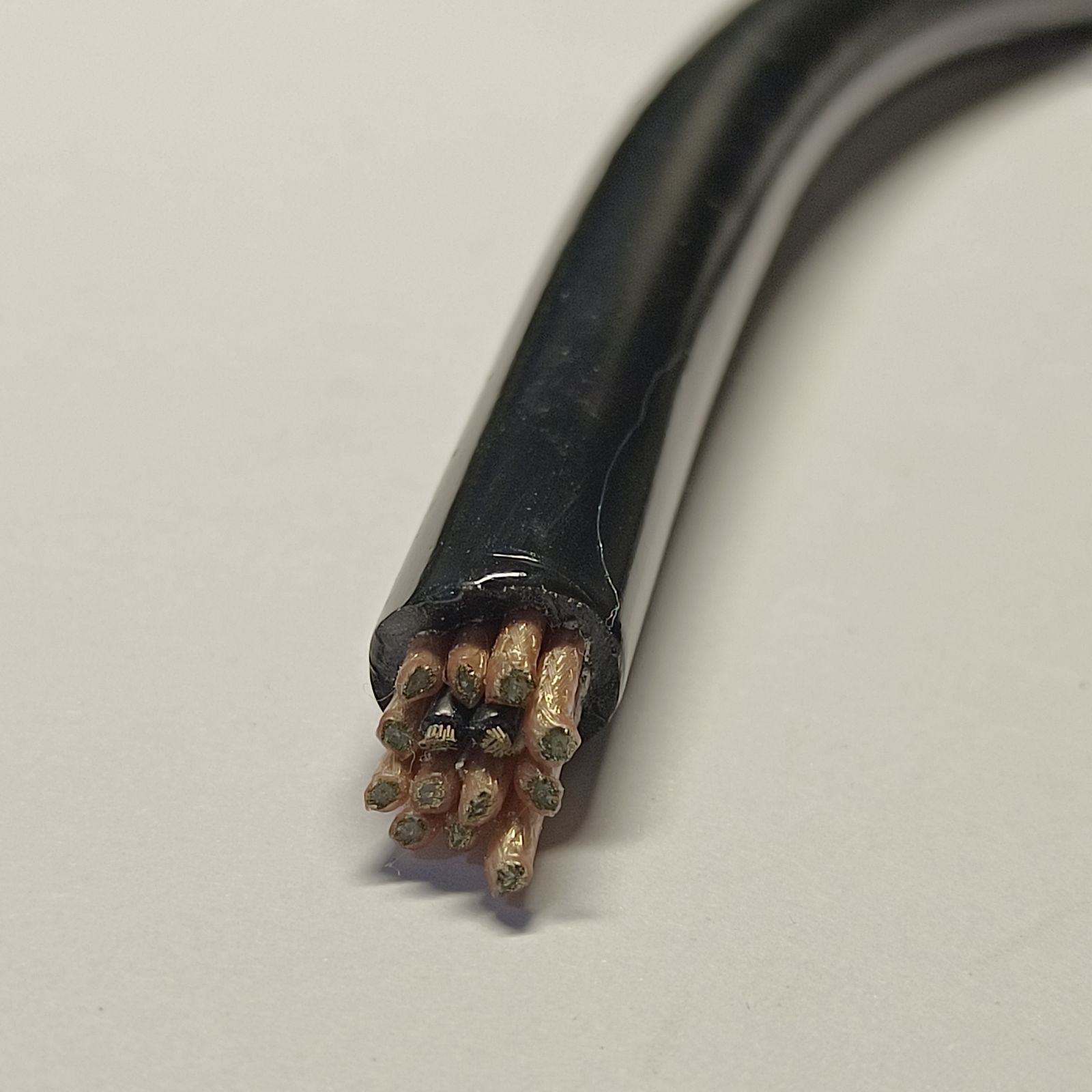
Detailed Description
What Is a Polyurethane Seawater Resistant Cable?
A polyurethane seawater resistant cable is a flexible power and control cable with a PUR (polyurethane) jacket specifically engineered for continuous or intermittent immersion in seawater. The PUR jacket is the key differentiator: it provides a combination of hydrolysis resistance, UV stability, abrasion resistance, and flexibility that no other single jacket material — not PVC, not rubber (neoprene/CSP), not polyethylene — can match for marine surface and splash-zone applications.
The cable serves the interface between the marine environment and the electrical equipment — navigation buoys, floating docks, offshore platform auxiliary systems, marine instruments — where the cable is exposed to:
- Continuous seawater immersion or spray — salt water is chemically aggressive; chlorides attack metal components and accelerate hydrolysis in susceptible polymers
- Direct sunlight (UV radiation) — surface-floating and splash-zone cables receive full solar UV exposure for years
- Mechanical wear — wave action causes continuous flexing; floating debris and vessel contact cause abrasion and impact
- Wide temperature range — from sub-zero winter air temperatures on a buoy in northern waters to +40°C seawater in tropical harbours
PUR vs Other Marine Jacket Materials
| Jacket Material | Hydrolysis Resistance | UV Resistance | Abrasion Resistance | Flexibility at -20°C | Typical Marine Service Life |
|---|---|---|---|---|---|
| PUR TMPU (Polyether) | Excellent — molecular structure resists hydrolysis | Excellent with UV stabilizer | Excellent — ≤50 mm³ abrasion | Excellent — flexible to -40°C | 10–20 years |
| PVC | Moderate — plasticizer leaching in water | Moderate with UV stabilizer | Moderate — ≤200 mm³ abrasion | Poor — stiff below -5°C | 2–5 years |
| CSP (Hypalon) | Good — chlorosulfonated PE resists water | Good with carbon black | Good — ≤150 mm³ abrasion | Good — flexible to -25°C | 8–15 years |
| PCP (Neoprene) | Good — polychloroprene resists water | Moderate | Good — ≤180 mm³ abrasion | Good — flexible to -25°C | 5–10 years |
| PE (Polyethylene) | Excellent | Poor without carbon black | Poor — ≤300 mm³ | Stiff — limited flexibility | 15–25 years (as outer sheath on submarine cables, not for flexible applications) |
PUR's combination of properties makes it the material of choice for flexible marine cables that must survive in the splash zone and at the surface. For permanently submerged submarine power cables — where flexibility is less important and abrasion from anchors and fishing gear is the dominant threat — steel wire armour over a PE sheath is the standard construction.
Seawater Resistance — What It Means and How It Is Tested
A cable marketed as "seawater resistant" must demonstrate resistance to the specific degradation mechanisms of the marine environment. The key laboratory tests are:
| Test | Standard | What It Measures | Acceptance Criteria |
|---|---|---|---|
| Hydrolysis resistance | ISO 15702 | Resistance of PUR to degradation in hot water | ≥28 days at 80°C; ≥70% retention of tensile strength and elongation |
| Long-term seawater immersion | ISO 1817 | Physical and mechanical changes after extended synthetic seawater exposure | ≥5 000 h at 40°C; no cracking, blistering; ≥70% retention of mechanical properties |
| UV ageing (QUV) | ISO 4892-2 | Resistance to accelerated UV exposure (simulates years of sunlight) | ≥1 000 h; ≥70% retention of tensile strength and elongation; no chalking or surface cracking |
| Salt spray / mist | ISO 9227 | Corrosion resistance of metallic components (tinned copper, braid) | ≥1 000 h; no red rust on tinned copper; no pitting corrosion |
| Dynamic seawater immersion with flexing | Custom test | Combined effect of flexing and seawater — simulates wave action on a floating cable | ≥1 000 000 flex cycles in synthetic seawater at 20°C; no jacket cracking |
Yichi PUR seawater resistant cables are tested to these standards, with test reports available for each production batch. The 5 000-hour seawater immersion test at 40°C is an accelerated test representing approximately 5–10 years of natural seawater exposure at temperate latitudes.
Application Analysis: Where PUR Seawater Resistant Cables Are Used
- Navigation buoys and aids to navigation (AtoN): The power and monitoring cable on a channel marker buoy or lighthouse buoy — continuously flexed by wave action, fully exposed to sun and salt spray, and accessed for maintenance only during annual service visits
- Marina and floating dock electrification: Shore power pedestal to floating dock, and dock to berthed vessel — the cable floats or is partially submerged in marina basin water, exposed to fuel and oil sheen, sunlight, and mechanical abuse from vessel movement
- Offshore wind farm auxiliary power: Platform lighting, navigation warning lights, corrosion protection anodes, and meteorological mast power on offshore wind turbine foundations — the cable runs from above the waterline down the foundation structure into the splash zone
- Coastal oceanographic observatories: Cabled instrument platforms on the seafloor connected by PUR-jacketed riser cables to surface buoys — the riser cable flexes with wave and current motion at the buoy interface
- Vessel deck machinery: Mooring winches, windlasses, and crane power cables on the weather decks of workboats, fishing vessels, and offshore supply vessels — exposed to seawater from deck wash and wave action
Why Choose Yichi for PUR Seawater Resistant Cables
- Polyether-based PUR — not polyester: Polyester-based PUR is lower cost but hydrolyses in warm seawater as the ester bonds are attacked by water molecules. Polyether-based PUR (TMPU) has ether bonds that are inherently resistant to hydrolysis. Yichi uses polyether PUR for all seawater resistant cables
- Proven by accelerated testing, not catalog claims: Hydrolysis resistance per ISO 15702, UV ageing per ISO 4892-2, seawater immersion per ISO 1817 — Yichi provides test reports for these standard tests on each production batch, not generic material datasheet values
- Tinned copper at every metallic element: Conductors, braid shield, drain wire — every copper component is tinned for corrosion resistance in the marine environment. Bare copper in a seawater cable develops green corrosion product within months, increasing contact resistance at terminations
- Halogen-free jacket option for enclosed marine spaces: On vessels and offshore platforms, fire in an enclosed space demands low-smoke, halogen-free cable materials. Yichi offers PUR seawater resistant cable with a halogen-free jacket for these applications
- Factory-direct with marine classification society approval on request: ABS, DNV, Bureau Veritas, and Lloyd's Register type approval available for project-specific requirements — Yichi manages the classification process alongside cable manufacturing