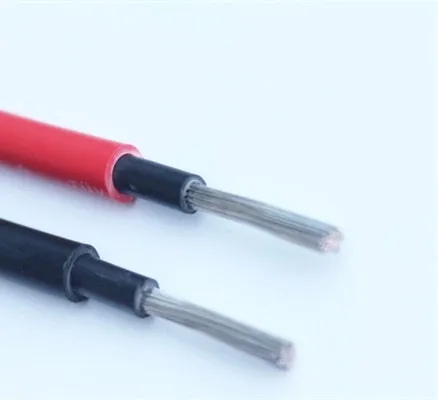
Solar Photovoltaic (PV) Cable — IEC 62930 / EN 50618 TUV 2PfG 1169 Certified Single-Core XLPO Insulated and Sheathed 1.5 kV DC Flexible Solar Cable with Tinned Copper Conductor, 25+ Year UV/Weather/Ozone/Ammonia Resistance for Solar Panel Interconnection, String Wiring, and DC Combiner to Inverter Connection
EV Charging & Renewable Energy Cables /Solar PV Cable

Solar Photovoltaic (PV) Cable — IEC 62930 / EN 50618 TUV 2PfG 1169 Certified Single-Core XLPO Insulated and Sheathed 1.5 kV DC Flexible Solar Cable with Tinned Copper Conductor, 25+ Year UV/Weather/Ozone/Ammonia Resistance for Solar Panel Interconnection, String Wiring, and DC Combiner to Inverter Connection

Solar PV cable: IEC 62930 / EN 50618 TUV 2PfG 1169 certified, single-core, tinned copper Class 5, XLPO insulated and sheathed, 1.5 kV DC, 1.5–35 mm². UV, ozone, weather, ammonia, salt mist resistant. -40°C to +120°C, 25+ year design life. For solar panel interconnection, string wiring, DC-to-inverter. CE, TUV, RoHS.

Key Features

IEC 62930 / EN 50618 / TUV 2PfG 1169 certified — the international standards for solar photovoltaic cables; TUV certification is the definitive third-party quality mark for PV cables, verifying 25+ year design life per the full IEC 62930 type test program including 2 000+ hour accelerated ageing
Tinned copper conductor, IEC 60228 Class 5 flexible stranded — tinning protects the copper from oxidation and corrosion in the high-temperature, high-humidity environment behind a solar panel where the connector and cable are exposed to condensation, rain, and heat cycling between -40°C and +85°C daily
XLPO (cross-linked polyolefin) insulation and sheath — electron-beam cross-linked for superior thermal stability; no halogen, no sulfur, no phosphorus — the XLPO compound is formulated specifically for solar cable with verified resistance to the full PV environmental spectrum: UV (ISO 4892-2, >7 200 h), ozone (IEC 60811-403), ammonia (IEC 62716, agricultural environments), and salt mist (IEC 60068-2-52, coastal installations)
1.5 kV DC rated voltage — the standard voltage class for solar PV string cables per IEC 62930; covers residential (1 000 V DC), commercial (1 000 V DC), and utility-scale (1 500 V DC) PV system voltages
Double-insulated construction (Class II) — XLPO insulation + XLPO sheath provides two layers of electrical protection; no earth conductor required; the double insulation is verified by the 6.5 kV AC spark test and 15 kV DC voltage test per IEC 62930
Cross-section range 1.5–35 mm² — covering the complete solar PV string and array cable range: 4 mm² and 6 mm² for standard residential and commercial PV string wiring; 10–35 mm² for utility-scale PV DC collection circuits from combiner boxes to central inverters
Halogen-free, low smoke, low toxicity — the XLPO compound is inherently halogen-free (IEC 60754-1); low smoke emission (IEC 61034, >60% light transmittance); low toxicity (IEC 60754-2, pH >4.3, conductivity <10 μS/mm); essential safety characteristic for cables that are often routed through building roofs and attics
25+ year design life at 120°C continuous on the conductor at 90°C ambient — verified by Arrhenius-modeled thermal endurance testing per EN 60216; the cable is designed to match the service life of the solar PV modules (25–30 year warranty period)

Applications

Solar PV module interconnection — 4 mm² or 6 mm² single-core cable with MC4-compatible connectors for series-connecting individual PV modules into strings on residential and commercial rooftop systems; the cable is exposed to direct sunlight behind the panel with surface temperatures up to 85°CSolar PV string wiring — 4 mm² or 6 mm² cable from the end of each PV string to the string inverter or DC combiner box; multiple strings are routed in parallel across the roof or through cable trays to the inverter locationUtility-scale solar farm DC collection — 10–35 mm² cable from DC combiner boxes distributed throughout the solar array to central or string inverters at the edge of the array; long cable runs (100–500 m per circuit) require low conductor resistance to minimize DC voltage drop and power lossBuilding-integrated photovoltaics (BIPV) — PV cable for solar modules integrated into building facades, roof tiles, and glazing; the halogen-free, low-smoke construction is mandatory for building-integrated cables per EU CPR requirementsFloating solar PV installations — cable for solar arrays installed on water bodies (reservoirs, lakes); the XLPO insulation and sheath resist water immersion, UV reflecting from the water surface, and the mechanical stress of wave motion on floating cable management systemsAgricultural and greenhouse PV (agrivoltaics) — cable for solar installations co-located with agriculture; ammonia resistance per IEC 62716 is essential because ammonia-based fertilizers and animal waste produce atmospheric ammonia concentrations that degrade standard cable insulation within a few yearsOff-grid and remote solar power — cable for standalone solar systems powering telecommunications towers, remote monitoring stations, water pumping, and rural electrification; the cable must survive extreme temperatures, UV, and wildlife (rodent, bird) contact without degradation

Technical Specifications

Standards IEC 62930 (Solar cables — halogen-free cross-linked single-core power cables for photovoltaic systems, 1.5 kV DC); EN 50618 (harmonized European standard); TUV 2PfG 1169/08.2007 (TUV Rheinland PV cable certification scheme); VDE-AR-E 2283-4 (Germany); UL 4703 (North America, on request)
Rated Voltage — DC 1.5 kV DC (conductor-to-earth); the standard voltage for solar PV string cables; also rated for 1.0 kV AC when the cable is used on the AC side of the inverter
Test Voltage — DC (Routine) 6.5 kV DC / 5 min (core-to-water); 15 kV DC / 5 min (finished cable, core-to-core/core-to-surface) per IEC 62930
Test Voltage — AC (Routine) 6.5 kV AC / 5 min (spark test per EN 50356, in-line); 100% spark testing on the insulated core before sheathing
Conductor Material Tinned copper; IEC 60228 Class 5 flexible stranded; the tinning is essential for corrosion protection — bare copper oxidizes rapidly in the hot, humid microclimate behind a PV module and the oxide layer increases contact resistance at the connector crimp, leading to localized heating and connector failure
Conductor Cross-Sections 1.5, 2.5, 4, 6, 10, 16, 25, 35 mm²
Conductor Stranding — 4 mm² Example 56 strands × 0.30 mm diameter (Class 5); the high strand count ensures flexibility for routing through the confined space between the panel frame and the roof surface
Core Insulation — XLPO Electron-beam cross-linked polyolefin (XLPO); halogen-free; rated 120°C continuous at the conductor (per IEC 62930 thermal endurance classification); the EB cross-linking process uses high-energy electrons to create the cross-linked molecular network, eliminating the need for peroxide and the associated cross-linking by-products
Insulation Thickness — 1.5–6 mm² 0.7 mm (minimum average) per IEC 62930 Table 1; the thickness is selected for the 1.5 kV DC voltage rating with margin per the standard
Insulation Thickness — 10–35 mm² 1.0 mm (minimum average)
Outer Sheath — XLPO Electron-beam cross-linked polyolefin; halogen-free; same base material family as the insulation for chemical compatibility and co-cross-linking at the interface during the irradiation process; black (standard), red (positive polarity), blue or black with red stripe (optional for polarity identification)
Sheath Thickness — 1.5–6 mm² 0.5 mm (minimum average) per IEC 62930 Table 1
Sheath Thickness — 10–35 mm² 0.8 mm (minimum average)
Overall Cable OD (Approximate) — 4 mm² 4.8–5.5 mm; compatible with standard MC4 connector cable entry gland (typically accepts 4.0–7.0 mm cable OD)
Overall Cable OD (Approximate) — 6 mm² 5.5–6.5 mm
Maximum DC Conductor Resistance at 20°C — Tinned Copper Per IEC 60228 Class 5; 13.7 Ω/km (1.5 mm²); 8.21 Ω/km (2.5 mm²); 5.09 Ω/km (4 mm²); 3.39 Ω/km (6 mm²); 1.95 Ω/km (10 mm²); 1.24 Ω/km (16 mm²); 0.795 Ω/km (25 mm²); 0.565 Ω/km (35 mm²)
Insulation Resistance at 20°C — XLPO ≥1 000 MΩ·km (core-to-water at 500 V DC, 1 min) per IEC 62930
Insulation Resistance at 90°C — XLPO ≥0.001 MΩ·km (minimum after long-term thermal endurance testing per IEC 62930 Annex B)
Temperature Range — Conductor (Continuous) 120°C (per IEC 62930, higher than standard cable 90°C rating because solar cables operate in the elevated temperature environment behind PV modules); the conductor temperature is the sum of the ambient temperature behind the panel (up to 85°C on a hot roof) plus the I²R heating from the DC current
Temperature Range — Ambient (Operation) -40°C to +90°C (the ambient temperature in which the cable operates — from Arctic winter to desert summer to the air gap behind a PV module at midday)
Temperature Range — Ambient (Installation) -25°C minimum (the cable can be installed at this temperature without pre-heating; the XLPO sheath retains flexibility down to -40°C, but connector assembly at very low temperatures may require warming)
Short-Circuit Temperature — XLPO 250°C (max 5 s) per IEC 62930 / IEC 60949
Minimum Bend Radius — Fixed Installation 4× cable OD (per IEC 62930)
Minimum Bend Radius — During Installation 5× cable OD; do not bend the cable at a radius smaller than 5× OD during pulling and connector assembly — the insulation and sheath are flexible but excessive bending can create kinks that reduce insulation thickness at the bend point and increase the electric field stress at the kink
Current Rating — 4 mm² (Single Cable, Free Air, 60°C Ambient, 120°C Conductor) 44–55 A (DC, depending on the specific XLPO insulation thermal conductivity and the installation conditions — enclosed or free air)
Current Rating — 6 mm² (Same Conditions) 57–70 A (DC)
Current Rating Derating — Multiple Cables Bundled Per IEC 60364-5-52 correction factors for grouping; 3 cables bundled in a single layer: derate by ~0.7; 6 cables in a bundle: derate by ~0.55; PV string cables must be spaced or de-rated when multiple strings are routed in a common cable tray
Dynamic Penetration Test Per IEC 62930 Annex D; a hardened steel needle is driven into the cable at a specified speed and force; the cable must withstand the penetration without electrical breakdown — simulates accidental damage during installation (stepping on the cable, cable tie over-tightening, sharp roof edge contact)
Weathering / UV Resistance ISO 4892-2 (xenon arc lamp, method A, 7 200+ hours exposure); after UV exposure, the sheath must retain ≥70% of its original tensile strength and elongation — this is the definitive test for 25-year outdoor UV resistance
Ozone Resistance IEC 60811-403; the XLPO material is inherently ozone-resistant; no cracking after exposure to 200–300 pphm ozone concentration at 25°C for 24 hours under 20% elongation
Ammonia Resistance IEC 62716; the cable is immersed in 10% ammonium hydroxide solution at 20°C for 7 days; after exposure, the tensile strength and elongation must retain ≥70% of original values — essential for cables installed in agricultural environments (livestock buildings, greenhouses with ammonia-based fertilizer)
Salt Mist Resistance IEC 60068-2-52 (severity 6); the cable is exposed to a continuous salt spray of 5% NaCl at 35°C for 7 days; after exposure, the sheath must show no cracking, blistering, or significant loss of mechanical properties — required for coastal and offshore solar installations
Acid / Alkali Resistance EN 50618 Table 3; immersion in oxalic acid (5%) and sodium hydroxide (4%) for 168 hours at 23°C; mechanical properties must retain ≥70% — simulates acid rain and alkaline cleaning solutions used on solar panels
Flame Retardant IEC 60332-1-2 (single cable); the XLPO compound is inherently flame-retardant through its cross-linked structure and filler system
Halogen-Free IEC 60754-1 (halogen acid gas emission — HCl <0.5%); IEC 60754-2 (pH >4.3, conductivity <10 μS/mm); the cable does not emit corrosive or toxic halogen gases in a fire — essential for rooftop installations where the cable enters the building through the roof penetration
Low Smoke IEC 61034-2; minimum 60% light transmittance during smoke emission test; the low smoke characteristic maintains visibility for occupants and firefighters in a building fire involving the PV cable system
Expected Service Life ≥25 years at 120°C conductor / 90°C ambient per EN 60216 Arrhenius thermal endurance model; verified by 2 000+ hour accelerated thermal ageing at multiple elevated temperatures per IEC 62930 type testing
Certifications TUV Rheinland 2PfG 1169; CE; RoHS; EN 50618; VDE; UL 4703 on request; ISO 9001 manufactured

Detailed Description

What Is a Solar PV Cable?

A solar photovoltaic (PV) cable is a single-core, double-insulated, electron-beam cross-linked polyolefin (XLPO) cable designed specifically for the DC side of solar photovoltaic power systems — from the PV module junction box to the string inverter, through the DC combiner boxes, and across the solar array. It is defined by IEC 62930 (international) and EN 50618 (European harmonized), and its construction is fundamentally different from a standard power cable in three ways:

  1. Tinned copper conductor: The tinning prevents oxidation in the hot, humid, condensing microclimate behind a PV module. Bare copper in this environment develops a high-resistance oxide layer within months, increasing contact resistance at the connector crimp and causing connector overheating — a leading cause of PV system fires
  2. XLPO insulation and sheath: Cross-linked polyolefin is halogen-free (no PVC), ozone-resistant (no rubber degradation from atmospheric ozone), and rated for 120°C continuous conductor temperature — the temperature that a cable behind a PV module on a 40°C day with full solar irradiance can reach
  3. 25+ year design life: The cable must match the service life of the PV modules (25–30 year warranty). The accelerated thermal endurance testing per Arrhenius modelling (EN 60216) is the core of the IEC 62930 type test program — the cable is aged at multiple elevated temperatures (typically 135°C, 150°C, and 165°C) until 50% elongation at break, and the test data is extrapolated to predict the life at the rated operating temperature (120°C). A cable that fails this extrapolation at less than 25 years is not certified.

Why PV Cable Is Not Just Power Cable with a Different Label

Using a standard PVC-insulated power cable for a PV installation is a common mistake with serious consequences:

PropertyStandard PVC Power CableIEC 62930 Solar PV Cable
ConductorBare copperTinned copper — prevents connector oxidation
Insulation temperature70°C (PVC) or 90°C (XLPE)120°C (XLPO, electron-beam cross-linked)
UV resistanceModerate (black PVC, <10 years)Excellent (>25 years, ISO 4892-2 >7 200 h)
Ozone resistancePVC: good; XLPE: moderateExcellent (XLPO is inherently ozone-resistant)
Ammonia resistancePVC: poor; XLPE: poorExcellent (IEC 62716 tested for agricultural environments)
Halogen-freePVC: no (contains chlorine); XLPE: yesYes (XLPO is inherently halogen-free)
Design life15–25 years (indoors)≥25 years (outdoors, full environmental exposure)
DC voltage rating0.6/1 kV AC rated (not DC qualified for 1.5 kV DC)1.5 kV DC rated and type-tested
Dynamic penetrationNot testedIEC 62930 Annex D penetration tested
TUV certified for PVNoYes (TUV 2PfG 1169)

The cost of a PV-installation failure — a connector that overheats due to oxidized bare copper, a cable that embrittles from UV exposure after 10 years and cracks, a PVC cable that emits corrosive HCl gas in a roof fire — far exceeds the modest cost premium of a properly specified IEC 62930 solar cable.

The Role of Tinned Copper — Why It Matters

Behind every PV module junction box is a DC connector — typically an MC4 or MC4-compatible type. The connector's electrical contact is a crimp: the stripped conductor is inserted into a cylindrical metal contact and crimped to form a gas-tight connection. If the copper surface at the crimp interface is oxidized, the contact resistance is elevated. As DC current flows (8–12 A for a typical 400 W module), I²R heating at the high-resistance contact raises the temperature locally. The elevated temperature accelerates further oxidation (Arrhenius: ≈2× rate increase per 10°C rise), creating a thermal runaway cycle that ends with the connector melting or igniting.

Tinned copper eliminates this failure mode. The tin coating is a barrier that prevents copper oxidation. A properly crimped tinned copper conductor into a tinned copper contact maintains a stable, low-resistance connection for 25+ years. This is why IEC 62930 mandates tinned copper — it is not an optional upgrade; it is a safety requirement.

Why Choose Yichi Solar PV Cables

  • IEC 62930 / EN 50618 / TUV 2PfG 1169 triple-certified: The cable carries the three certifications that define the global solar cable standard — IEC for international, EN for Europe, TUV for the mark that PV system installers, EPC contractors, and plant operators worldwide recognize as the gold standard for solar cable quality
  • Electron-beam cross-linked XLPO — the correct insulation technology: The EB cross-linking process produces a clean, peroxide-free XLPO insulation with superior thermal stability, no by-product residues, and uniform cross-link density — verified by hot-set elongation testing per IEC 60811-507 on every production batch
  • 25+ year design life verified by Arrhenius testing: The thermal endurance extrapolation per EN 60216 is performed on our XLPO compound and verified by TUV as part of the 2PfG 1169 certification. The test data demonstrates the compound's life at 120°C conductor temperature — not a marketing claim, but a certified test result
  • Tinned copper as standard — not an option: Every conductor in every Yichi solar cable is tinned. The tinning thickness per IEC 61196 is controlled and verified on incoming copper strand, and the tinning integrity is checked after stranding to ensure no bare copper is exposed at strand cross-over points
  • Full environmental resistance testing: UV (ISO 4892-2, >7 200 h), ozone (IEC 60811-403), ammonia (IEC 62716), salt mist (IEC 60068-2-52), acid and alkali (EN 50618) — the cable's resistance to the full PV environmental spectrum is type-tested, not assumed from the material data sheet
  • MC4 connector compatibility verified: The cable OD and insulation strip characteristics are designed for the standard MC4 and MC4-compatible connector systems used in the PV industry. The cable strips cleanly from the conductor without leaving insulation residue that would contaminate the connector crimp interface

Product Inquiry

Product: Solar Photovoltaic (PV) Cable — IEC 62930 / EN 50618 TUV 2PfG 1169 Certified Single-Core XLPO Insulated and Sheathed 1.5 kV DC Flexible Solar Cable with Tinned Copper Conductor, 25+ Year UV/Weather/Ozone/Ammonia Resistance for Solar Panel Interconnection, String Wiring, and DC Combiner to Inverter Connection

Add technical specifications (optional)

The more detail you provide, the faster and more accurate our quotation.

No file chosen

PDF, Office, image or CAD file — up to 5 MB

Need Help?

Certifications

ISO 9001
Quality
CE
European
RoHS
Environmental
TÜV
Certification

Need a Quote for This Product?

Send us your requirements and receive a detailed quotation within 24 hours.