Detailed Description
What Is a Marine Exploration Floating ROV Cable?
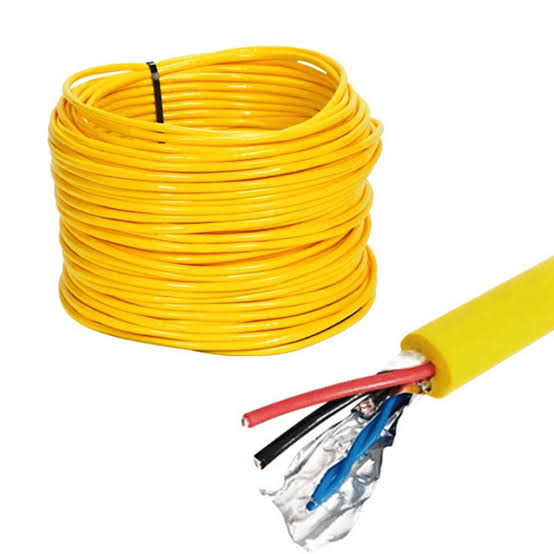
A marine exploration floating ROV cable is a positively buoyant tether designed to float on the water surface behind a survey vessel, connecting a small inspection-class ROV to the surface control station. Unlike the neutrally buoyant ROV tether — which is engineered for deep-water operation with the cable suspended in the water column — the floating ROV cable simply floats on the surface, visible and accessible at all times.
This cable type is used for shallow-water ROV operations where:
- Depth is modest — typically 5–100 metres. The ROV deploys vertically from the vessel, and the floating cable trails horizontally on the surface behind it. The ROV is not pulling the cable through the water column, so the catenary drag that plagues deep-water tethers is absent
- The cable must be visible — in busy harbours, near vessel traffic, or in areas with floating debris, a cable that trails on the surface is far easier for the operator and crew to monitor and manage than one that disappears underwater
- Seabed contact must be avoided — in environmentally sensitive areas (coral reefs, seagrass beds, archaeological sites), a floating cable eliminates the risk of the tether dragging across and damaging the seabed
Floating ROV Cable vs Neutrally Buoyant ROV Tether
| Parameter | Floating ROV Cable | Neutrally Buoyant ROV Tether |
|---|---|---|
| Buoyancy | Positive (<1.0 g/cm³) — floats on surface | Neutral (1.025 g/cm³) — stays suspended |
| Typical depth | 5–100 m (shallow water) | 200–3 000 m (deep water) |
| Power capacity | 1–5 kW (0.75–6 mm²) | 10–150 kW (1.5–35 mm²) |
| Fibre optic | Not standard (copper video + data adequate for shallow ROVs) | Standard (HD video + sonar over long distances) |
| Breaking strength | 200–1 000 kg | 500–5 000+ kg |
| Cable OD | 6–12 mm | 10–25 mm |
| Jacket color | Yellow/orange (high visibility on surface) | Yellow (underwater visibility) |
| Primary deployment | Surface trail behind small vessel | Winch deployment through moon pool or over A-frame |
| Cost | Lower — simpler construction, shorter length, no fibre | Higher — multi-layer, fibre, higher strength |
The two cable types serve different operational requirements. An inspection ROV in 20 metres of harbour water does not need a 3 000-metre-rated tether with four single-mode fibres. The floating ROV cable provides exactly the capability needed for shallow-water marine exploration and survey — at a significantly lower cost and with simpler handling.
Operational Considerations for Surface-Floating ROV Cables
Operating a surface-floating cable introduces considerations that do not apply to deep-water neutrally buoyant tethers:
- Vessel traffic: The floating cable is a potential hazard to other vessels if not clearly visible. The high-visibility yellow or orange jacket, combined with marker buoys attached to the cable at intervals for long deployments, is standard operating practice
- Wind and surface current: Wind blowing across a floating cable can push it off to one side, creating a lateral pull on the ROV below. The operator compensates by positioning the vessel upwind of the work site so the floating cable trails downwind
- UV exposure: Unlike a deep-water tether that spends its operational life in darkness, a floating cable is exposed to direct sunlight for hours per deployment. The PUR jacket's UV stabilizer package is essential for preventing surface cracking and chalking over hundreds of deployments
- Deployment and retrieval: The floating cable pays out and is recovered over the vessel's side or stern — no moon pool, A-frame, or traction winch required on smaller vessels. This reduces the vessel requirements for ROV operations
Application Analysis: Where Floating ROV Cables Are Used
- Harbour and port infrastructure inspection: Quay walls, bridge piers, lock gates, and fender systems inspected by ROV from a small workboat — the floating cable stays on the surface in the confined harbour environment where submerged cables would be a hazard to vessel propellers
- Ship hull survey: Underwater hull inspection for marine growth, coating condition, and damage assessment — the ROV operates directly below the vessel, and the floating cable trails on the surface alongside
- Environmental monitoring and sampling: Water quality surveys, sediment sampling, and habitat mapping in shallow coastal waters, lakes, and rivers — the floating cable avoids disturbing the benthic environment
- Search and recovery in shallow water: Evidence recovery, drowning victim search, and lost equipment recovery by law enforcement and search-and-rescue teams operating from small boats in shallow water
- Aquaculture facility inspection: Net pen inspection, mooring line survey, and mortality retrieval on fish farms — the floating cable is easily managed from the workboat deck by a single operator
Why Choose Yichi for Floating ROV Cables
- Purpose-built for surface-floating deployment: This is not a neutrally buoyant tether with the strength member removed. The foam insulation, filler, and jacket combination is engineered from the cross-section outward for positive buoyancy and surface durability
- High-visibility jacket with verified UV resistance: Yellow or orange PUR jacket tested per ISO 4892-2 for UV ageing — formulated to survive years of surface exposure on working vessels without cracking or fading to the point of reduced visibility
- Kevlar strength member sized for the ROV, not the depth: Breaking strength matched to the ROV's submerged weight plus surface recovery load — no oversizing that adds unnecessary weight and compromises buoyancy
- Simple deployment from small vessels: Compact OD, lightweight construction, and positive buoyancy mean the cable can be deployed and retrieved by hand over the vessel side — no specialized launch and recovery equipment required
- Factory-direct with full electrical and buoyancy documentation: Conductor resistance, insulation resistance, HV test, breaking strength sample, and positive buoyancy certificate — the same test discipline as our deep-water tethers, applied to the surface-floating cable